On 11/6, a 10-year-old boy was transferred to Children's Hospital 2 from Binh Duong Hospital in cardiac and respiratory arrest, having suddenly fainted at home. This was not his first episode; his family reported two similar fainting spells previously, though the cause remained unknown. This time, his heart stopped for about 20 minutes at home and continued during emergency care at the referring hospital, requiring continuous cardiopulmonary resuscitation. Despite intensive resuscitation efforts at Children's Hospital 2, including vasopressor drugs, respiratory support, and advanced emergency measures, his condition worsened, and he again went into cardiac arrest.
Faced with this critical situation, the hospital's specialized ECMO team rapidly mobilized. Comprising doctors from the intensive care and anti-poison department, cardiology department, cardiothoracic intensive care surgery department, and anesthesiology department, the team swiftly coordinated to deploy extracorporeal cardiopulmonary resuscitation (ECPR) at the patient's bedside.
After approximately 60 minutes of continuous resuscitation and successful establishment of a veno-arterial extracorporeal membrane oxygenation (VA-ECMO) system, the boy's circulation was re-established. This crucial intervention ensured that vital organs like the brain, heart, liver, and kidneys continued to receive blood flow, helping his body overcome the immediate life-threatening phase.
In the days that followed, the child received close monitoring and specialized treatment, leading to a gradual improvement in heart function. After one week of treatment, doctors successfully weaned him off extracorporeal membrane oxygenation. His consciousness recovered well, heart function significantly improved, and he is now continuing his recovery. The cause of his recurrent fainting and cardiac arrest remains undetermined. Doctor Tran Thi Bich Kim, Deputy Head of the Intensive Care and Anti-poison Department at Children's Hospital 2, stated that once his heart condition stabilizes further, the boy will undergo specialized tests and screening to identify the underlying cause.
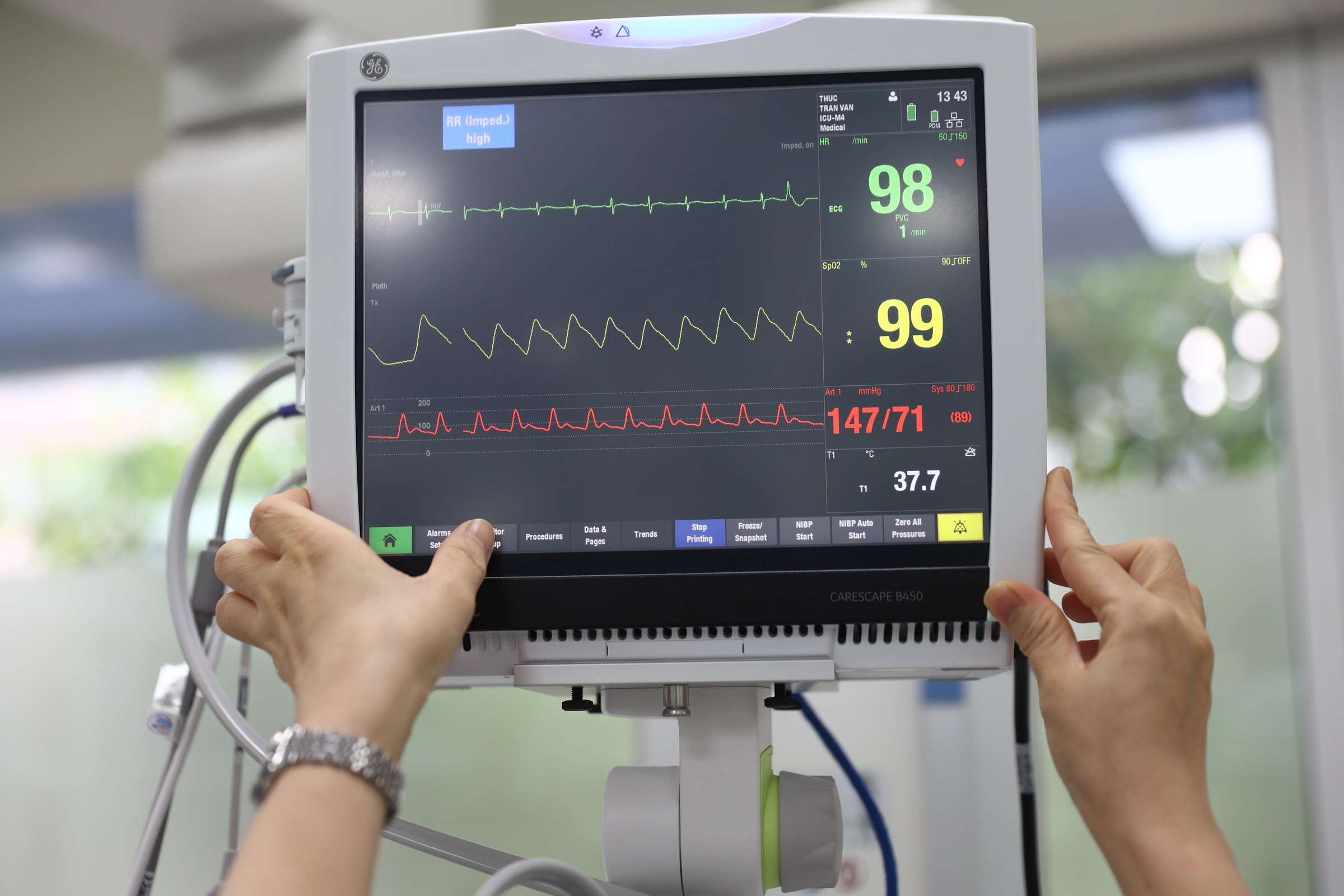 |
Treating a patient with resuscitation. Photo: Quynh Tran
ECPR is a specialized extracorporeal cardiopulmonary resuscitation technique used for cardiac arrest cases that do not respond to conventional cardiopulmonary resuscitation. When combined with a veno-arterial extracorporeal membrane oxygenation system, this technique effectively maintains circulation and supplies oxygen to critical organs when the heart and lungs are unable to function effectively on their own.
Doctor Kim emphasized the critical importance of every minute during cardiac arrest. She urged parents to be vigilant about recurrent fainting episodes in children, especially those that occur suddenly or without a clear cause, and to seek early specialist medical attention. Prompt detection of potential underlying abnormalities can significantly reduce the risk of serious events such as cardiac arrest.
Le Phuong