Doctor Le Anh Tuan, a specialist in Cardiology at Tam Anh Hanoi General Hospital, reported pathological blood reflux in the girl's great saphenous vein, an early sign of lower limb venous insufficiency. This case highlights how venous insufficiency in children is often overlooked due to subtle initial symptoms.
Venous valves facilitate one-way blood flow from the legs back to the heart. When these valves are damaged or have congenital abnormalities, their function becomes inefficient. Blood then refluxes into the lower part of the leg, increasing pressure in the veins, causing discomfort and cosmetic issues.
In the early stage, patients often experience aching, fatigue, or heaviness in the legs, along with muscle cramps. Some cases show mild swelling or superficial veins dilated under the skin. Symptoms typically subside with rest or leg elevation. Without timely treatment, prolonged reflux and persistently increased venous pressure can lead to recurrent swelling, significant vein dilation, skin hyperpigmentation, and dermatitis. Severe stages can result in venous leg ulcers, impacting quality of life.
As Phuong's venous insufficiency is in an early stage, she is receiving conservative treatment. This includes wearing compression stockings, increasing physical activity, and limiting prolonged standing or sitting.
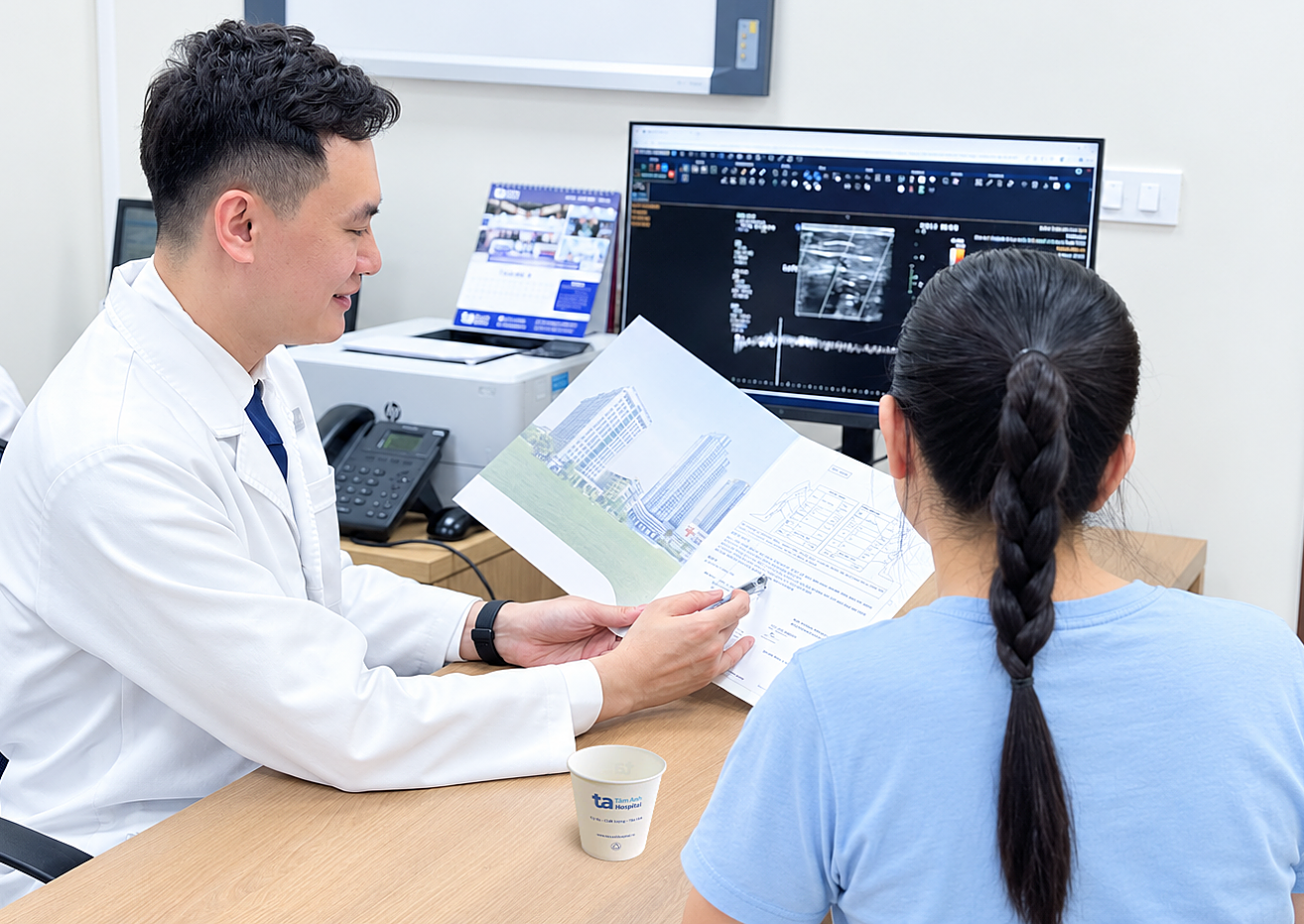 |
Doctor Tuan explains the patient's leg venous insufficiency. *Photo: Tam Anh General Hospital*
Leg venous insufficiency is common in adults, especially the elderly, pregnant women, and those who are overweight or obese. Currently, this condition is also being identified in many children and adolescents. Symptoms can be mild or atypical, easily overlooked or mistaken for muscle fatigue from physical activity. Causes may include: congenital abnormalities of the venous system, family history, or a history of venous thrombosis. Notably, a family history of venous disease is reported in 70-80% of pediatric patients.
Phuong's mother and grandmother both suffer from varicose veins, suggesting a potential genetic predisposition, according to Doctor Tuan. Genetic factors can influence the structure of blood vessel walls and venous valve function. Body changes during pubertal growth can exacerbate the condition, leading to noticeable symptoms.
Doctor Tuan advises early evaluation for children with a family history of venous insufficiency, obesity, sedentary lifestyles, or endocrine abnormalities. Children experiencing frequent swelling, leg heaviness or fatigue, abnormal prominent veins, or persistent, recurrent symptoms should seek medical attention.
Ly Nguyen
*Patient's name has been changed
| Readers can submit questions about cardiovascular diseases here for a doctor's response. |