Response:
Fatty liver disease and elevated liver enzymes are two distinct issues that can occur simultaneously. Elevated liver enzymes refer to test results indicating an increase in certain liver enzymes in the blood.
ALT and AST are enzymes commonly used to assess liver cell damage. When liver cells are damaged, they release these enzymes into the bloodstream in larger quantities, causing their levels to rise. However, elevated liver enzymes do not only occur in individuals with fatty liver disease but can also be found in many other hepatobiliary conditions, such as: viral hepatitis, heavy alcohol consumption, drug-induced liver damage, autoimmune liver disease, or inflammation or obstruction of the bile ducts. AST can be present in muscles and some extrahepatic tissues, so an increase in AST is not always solely liver-related.
Fatty liver disease is a condition where fat accumulates in liver cells, potentially linked to being overweight, obesity, insulin resistance, type 2 diabetes, dyslipidemia, high-energy diets, and sedentary lifestyles. Most people with fatty liver disease experience no obvious symptoms and are often diagnosed incidentally through ultrasound.
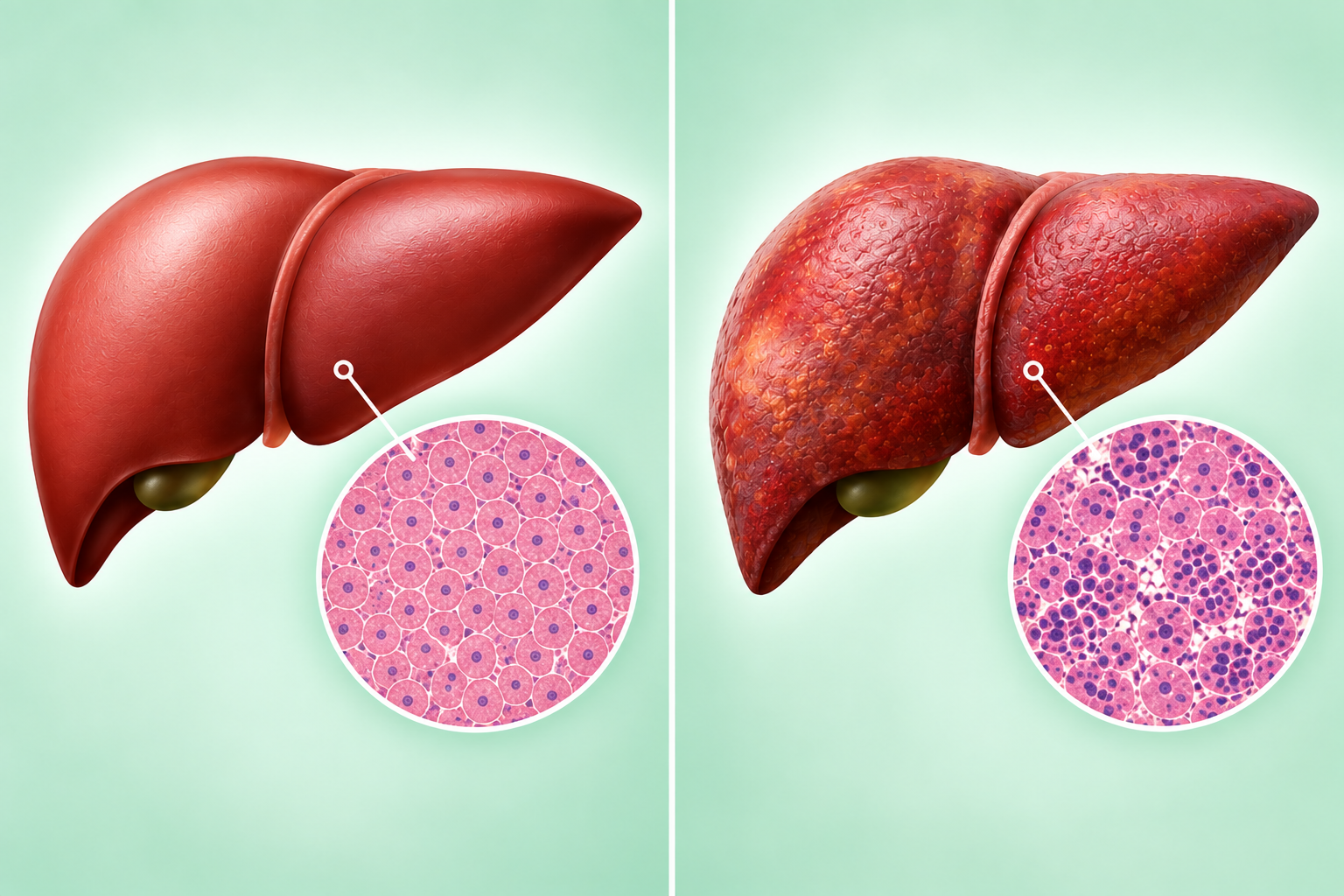 |
Illustration of a normal liver and a fatty liver. Photo: Eco Pharmaceuticals
To diagnose fatty liver disease, doctors typically combine a patient's medical history, risk factors, blood tests, and imaging diagnostics such as abdominal ultrasound. Ultrasound can reveal images suggestive of fat accumulation in the liver. In some cases, doctors may recommend FibroScan or other elastography methods to further assess fibrosis. If elevated liver enzymes are detected, doctors may order additional tests, ultrasounds, and other imaging diagnostics to identify the cause.
If you have been diagnosed with elevated liver enzymes and have risk factors such as being overweight, diabetes, dyslipidemia, or regular alcohol consumption, you should seek medical consultation and undergo specialized tests to monitor your specific liver condition.
Upon detecting elevated liver enzymes, you should not self-medicate or purchase supplements with the aim of "reducing liver enzymes" before identifying the underlying cause. Instead, you should adopt a scientific diet and lifestyle to minimize factors that could further damage the liver. You may consider regularly supplementing with natural extracts like wasabia japonica and s. marianum, as advised by your doctor, to help control excessive activity of kupffer cells, reduce inflammatory substances, and enhance detoxification.
Dr. Doan Vinh Binh, Master and physician
Medical Information Center
Tam Anh General Hospital, TP HCM
| Readers can submit questions about digestive diseases here for doctors to answer. |