It was almost 1:00 AM, and Nam, 27, in Ho Chi Minh City, was still curled up in bed, his thumb continuously swiping through profiles on Tinder, one of Vietnam’s popular dating applications. Two hours had passed since he opened the app, browsing dozens of faces but unable to send a single message. The young man tossed his phone onto the mattress, closed his eyes for a few seconds, then reached for it again.
"Many nights I swipe until 1:00 AM just out of habit, my eyes burning, but my fingers can’t stop," Nam said.
After breaking up with his girlfriend three years ago, Nam installed the app to find someone to chat with. He chose a profile picture that didn't clearly show his face, wrote a short introduction, and began his search. Initially, it was a need to make friends, but it gradually shifted to fleeting relationships. At one point, Nam messaged 10 girls simultaneously each night, using pre-copied, formulaic greetings.
"I used to think I had many choices. But after each rushed meeting, waking up alone in my room, I felt empty. All emotions gradually numbed; I no longer felt like understanding or listening to anyone," Nam shared.
Meanwhile, Thuy Linh, 24, residing in Binh Thanh District, faced a crisis when stepping out of the digital realm. Online, Linh cultivated an image of an articulate, quick-witted girl with dozens of matches each week. She could stay up until 2:00 AM, continuously texting someone she felt compatible with for an entire month.
Problems arose during her first date at a cafe in District 1. Without the comfort of a keyboard to carefully consider her words or supporting emojis, Linh felt awkward under her date's direct gaze. For two hours, she continuously looked down, clutching her phone on the table, responding only with terse, clipped sentences.
"I felt suffocated and scared when I had to face a real person. After that experience, I developed a habit of blocking contact or silently disappearing as soon as someone suggested meeting in person," Linh said.
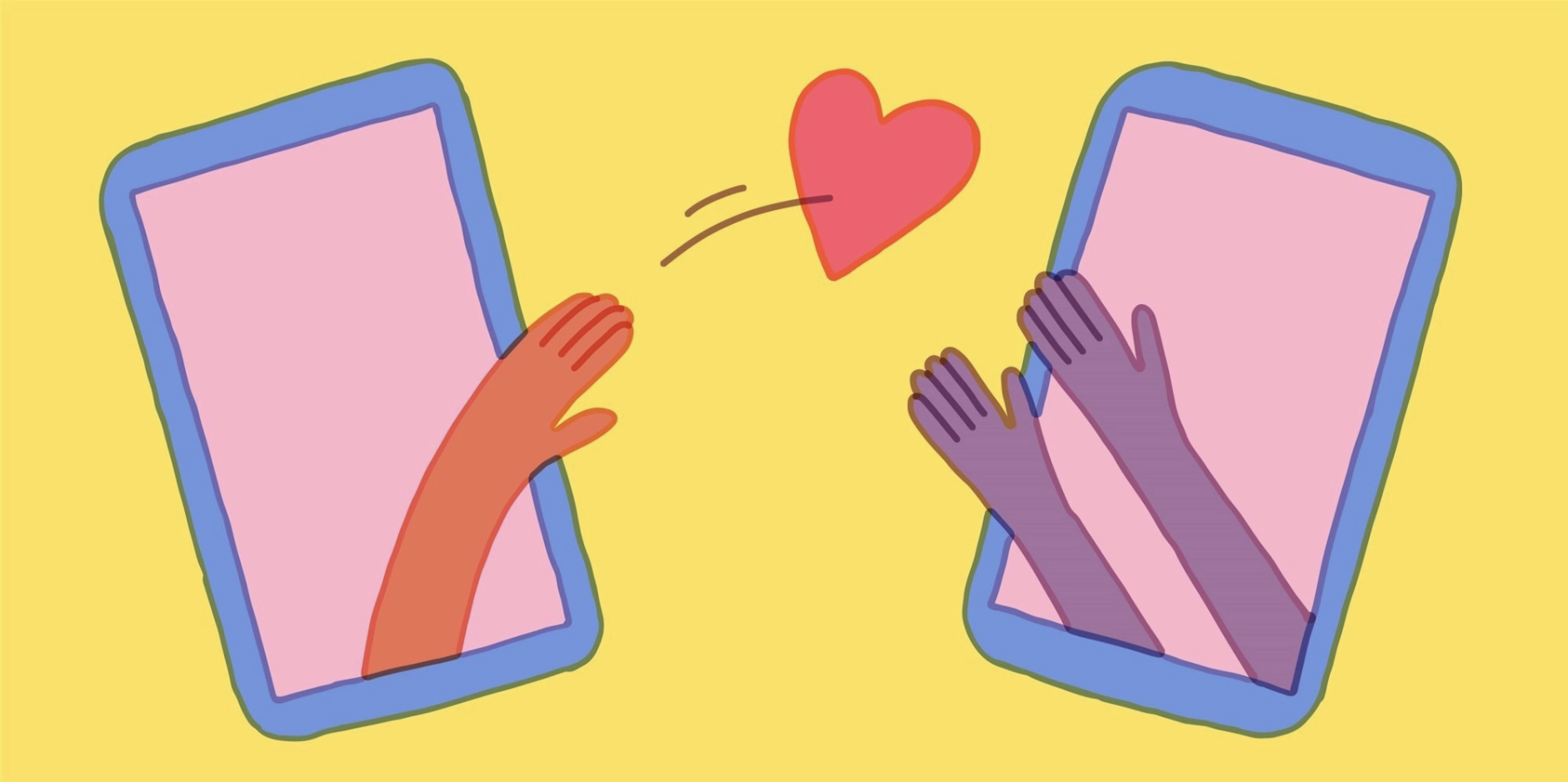 |
Many young people turn online platforms into their primary communication channel due to the advantage of quick connections without needing to leave home. Illustration: NBC |
The experiences of Nam and Linh reflect a reality for a segment of urban youth after more than a decade of booming online dating platforms. Many young people choose online platforms as their primary means of meeting others due to convenience, speed, and not having to leave home. However, behind this convenience are subtle impacts on mental health.
A 2025 Forbes Health survey revealed that 78% of US users are tired of dating apps, with Gen Z accounting for 79%. Data from the Pew Research Center also noted that users increasingly view online connections negatively due to a lack of depth. Meanwhile, data from the Hindustan Times in early 2026 showed that 79% of Indian Gen Z are experiencing "dating-app burnout." Currently, Vietnam lacks similar statistics.
However, Clinical Psychologist Vuong Nguyen Toan Thien, Professional Director of Lumos Psychological Consulting and Therapy Center, stated that the center receives numerous young people in Ho Chi Minh City seeking counseling for disorientation due to dating app dependence.
"When the search for a relationship transforms into a continuous process of screening, evaluation, and rejection, users easily fall into a state of self-doubt. The uncertainty after each swipe stimulates the dopamine release system, similar to the mechanism of gambling, causing users to form a reflex for seeking virtual validation," Mr. Thien explained.
Several international studies have noted this correlation. A survey published in the journal BMC Psychology indicated that dating app users experienced higher levels of depression and stress compared to non-users. The uncertainty of each swipe stimulates the dopamine mechanism like a random reward, gradually turning the search for validation into a dependent habit.
This is accompanied by the phenomenon of choice overload. Research published in Computers in Human Behavior noted that exposure to too many profiles increases the fear of being single, reduces self-esteem, and pushes users towards viewing potential partners as "commodities." Additionally, the act of suddenly cutting off communication, known as ghosting, leaves lasting emotional damage due to the lack of clear closure.
Experts suggest that technology should not be blamed as the sole cause of emotional exhaustion among young people.
"Dating apps are merely a bridge, a tool that accurately reflects the need for quick connections in the fast-paced urban rhythm of life. The problem lies not in the 'swiping' feature, but in the consumer mentality towards relationships," the expert stated, adding that many young people enter the virtual world with a mindset of seeking instant gratification or viewing others as a catalog of goods to constantly compare.
When users lack emotional filters and real-life communication skills, they can easily turn a tool meant to expand relationships into a trap that isolates them.
To avoid emotional exhaustion, Mr. Thien advises young people to set clear boundaries: browse for only 15-20 minutes per session, with a maximum of one to two sessions a day, avoid using apps close to bedtime, focus on deep conversations with two or three people instead of spreading themselves thin, and avoid opening the app as a reflex whenever feeling sad or lonely.
"A healthy relationship does not begin with the number of likes on a screen, but with the ability of two people to see and understand each other in real life," Mr. Thien emphasized.
Users should recognize early warning signs of mental distress, such as opening the app habitually, feeling empty after swiping, or allowing the number of "matches" to determine their self-worth. If signs of overload appear, it is advisable to take a one to two-week break from using the app to restore a healthy routine and sleep pattern.
Nam has deleted all dating apps and joined a weekend running club. Linh enrolled in a pottery class and practices conversing with her classmates. Both admit that quitting the apps is not easy, and they still occasionally feel the urge to reinstall them.
One weekend evening, Nam picked up his phone out of old habit, paused for a few seconds on the home screen, then put it back down. "It’s been a long time since I slept without swiping," he said.
My Y