Doctor Nguyen Anh Dung, Head of Thoracic and Vascular Surgery at Tam Anh General Hospital TP HCM, reported that prolonged, untreated myasthenia gravis affects limb movement and causes muscle weakness.
CT scan results revealed a large thymic tumor, approximately 3 cm in size, located directly in front of the heart, behind the breastbone. The tumor exhibited several suspicious malignant characteristics, including irregular borders, heterogeneous contrast enhancement, and signs of invasion into the lung and pericardium.
Doctor Dung prescribed "two-in-one" laparoscopic surgery to remove the suspected malignant tumor and excise the fatty tissue of the thymus. This procedure aims to alleviate myasthenia gravis symptoms and enhance the effectiveness of subsequent medication treatment for the condition.
After making three small incisions on the chest wall, and with the aid of a magnified 3D camera system, Doctor Dung used specialized endoscopic instruments to access the chest area. The team then dissected and removed the entire thymus gland containing the tumor, along with surrounding fatty tissues. Concurrently, the surgical team detached the tumor from the pericardium and resected a portion of the lung that the tumor had invaded.
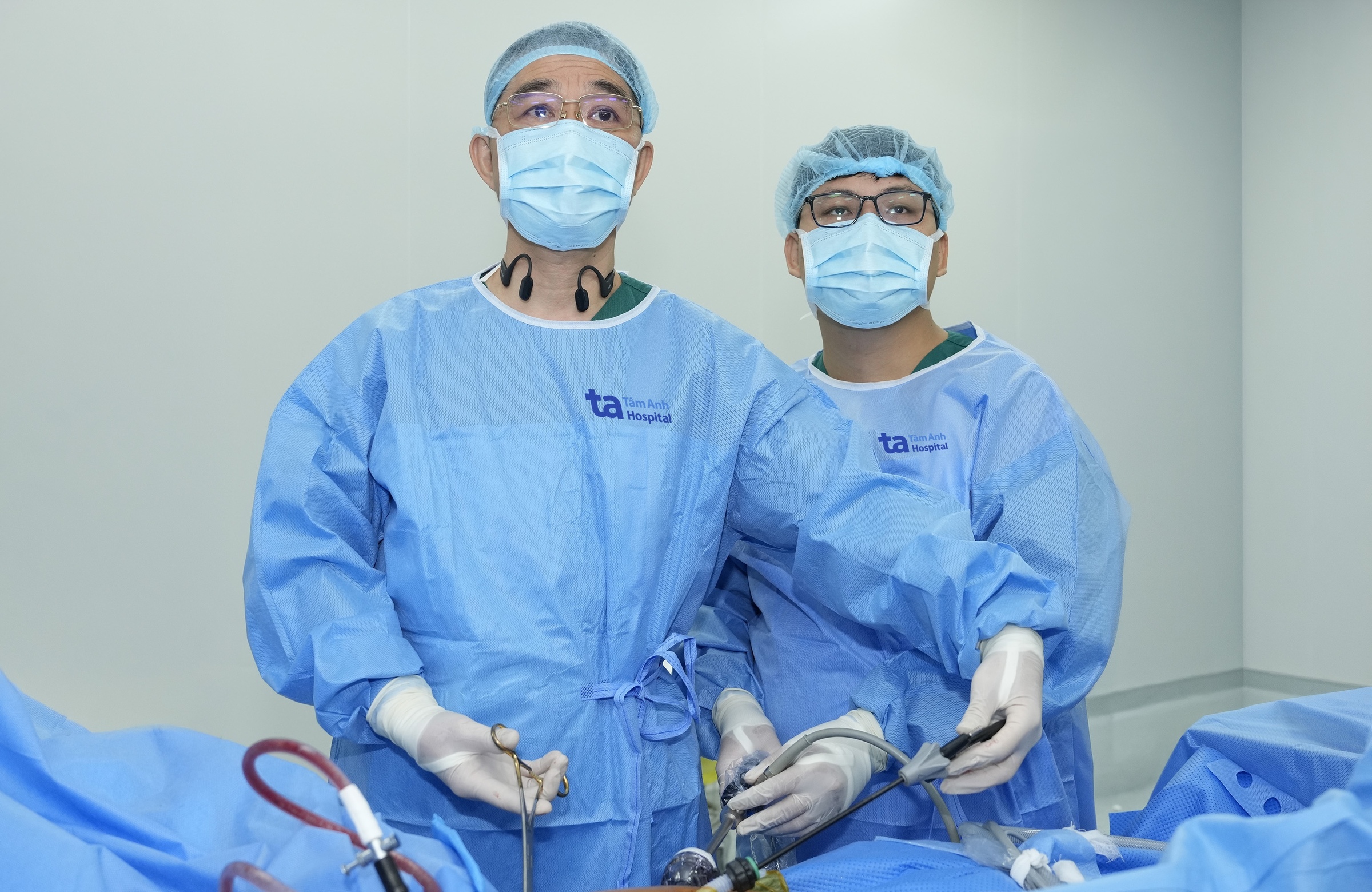 |
Doctor Dung (left) and the surgical team perform a thymoma resection for the patient. Photo: Tam Anh General Hospital. |
Thanks to the minimally invasive surgery, the patient recovered quickly, with significantly improved myasthenia gravis symptoms and minimal incision pain. She was discharged after three days. Subsequent pathology results confirmed the tumor was malignant. According to Doctor Dung, early detection and timely treatment provided Ms. Tuyet with a favorable prognosis for recovery, and she will continue with supplementary chemo-radiation therapy.
Myasthenia gravis is a chronic neuromuscular disorder that causes muscle weakness in voluntary muscle groups, especially those innervated by cranial nerves, such as: facial muscles, masticatory muscles, ocular muscles, and bulbar muscles. Doctor Dung noted that the incidence of myasthenia gravis is approximately 15-20 per 100,000 people. The condition is often associated with thymic abnormalities, such as thymomas, and can be triggered by stress, infection, or genetic factors.
If patients experience unusual, persistent fatigue symptoms, such as drooping eyelids, limb muscle weakness, or difficulty swallowing, they should consult a thoracic surgery or neurology specialist for examination and diagnosis. Early-stage treatment enhances effectiveness and accelerates recovery.
Bao Anh
* The patient's name has been changed.
| Readers can submit questions about cancer here for doctors to answer. |