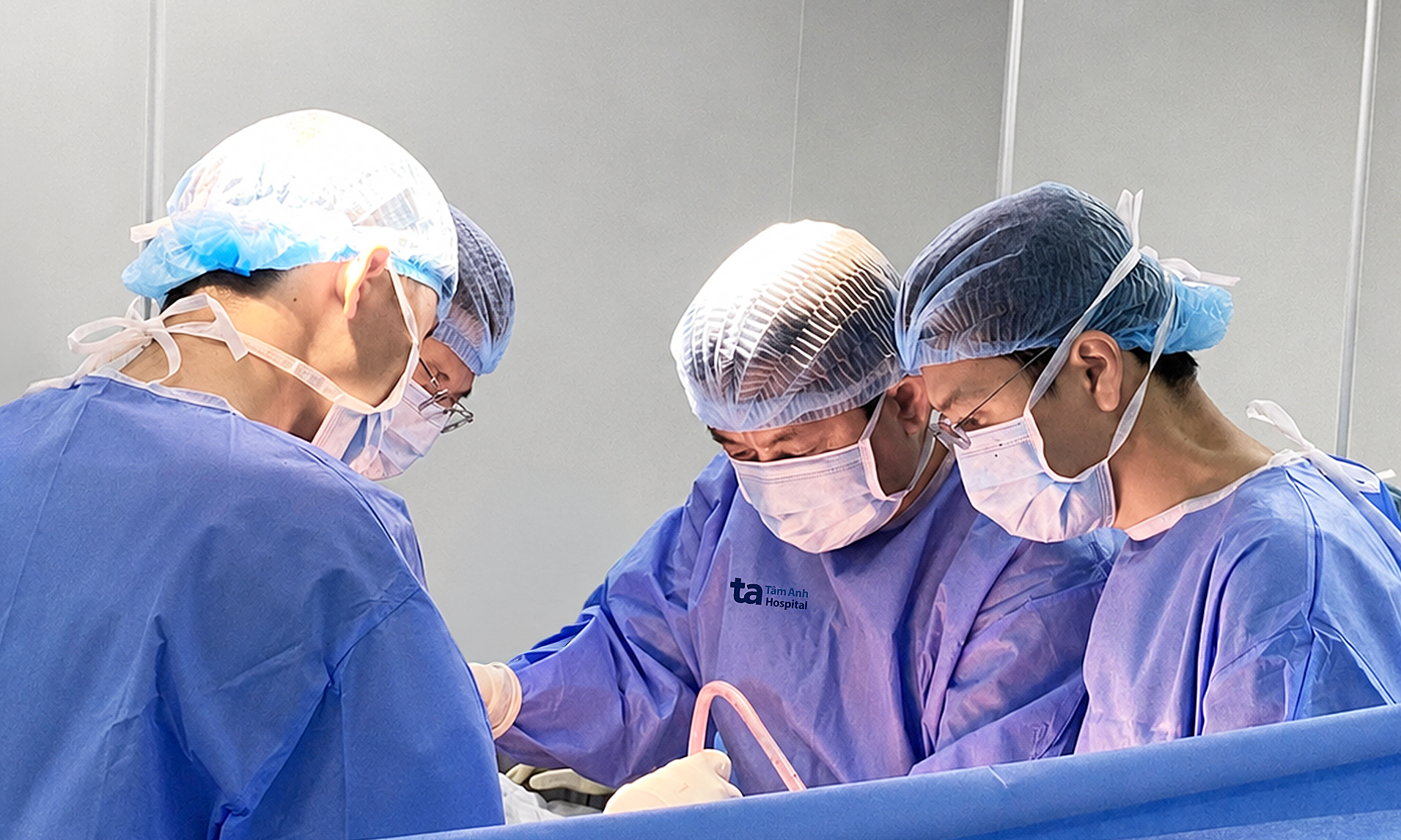
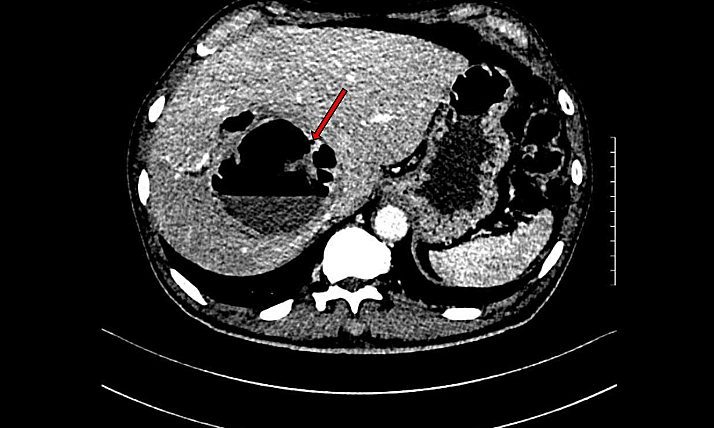
Dr. Le Xuan Ngoc, from the Department of Otorhinolaryngology at Hong Ngoc Yen Ninh General Hospital, reported on a 27-month-old patient. The child was brought in by his family for examination due to frequently pulling and scratching his left ear. The family initially believed the child had a common middle ear infection.
Ear endoscopy and computed tomography (CT) scan results revealed a congenital cholesteatoma mass behind the left eardrum. This mass had spread extensively in the middle ear, causing destruction of the ossicular chain, which transmits sound from the eardrum to the cochlea. Without intervention, the child faced a risk of hearing loss and other complications.
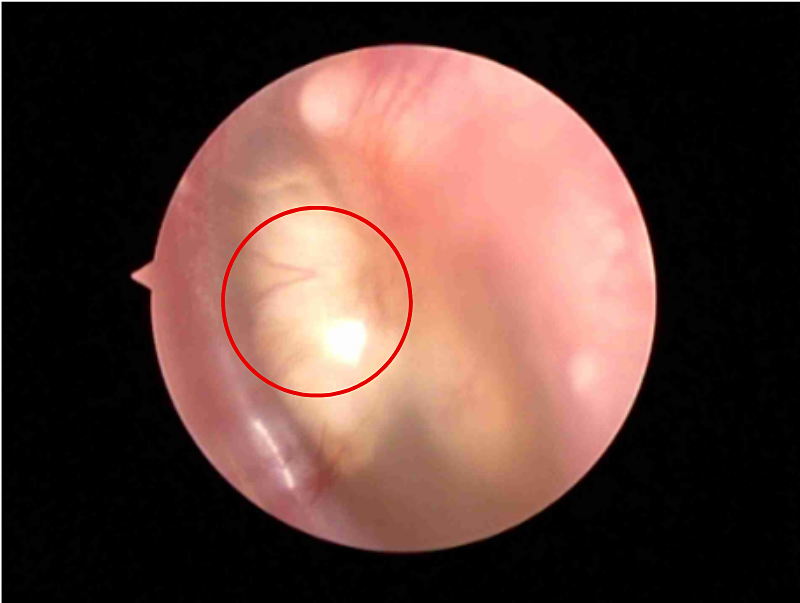 |
The cholesteatoma mass located behind the patient's left eardrum. *Photo: Provided by the hospital.*
Dr. Ngoc noted this was a rapidly progressing congenital cholesteatoma. The lesion had spread throughout the middle ear, invading the mastoid antrum and destroying the ossicular chain. Continued spread could lead to hearing loss, dizziness, facial paralysis, or intracranial complications.
Due to the child's young age, accurately assessing the extent of hearing loss was challenging. Therefore, the treatment objective was to remove the lesion, preserve middle ear structures as much as possible, and monitor hearing function as the child developed.
Given the risk of the lesion further destroying middle ear structures, the medical team decided on early surgery. Dr. Ngoc performed an endoscopic tympanotomy to remove the cholesteatoma mass and reconstruct the ossicular chain.
During the surgery, the doctor used the patient's own incus, drilling and shaping it into a conductive pillar to re-establish the connection between the malleus and stapes. This technique aimed to restore the sound conduction pathway and preserve the child's hearing function.
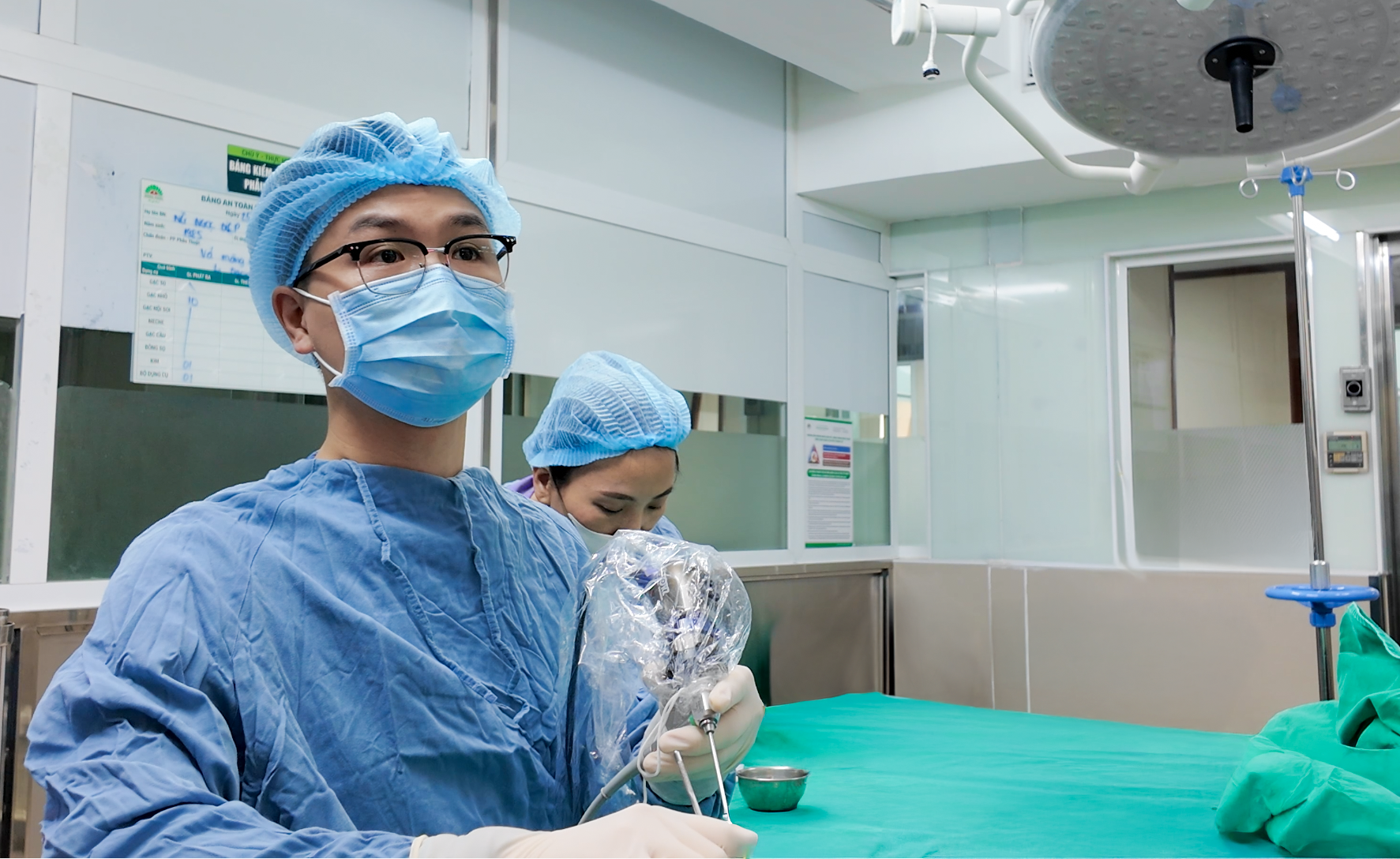 |
Dr. Le Xuan Ngoc performing endoscopic ear surgery. *Photo: Provided by the hospital.*
After surgery, the child showed no signs of facial nerve damage, vestibular disorders, or intracranial complication signs. The postoperative course was stable. The patient will undergo regular follow-ups to assess hearing recovery.
According to Dr. Ngoc, congenital cholesteatoma in young children can progress silently. In its early stages, the condition presents few symptoms, making it easy to overlook. By the time it is detected, the lesion may have already spread extensively in the middle ear.
 |
The doctor explaining the post-surgery results to the patient's family. *Photo: Provided by the hospital.*
The surgical journey to remove the bone-eroding substance for baby Nhat Anh. *Video: Hong Ngoc General Hospital.*
Van Ha