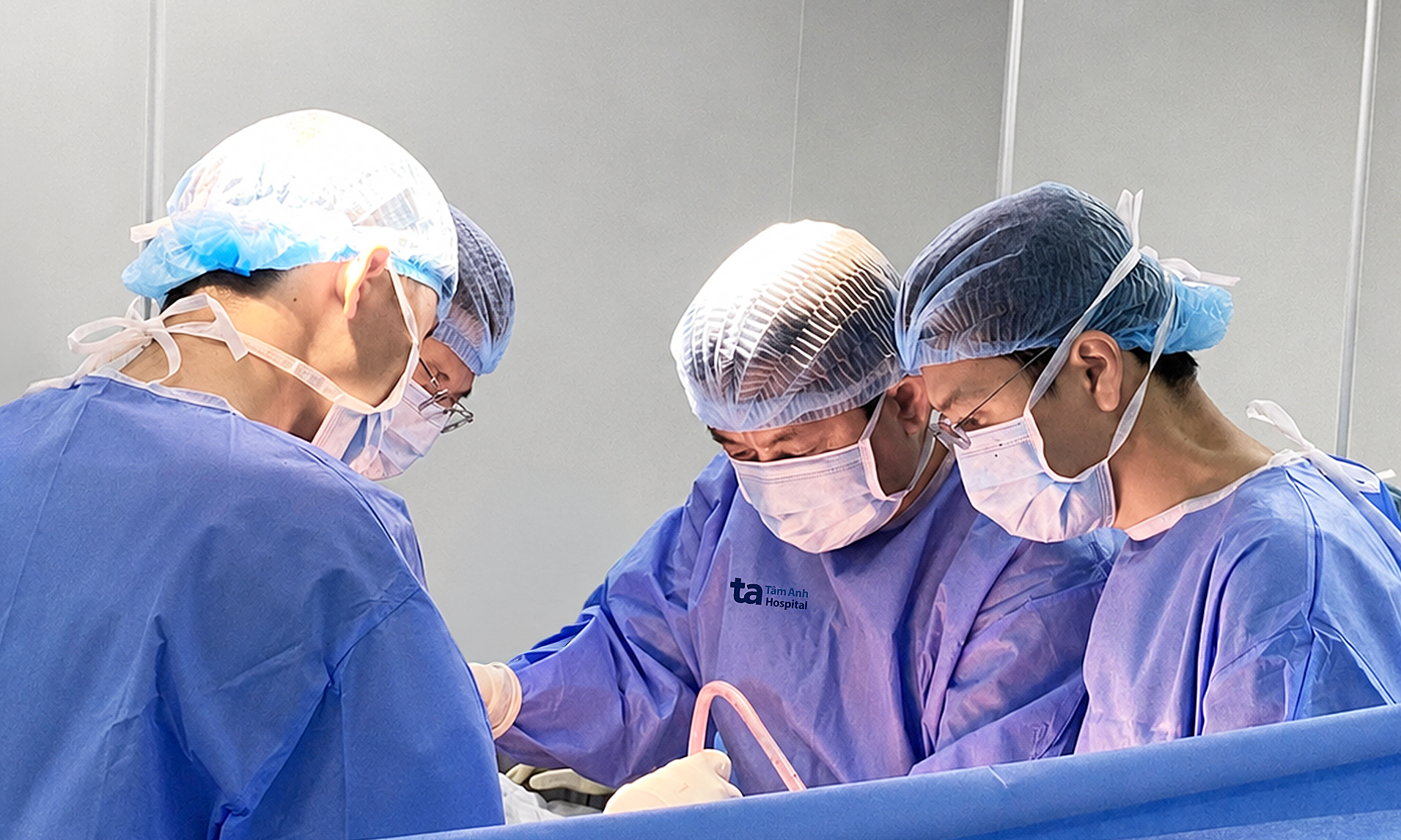
At Tam Anh General Clinic District 7, a computed tomography (CT) scan of Mr. Quan’s abdomen revealed a liver abscess at risk of rupture. Concurrently, coronary CT angiography indicated severe narrowing in three major coronary arteries due to high-risk atherosclerotic plaque, posing a threat of sudden death from acute myocardial infarction.
Doctor Pham Thi Thu Thao, from the General Internal Medicine Department, explained the patient faced two acute, co-occurring conditions, necessitating a clear treatment priority. Prioritizing coronary artery stenting would require high-dose anticoagulants, significantly increasing the risk of massive hemorrhage. This would prevent drainage of the liver abscess, potentially leading to rupture, peritonitis, and sepsis. Conversely, addressing the liver injury first carried the risk that surgical stress could trigger an acute myocardial infarction during the operation, given the heart's blood supply was already 70-80% blocked.
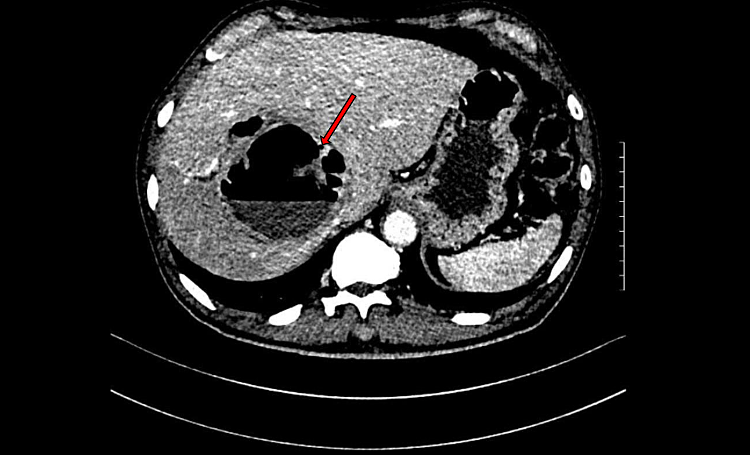 |
CT scan of the abdomen showing a large abscess in the right liver (red arrow). *Tam Anh General Hospital*.
Following a consultation, doctors prioritized treating the liver abscess due to its rupture risk. The severe coronary artery disease, while serious, had not yet manifested clinical symptoms and could be temporarily managed with optimal medical treatment.
The medical team proceeded to treat the liver injury first, employing a minimally invasive ultrasound-guided drainage procedure. This approach effectively removed the pus, prevented abscess rupture, alleviated strain on the circulatory system, and ensured the patient’s cardiac safety.
Doctors inserted a specialized catheter into the abscess core, draining nearly 300 ml of thick pus. Following this intervention, the patient recovered well, showing no further symptoms of fever or lethargy.
Once the patient’s physical condition recovered and the infection completely resolved, coronary artery stents were placed. This procedure addressed the atherosclerotic narrowing that had obstructed blood flow to the heart.
Doctor Thao emphasized that dangerous conditions such as early-stage liver abscess and coronary artery narrowing often progress silently. Without timely detection, patients face a high risk of severe complications. Regular health check-ups and screenings, guided by medical advice, are crucial for early detection before symptoms emerge, thereby increasing the likelihood of successful treatment.
By Thao Vy
*Patient's name has been changed*
| Readers can submit questions about digestive diseases here for doctors to answer |