For patients with chronic kidney failure requiring regular dialysis, extended travel has always posed a significant challenge. Behind the desire to explore new places lies the concern of maintaining a regular dialysis schedule, typically two to three times a week, essential for survival. Ms. Huong, from Hanoi, exemplified this situation. With a fixed dialysis schedule on Tuesdays, Thursdays, and Saturdays, venturing away from her familiar medical center was a risky decision.
"I had to research the medical facilities at the destination very carefully to see if they could meet my dialysis needs before deciding to visit Con Dao," she told doctors about her family's trip at the end of June.
Con Dao is often associated with its sacred historical and spiritual significance, pristine blue seas, and fresh air. Now, the island holds another meaning for patients with underlying conditions: a place where they can confidently enjoy life.
After her dialysis session at the Con Dao Special Zone Military-Civilian Medical Center, Ms. Huong felt a complete sense of relief. "The island is beautiful, the people are friendly, and what I like most is that people with underlying conditions, like kidney disease, can still travel without worry," she said.
The hemodialysis unit at the Con Dao Special Zone Military-Civilian Medical Center began operations in May, with comprehensive professional support from Thong Nhat Hospital.
Associate Professor, Doctor Nguyen Bach, Head of the Nephrology and Dialysis Department at Thong Nhat Hospital, stated that the total preparation time to operationalize the dialysis system in Con Dao was only 20 days—a record for the industry. Typically, this process takes at least 6 months due to stringent requirements for water treatment systems and specialized personnel.
The Con Dao unit is equipped with two hemodialysis machines and a modern, European-standard reverse osmosis (RO) water treatment system. From consumables and equipment to professional procedures, everything is comparable to major facilities on the mainland. Patients undergoing dialysis in Con Dao still receive full health insurance (BHYT) benefits, just as they would at other hospitals.
To ensure stable operation under the island's unique conditions, such as the risk of equipment corrosion from salt and difficulties in transporting supplies during rough seas, Thong Nhat Hospital dispatches a rotating team to be on duty for 6 months. The hospital also provides all initial essential medications and supplies, while directly transferring technology to two local medical teams.
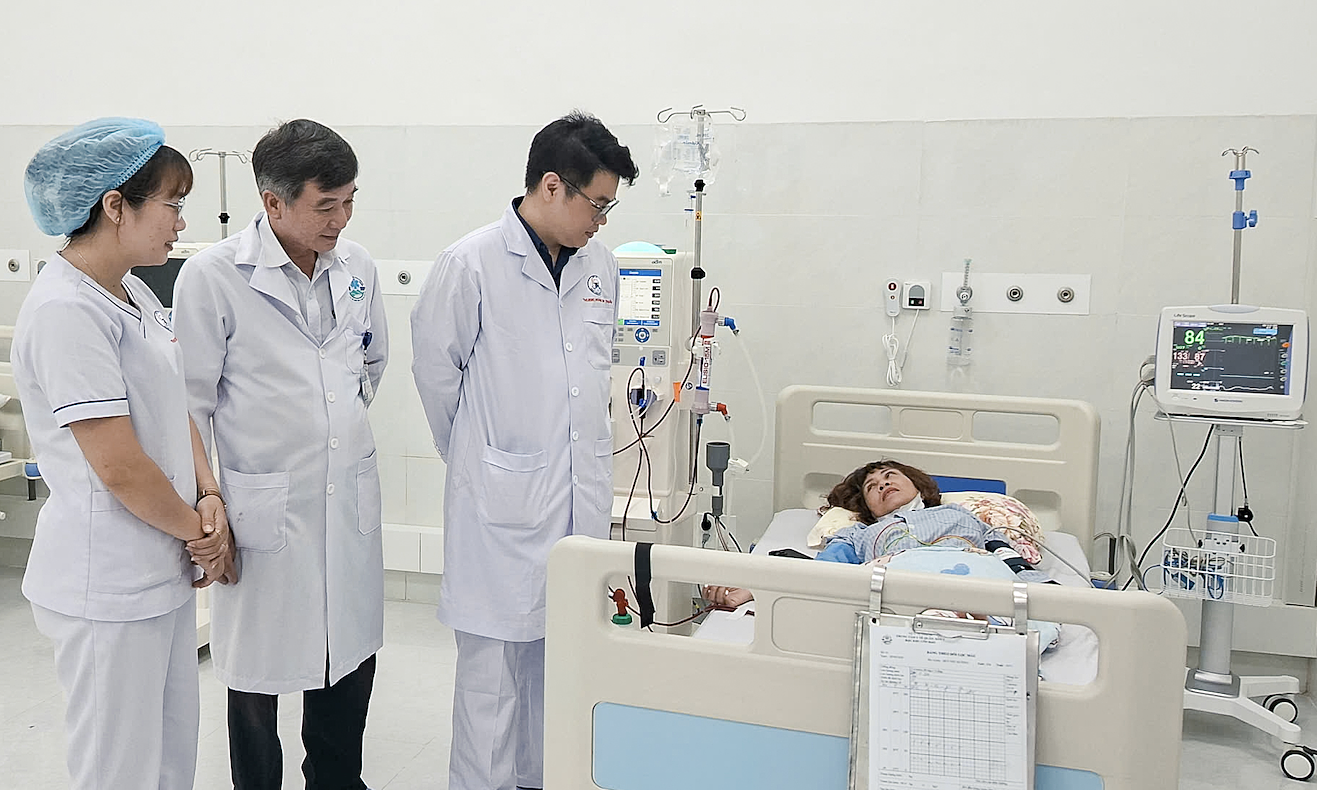 |
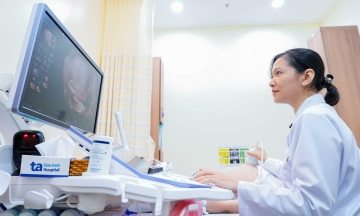
Doctors examining a dialysis patient in Con Dao. Photo: Provided by the hospital |
Doctor Le Cong Tho, Director of the Con Dao Special Zone Military-Civilian Medical Center, stated that since the unit began operations, five patients from Ho Chi Minh City have visited Con Dao to combine tourism with regular dialysis. This exemplifies a healthcare service model integrated with tourism development.
According to Associate Professor, Doctor Le Dinh Thanh, Director of Thong Nhat Hospital, for kidney failure patients, the most valuable aspect is not just safe treatment, but also the ability to live a normal life. "We aim not only to ensure access to high-quality medical services for island residents but also to open Con Dao's doors to kidney failure patients nationwide," he said.
Director of Ho Chi Minh City Department of Health, Tang Chi Thuong, praised the dialysis unit's operation as a significant milestone for the city's healthcare sector and Con Dao residents, officially ending the situation where many kidney failure patients had to leave their homes, rent accommodation, and separate from their families to sustain life. Mastering dialysis technology not only helps residents stay on the island but also unlocks medical tourism potential. Kidney failure patients from various localities can now confidently visit Con Dao for tourism and relaxation without worrying about treatment interruptions.
Con Dao, formerly part of Ba Ria - Vung Tau province and now a special zone of Ho Chi Minh City, is receiving increased healthcare investment to improve the quality of medical examination and treatment. Starting September 2025, the Ho Chi Minh City Department of Health will regularly rotate doctors from major hospitals to work at the Con Dao Special Zone Military-Civilian Medical Center. This will enable the center to gradually master many specialized techniques, effectively manage complex cases directly on the island, and significantly reduce instances requiring patient transfers by boat or helicopter.
My Y
*Character's name has been changed.