Hanoi Police recently uncovered a ring slaughtering and distributing 3,600 pigs infected with african swine fever, amounting to 300 tons of meat. This operation identified Cuong Phat company as the primary distributor, supplying pork to several schools in Hanoi. In a dispatch sent to localities on 1/4, the ministry of health highlighted the severe implications of this incident, noting that such events escalate disease transmission risks, compromise food safety, and pose long-term health threats, particularly to children, students, and workers.
The specific list of schools that received food from Cuong Phat company has not yet been publicly disclosed.
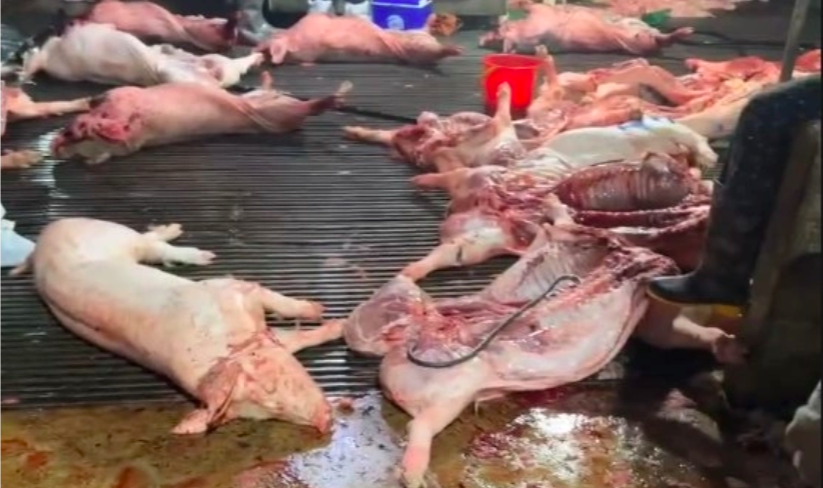 |
Inside the slaughterhouse discovered by police. Photo: Hanoi Police |
Inside the slaughterhouse discovered by police. Photo: Hanoi Police
Following this discovery, the People's Committees of provinces and cities are mandated to overhaul their management of collective kitchens. This includes increasing unannounced inspections and publicly reporting all violations to inform the community. Organizations operating these kitchens must strictly adhere to food safety regulations, meticulously control raw material sourcing, and ensure complete product traceability.
For educational institutions with boarding, semi-boarding kitchens, and canteens, the ministry of health emphasizes enhanced school responsibility. Schools are required to intensify food safety education for teachers and students. Additionally, parents and school organizations should actively participate in monitoring kitchen operations.
African swine fever (ASF) is a highly contagious viral disease exclusively affecting pigs, including domestic and wild varieties. The causative virus (ASFV) spreads rapidly and results in a nearly 100% mortality rate in infected animals. Associate Professor Doctor Nguyen Duy Thinh, an expert from the Institute of Biotechnology and Food at Hanoi University of Science and Technology, explained that the ASFV is highly persistent in the environment and easily transmitted among pigs through both respiratory and digestive routes. Humans can inadvertently spread the virus through contact with infected pens, transport vehicles, or contaminated pork products.
The consumption of diseased pork poses significant health hazards to humans. Farmers often struggle with early detection, allowing the disease to quickly infect entire herds. Infected pigs are also prone to other illnesses like blue ear disease, flu, and typhoid. Even after thorough cooking, toxins can remain in the meat. Ingesting such meat can lead to severe symptoms, including diarrhea, vomiting, and potentially fatal septic shock. Furthermore, pork from sick or deceased animals can harbor other harmful bacteria and parasites, such as worms, Salmonella, and E.coli, causing food poisoning or serious digestive illnesses in humans. Ensuring truly safe pork necessitates rigorous scrutiny of the entire supply chain; any lapse in this process dramatically elevates contamination risks.