Ms. Binh suffered from infertility for many years, with five failed embryo transfers due to multiple endometrial polyps. After two previous surgeries, she successfully conceived and gave birth to her first child 5 years ago. Recently, as she prepared for another in vitro fertilization (IVF) cycle, she experienced abnormal vaginal bleeding and sought examination at Tam Anh General Hospital Ho Chi Minh City.
Doctor Nguyen Thi Thanh Tam, from the Obstetrics and Gynecology Center, stated that Ms. Binh had a recurrence of multiple endometrial polyps of unknown cause, with numerous polyps scattered throughout her uterus, the largest measuring 1x1.6 cm. The repeated recurrence of multiple polyps, despite previous surgeries, indicates an abnormal proliferative tendency in her endometrial lining. Large polyps can occupy space and deform the uterine cavity, potentially making it difficult for an embryo to implant during Ms. Binh’s next transfer.
Additionally, Ms. Binh is infected with high-risk HPV type 16 and has experienced recurrent mild cervical precancerous lesions (CIN 1). While this lesion often resolves spontaneously, its recurrence indicates active virus, posing a potential risk of progression and impacting the outcome of in vitro fertilization.
Ms. Binh received treatment for uterine polyps before embryo transfer, with close monitoring of her HPV infection and cervical lesions. Doctor Tam and her team performed hysteroscopic surgery via the vaginal canal into the uterus, removing all polyps while minimizing damage to the uterine cavity. Pathology results confirmed the lesions were benign, and Ms. Binh was discharged one day after the surgery.
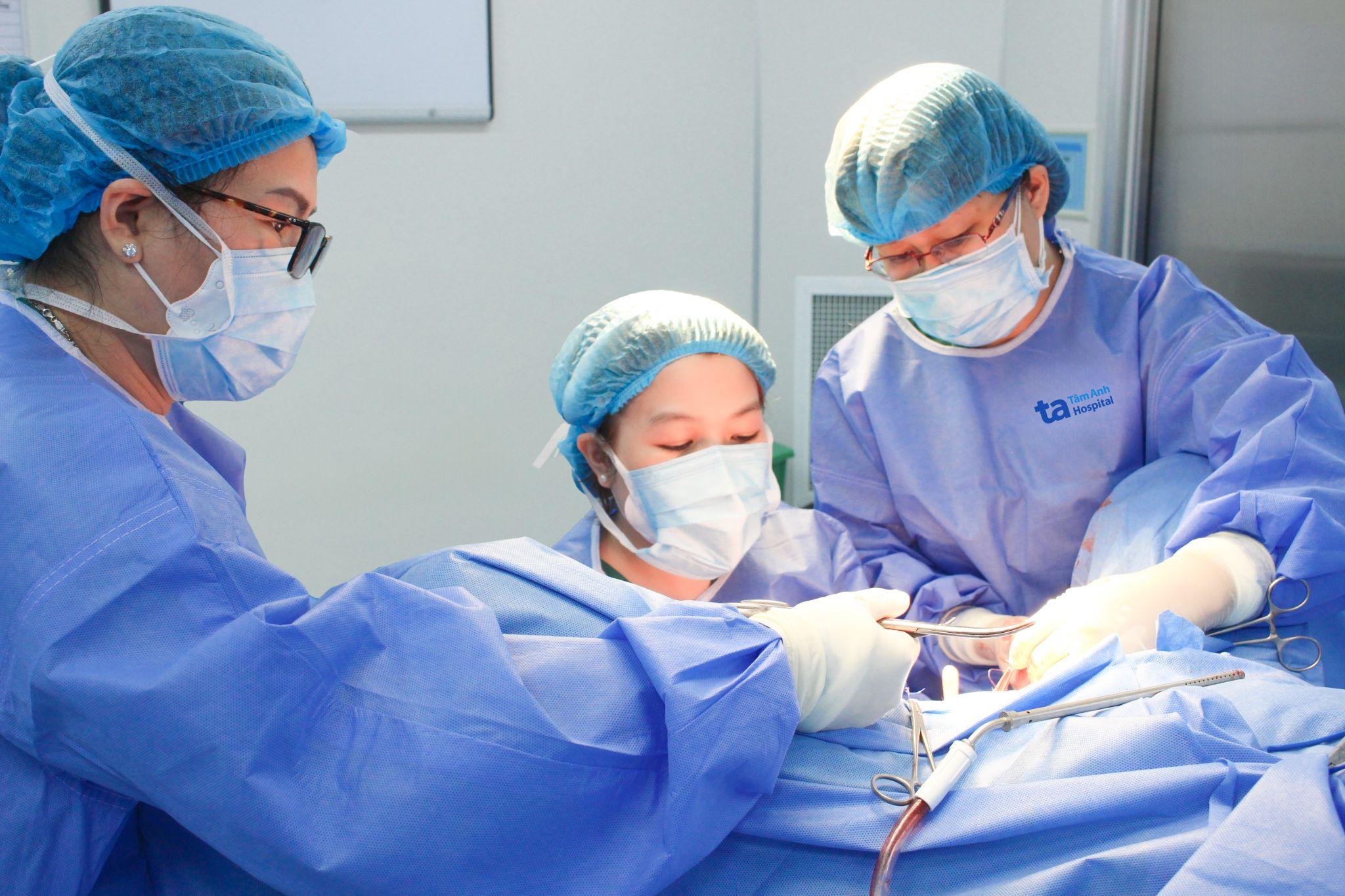 |
Doctor Tam and her team preparing for transvaginal hysteroscopic polypectomy for a patient. Photo: Tam Anh General Hospital
Doctor Tam explains that most uterine polyps are small, benign growths. Some cases can cause complications such as difficulty conceiving, heavy menstrual bleeding, post-menopausal vaginal bleeding, or precancerous conditions. The exact cause of the disease remains undetermined. Risk factors may include sensitivity to estrogen hormones, older age, perimenopause, and obesity.
Patients with polyps may not exhibit any symptoms, or they might experience abnormal vaginal bleeding. Other related signs include abdominal pain, pelvic pain, irregular periods, post-coital bleeding, difficulty conceiving, or infertility. Asymptomatic patients with low risk may receive conservative treatment through regular monitoring. For cases requiring intervention, doctors perform minimally invasive hysteroscopic polypectomy to treat the polyps while maximally preserving healthy uterine lining, ensuring the patient's reproductive function.
To prevent the condition, Doctor Tam recommends: maintaining a healthy weight, eating a balanced diet, and undergoing gynecological check-ups every 6 months to one year, or immediately if any unusual symptoms appear.
Ngoc Chau
*Patient's name has been changed
| Readers can submit questions about obstetrics and gynecology here for doctors to answer |