Master of Science Tran Van Dan, from the Department of Physical Therapy and Rehabilitation at Tam Anh General Hospital Hanoi, states that prolonged sitting for office workers reduces blood circulation and increases pressure on the musculoskeletal system. Muscles in the neck, shoulders, and back, when held in one position for too long, can easily contract and stiffen, leading to persistent or recurring aches. Prolonged sitting also negatively impacts overall health, slowing metabolism and increasing the risk of overweight, metabolic disorders, and cardiovascular diseases.
Office workers should incorporate movement breaks into their work routine to improve health, reduce stress, and enhance productivity. Master of Science Dan introduces three exercises that office workers can perform right at their desks to relieve neck, shoulder, and upper back fatigue.
Chin tuck exercise
Sit with a straight back, looking forward. Place a finger on your chin and slowly push your chin and head straight back until you feel a stretch in your head and neck area. Hold this position for 5 seconds, then return to the starting position. Repeat this process about 10 times or more until you feel comfortable. This exercise helps restore a neutral head posture and is recommended for those with "turtle neck syndrome"—a forward head posture and rounded shoulders often seen in office workers.
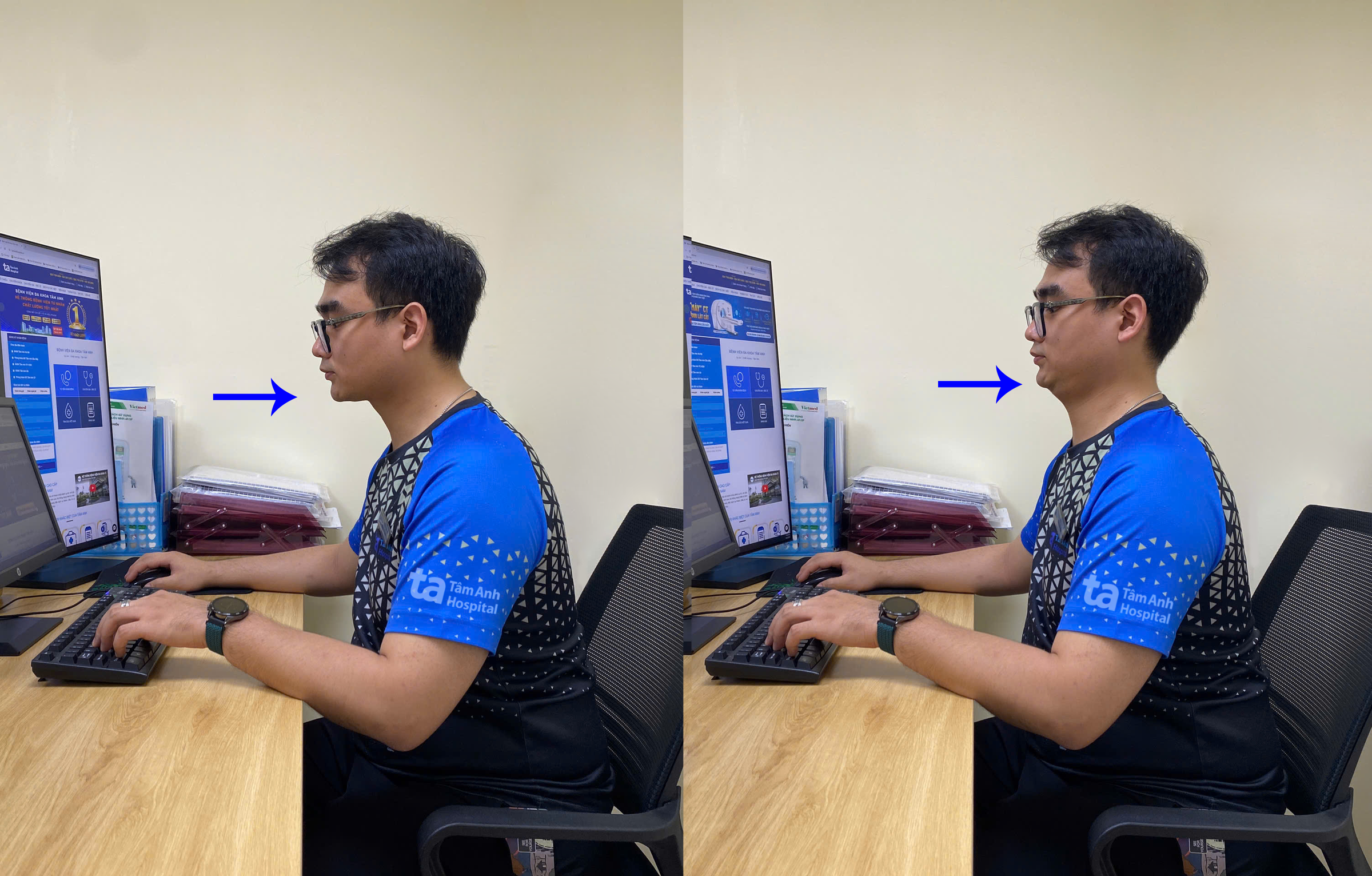 |
A physical therapist demonstrates the chin tuck exercise. Photo: Tam Anh General Hospital
Side neck stretch
Sit straight. Place your right hand on the top of your head, on the left side, and gently tilt your head to the right, using your hand to help bring your ear closer to your right shoulder. Your left hand can be placed under your buttocks or gripping the side of the chair to increase the stretch. Remember not to shrug your shoulder towards your ear; keep your shoulder completely relaxed. Hold for 20-30 seconds, then switch sides. This exercise focuses on stretching the upper trapezius muscle, which often becomes stiff from computer work.
Shoulder blade squeeze
Squeezing your shoulder blades helps open the chest and activate the muscle groups between the two shoulder blades, reducing strain on the neck area.
Stand or sit straight with your arms relaxed by your sides. Slowly squeeze your two shoulder blades together (imagine trying to hold a pen between your shoulder blades). Hold this position for 5 seconds, then release. Perform 10-15 repetitions.
 |
Therapy with a shockwave machine helps office workers reduce neck and shoulder pain. Photo: Tam Anh General Hospital
Master of Science Dan notes that in addition to these three exercises, office workers should maintain correct sitting posture: sit with a straight back and adjust their chair, desk, and monitor to eye level. This helps maintain physiological posture, limiting muscle tension and pain caused by incorrect posture. After every 45-60 minutes of continuous sitting, it is advisable to stand up and walk around to stimulate blood circulation and reduce stagnation in the muscles and shoulder joints.
If shoulder pain persists and does not improve with regular exercise, individuals should seek examination at a multispecialty hospital, combining musculoskeletal, physical therapy, and rehabilitation expertise. Depending on the condition, doctors may prescribe initial methods such as electrotherapy, ultrasound therapy, shockwave therapy, and movement exercises to help relax, reduce aches, and enhance the effectiveness of combined training.
Thanh Long