By late march, the bald patch on Tieu's head had expanded to the size of a palm. The Yangtse Evening Post reported on 31/3 that Tieu first noticed a fingertip-sized area of hair loss in january, which rapidly deteriorated.
The hair loss began after Tieu lost her job late last year and decided to become a "full-time tutor" for her 14-year-old son. Her son struggled with math, often working on homework until 11 PM or early morning. Tieu stayed up every night to assist him, even using artificial intelligence (AI) to find answers and explain concepts. The dual pressure of academic performance and physical exhaustion left her depleted.
Currently, Tieu is undergoing nerve block injections and taking oral medication. She has also transferred her son's tutoring responsibilities to her husband to find peace of mind.
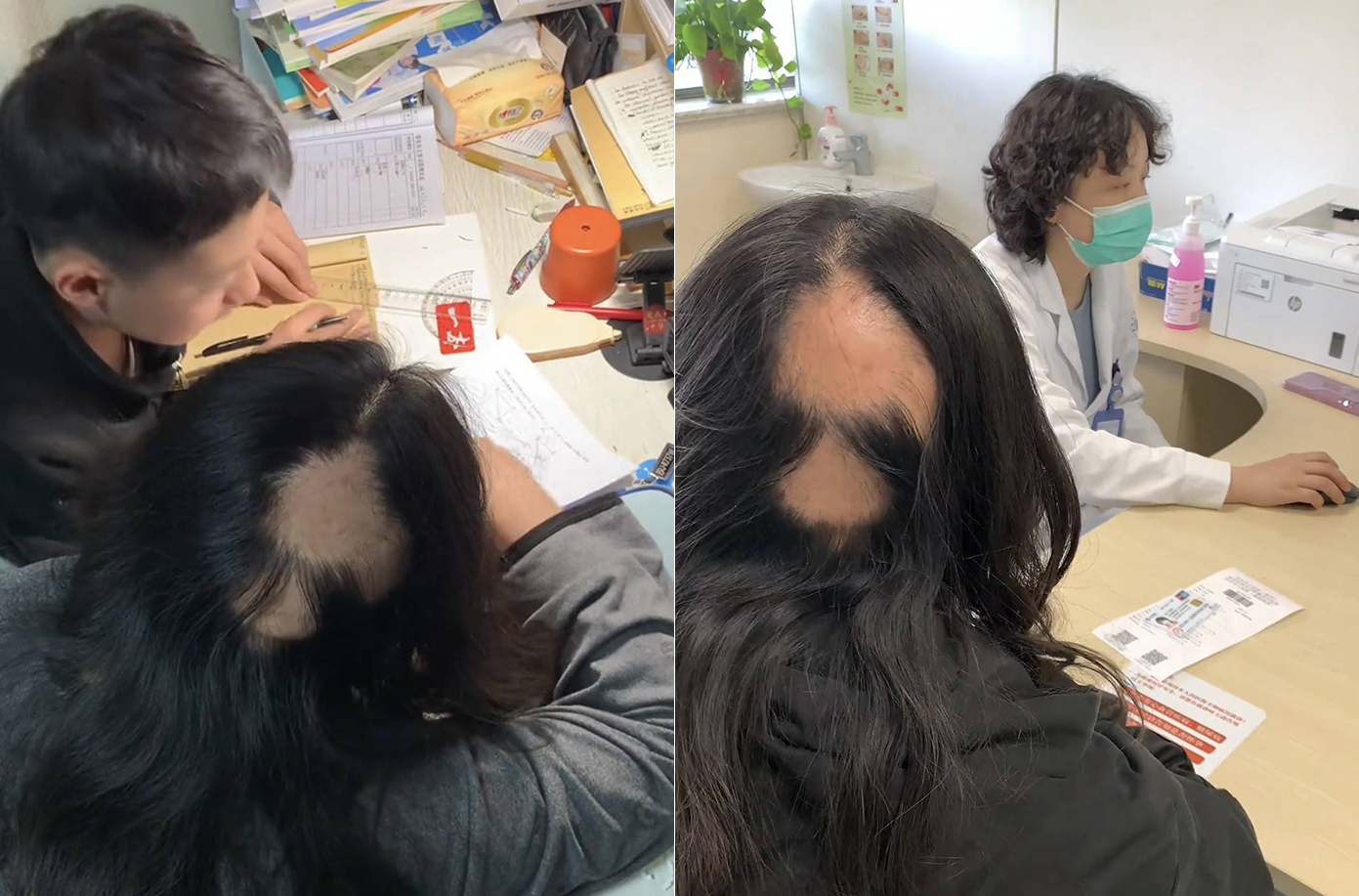 |
Tieu experienced patchy hair loss after prolonged anxiety and stress from late-night study sessions with her son. The Cover/Yangtse Evening Post.
Doctor Dai Kiet, Deputy Director and Head of Dermatology at Nanjing No. 1 Hospital, explained that prolonged mental stress, grief, or anxiety is a primary trigger for acute hair loss, commonly known as alopecia areata. This condition is often referred to colloquially as "ghost pulling hair" because individuals experience hair loss without pain, itching, or inflammation. Doctor Kiet warned that the immune system attacking hair follicles can lead to widespread baldness, potentially resulting in the loss of all body hair.
Treatment for this condition emphasizes emotional management, alongside topical Minoxidil solution and microneedling to stimulate hair regrowth. For severe cases, doctors may prescribe JAK inhibitors or oral hormones. Recovery typically spans six months to one year. However, the condition is prone to relapse if psychological stress returns. Doctor Kiet advises a healthy lifestyle, adequate sleep, and sufficient carbohydrate intake, warning against extreme carbohydrate-restricted diets.
Medical professionals recommend immediate consultation for any unusual symptoms to accurately determine the underlying cause. Doctor Dai Kiet highlighted that some children exhibit trichotillomania, a condition where they pull their own hair, often triggered by exam pressure or a lack of attention, rather than a dermatological illness. Furthermore, individuals should be aware of "pseudo alopecia areata," which can be caused by conditions such as syphilis, systemic lupus erythematosus, dermatomyositis, or scleroderma. These systemic diseases often result in permanent scarring, impeding hair follicle recovery.
Binh Minh (According to Yangtse Evening Post, The Cover)