Hung, 35, sought medical attention at Tam Anh General Hospital Hanoi due to severe abdominal pain and four months of persistent left lower back discomfort, painful urination, and occasional blood in his urine. A computed tomography (CT) scan revealed a 5x7 mm stone in the lower one-third of his left ureter, close to the bladder. This obstruction of urine flow from the kidney resulted in grade two left kidney dilation.
Master of Science, Doctor Tran Van Quy, from the Urology - Andrology Department at Tam Anh General Hospital Hanoi, explained that ureteral stones are a common condition. The ureter is the tube that transports urine from the kidney to the bladder. When a stone becomes impacted, urine backs up, causing dilation of the renal pelvis and ureter. Prolonged obstruction leads to a gradual decline in kidney function. If the kidney dilates significantly and loses function, a nephrectomy (kidney removal) may be necessary.
Hung was treated with retrograde ureteral laser lithotripsy. This minimally invasive endoscopic procedure broke the stone into small fragments, which were then removed, clearing the obstruction without incisions. He was discharged shortly after his urethral catheter and ureteral stent were removed after 48 hours.
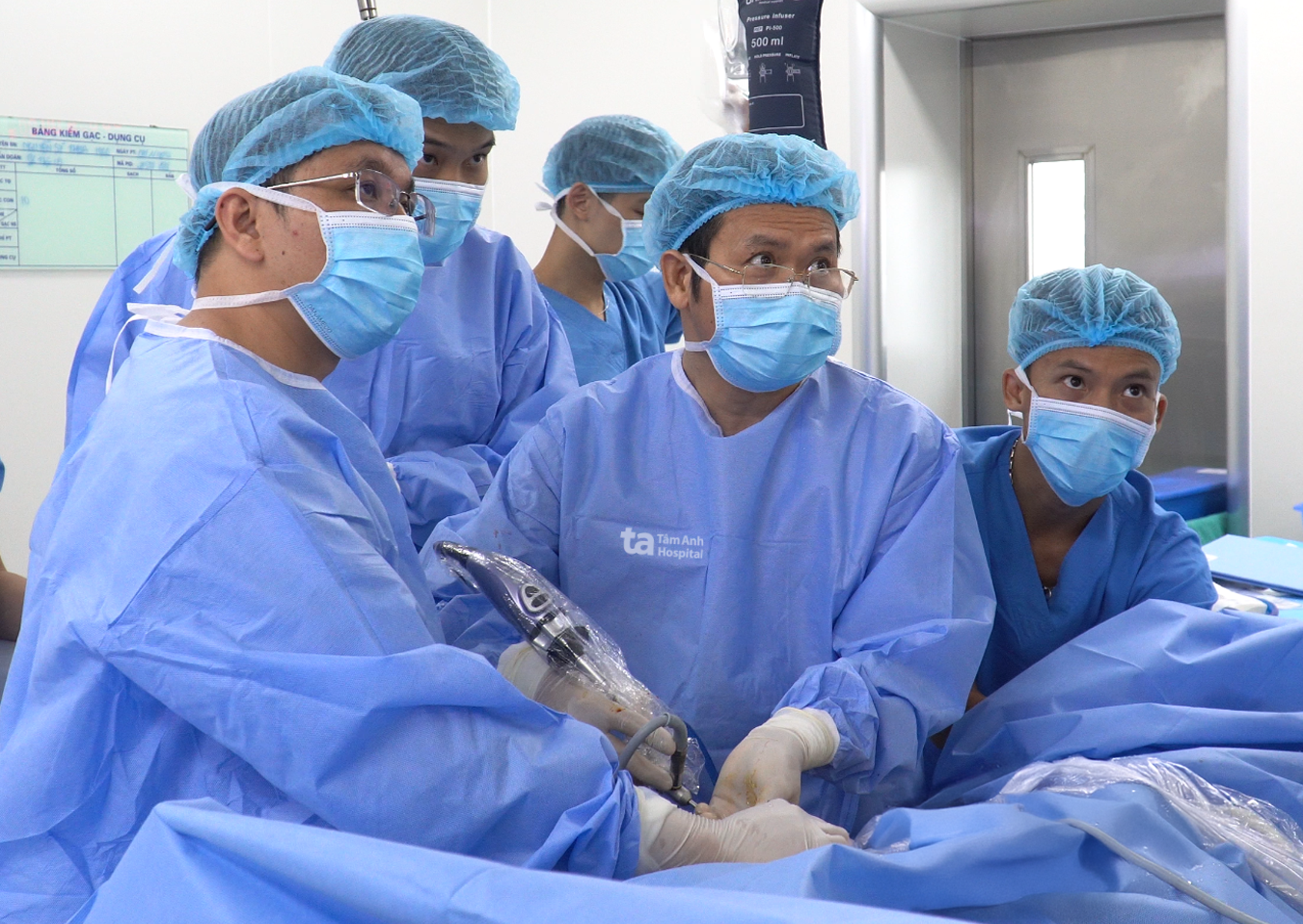 |
A team performs ureteral laser lithotripsy. *Photo: Tam Anh General Hospital*
Ureteral stones affect various age groups, often linked to insufficient water intake, high-salt diets, excessive animal protein consumption, or metabolic disorders. Common symptoms include renal colic, painful urination, and blood in the urine. According to Doctor Quy, most cases detected early can be managed with minimally invasive procedures. Prolonged obstruction can lead to urinary tract infections and decreased kidney function, potentially resulting in complete loss of kidney function.
Individuals experiencing symptoms such as blood in the urine, even if it occurs only one time, or persistent dull lower back pain, should seek early specialist consultation to identify the cause and receive timely treatment. Preventing urinary stones involves adequate hydration, reducing dietary salt, managing weight, and undergoing regular health check-ups.
Thu Giang
*Patient's name has been changed