His colleagues performed cardiopulmonary resuscitation and called for an ambulance, which transported him to Phuong Dong General Hospital. Doctors worked tirelessly to resuscitate the patient's heart and lungs using defibrillation and vasopressor medications. It took 50 minutes for his heartbeat to return.
The patient was then transferred to E Hospital in a deep coma, suffering from severe respiratory failure, with wet rales in his lungs and pink foam spewing through the endotracheal tube – signs of acute pulmonary edema due to acute left heart failure. A coronary angiogram revealed a 99% blockage in the left anterior descending artery (LAD), the most important artery supplying the heart.
"This was a consequence of widespread atherosclerosis. Previously, the patient experienced mild angina, which he mistakenly attributed to acid reflux," said Master of Science, Doctor Nguyen Dinh Thuyen, from the Intensive Care Department.
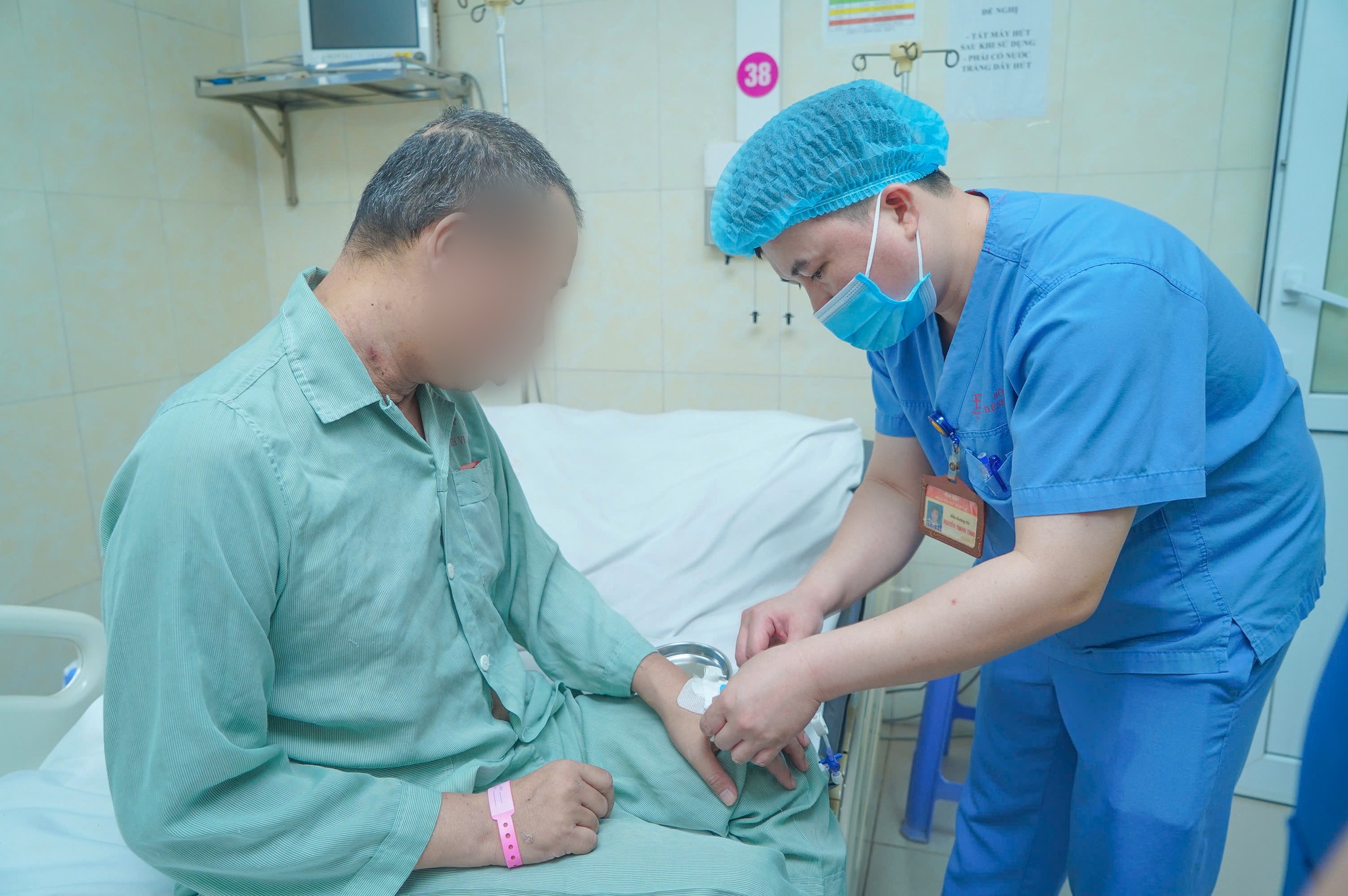 |
The doctor re-examines the patient before discharge. Photo: Thanh Xuan |
Faced with this critical condition, the hospital activated a red alert system, coordinating multiple specialties to implement a comprehensive and intensive treatment strategy to "revive" the patient's heart. Interventional cardiologists placed a stent, clearing the blockage and restoring coronary blood flow to salvage the acutely ischemic myocardial region and prevent dangerous arrhythmias.
Following percutaneous coronary intervention, the patient was transferred to the Internal Medicine Intensive Care and Anti-poisoning Department for continued treatment. There, doctors decided to implement targeted temperature management (TTM), which involves "cooling" the body to protect the brain from damage after circulatory arrest, addressing post-cardiac arrest syndrome.
By actively inducing a temporary "hibernation" state and maintaining an optimal core temperature, doctors minimized brain metabolism, prevented a cascade of inflammatory reactions and widespread brain edema. This approach helped preserve cognitive function, a key factor enabling the patient to regain consciousness and speak normally later on.
The patient received intensive resuscitation for multi-organ failure, including continuous dialysis and mechanical ventilation. Concurrently, a continuous renal replacement therapy (CRRT) system functioned as an "artificial kidney" to eliminate metabolic toxins, balance acid-base levels, and manage fluid overload. Combined with a lung-protective artificial ventilation strategy, medical staff provided maximum respiratory and homeostatic support, allowing the weakened organs time to recover after nearly one hour of circulatory arrest.
On 23/2, after 40 days of intensive care, the patient made a miraculous recovery. From a deep coma, requiring mechanical ventilation and dialysis to sustain life, he is now fully conscious, talking, and eating normally. Holding his discharge papers in the early spring days of the new year, the patient remarked that he felt like he had returned from "the brink of death."
Doctor Phan Thao Nguyen, Deputy Director of E Hospital, emphasized that this patient's case highlights the danger of cardiovascular diseases, which progress silently but can lead to unpredictable consequences. Many patients confuse angina with gastroesophageal reflux disease (GERD).
Symptoms such as burping, heartburn, and epigastric pain radiating behind the sternum in individuals with risk factors could actually indicate myocardial ischemia. Therefore, patients should be aware: if these symptoms appear during exertion, in cold weather, or are accompanied by shortness of breath and sweating, they should seek cardiac screening at a cardiology facility instead of self-medicating at home.
Patients need to control the root causes of issues, such as dyslipidemia. Even if cholesterol levels are not excessively high, a sedentary lifestyle can still lead to the formation of coronary atherosclerosis and sudden blockages. Additionally, comprehensive screenings like echocardiograms, stress electrocardiograms, or coronary CT scans are necessary to detect early cardiovascular abnormalities in high-risk individuals.
Le Nga