Mr. Phuong, 49, recently underwent successful total hip replacement surgery after being diagnosed with late-stage avascular necrosis of his left femoral head. MRI results at Tam Anh General Clinic District 7 revealed subchondral bone collapse and femoral head deformity, causing him severe pain and significantly impairing his mobility. Dr. Truong Huu Bao, head of orthopedics and traumatology, confirmed that total hip replacement was the most suitable treatment.
Doctors opted for the minimally invasive SPAIRE technique, utilizing a posterior approach. This method preserves external rotator muscles, minimizing damage to tendons, muscles, and other soft tissues. The technique resulted in less blood loss, reduced pain, faster post-operative recovery, and a significantly lower risk of future dislocation. Mr. Phuong received a ceramic-on-ceramic artificial hip joint, where both the acetabular cup and femoral head are made of ceramic material. This implant offers high biocompatibility, low irritation, good durability, low wear, and a potential lifespan exceeding 25 years.
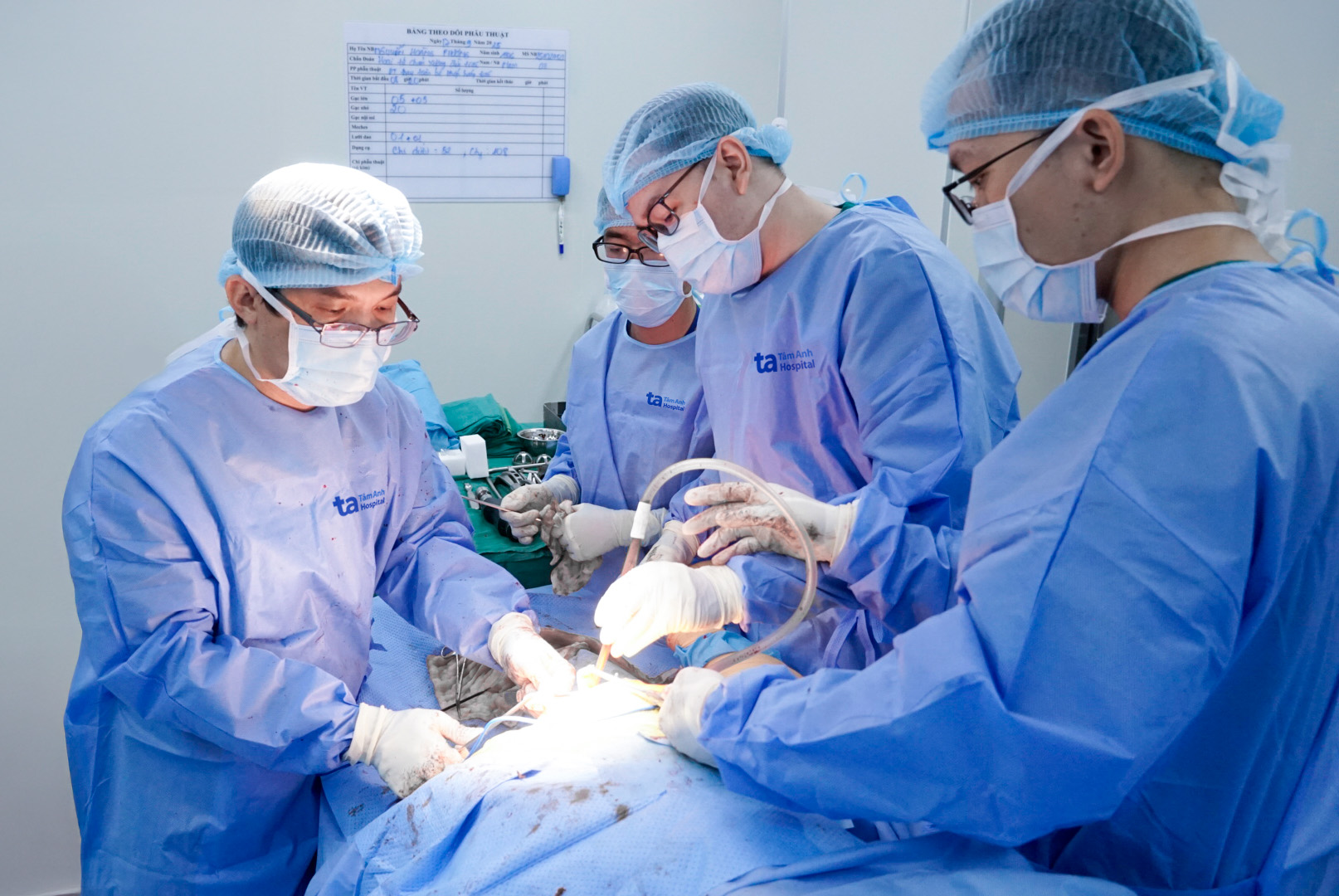 |
Dr. Bao (left) performing surgery on Mr. Phuong. *Photo: Tam Anh General Hospital* |
During the procedure, the surgeon made a 6 cm incision on the posterior aspect of the left thigh. Muscles were carefully retracted to access the hip joint, allowing for the removal of damaged bone, cartilage, and other affected components. The artificial joint was then precisely inserted. This method of muscle retraction, rather than cutting external rotator tendons, is crucial in preventing post-operative hip dislocation.
Mr. Phuong's recovery was remarkably swift. On the first day after surgery, he experienced almost no pain and was able to begin physical therapy. His health recovered well, and he was discharged the following day, a testament to the effectiveness of the advanced surgical technique.
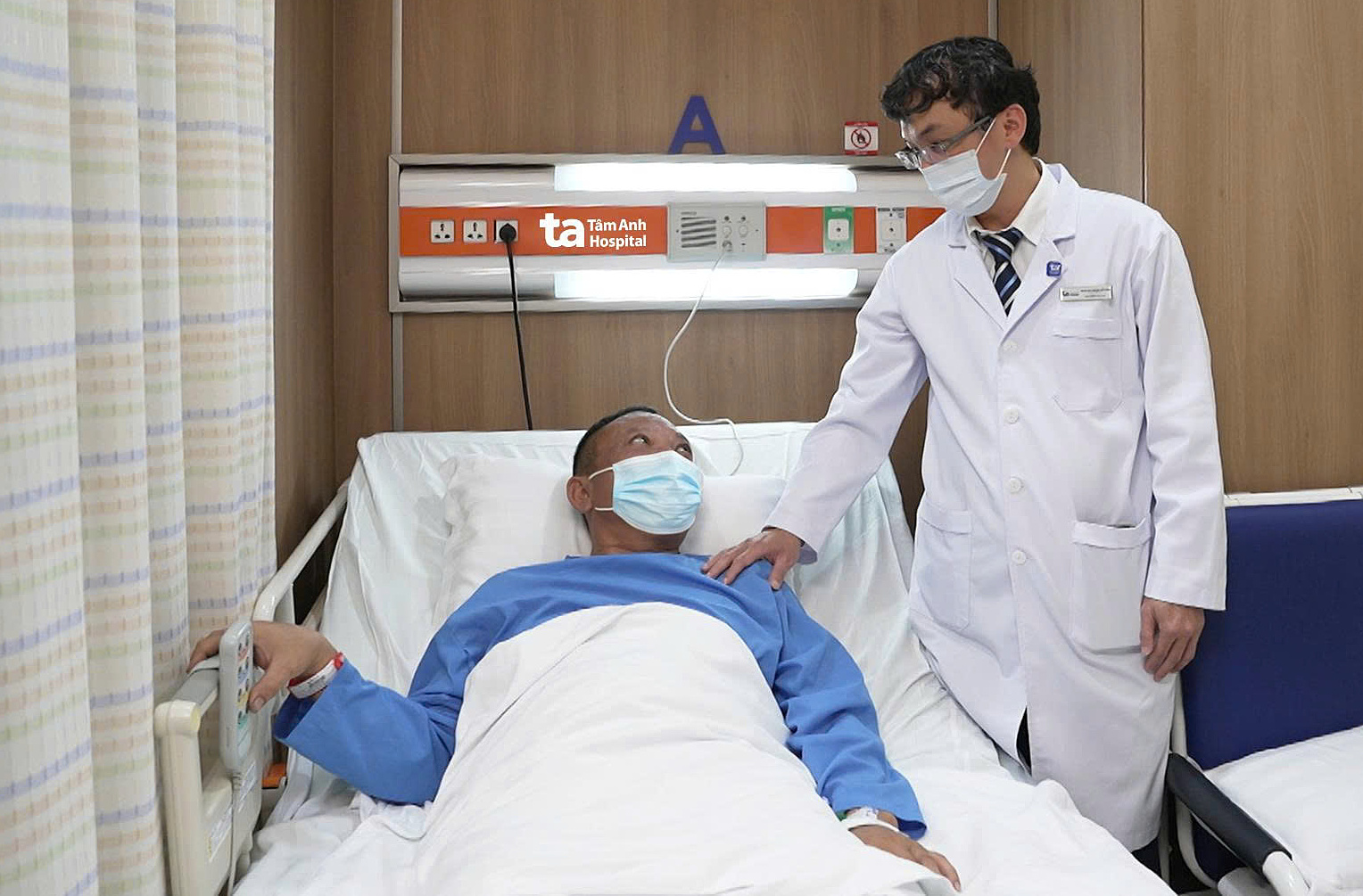 |
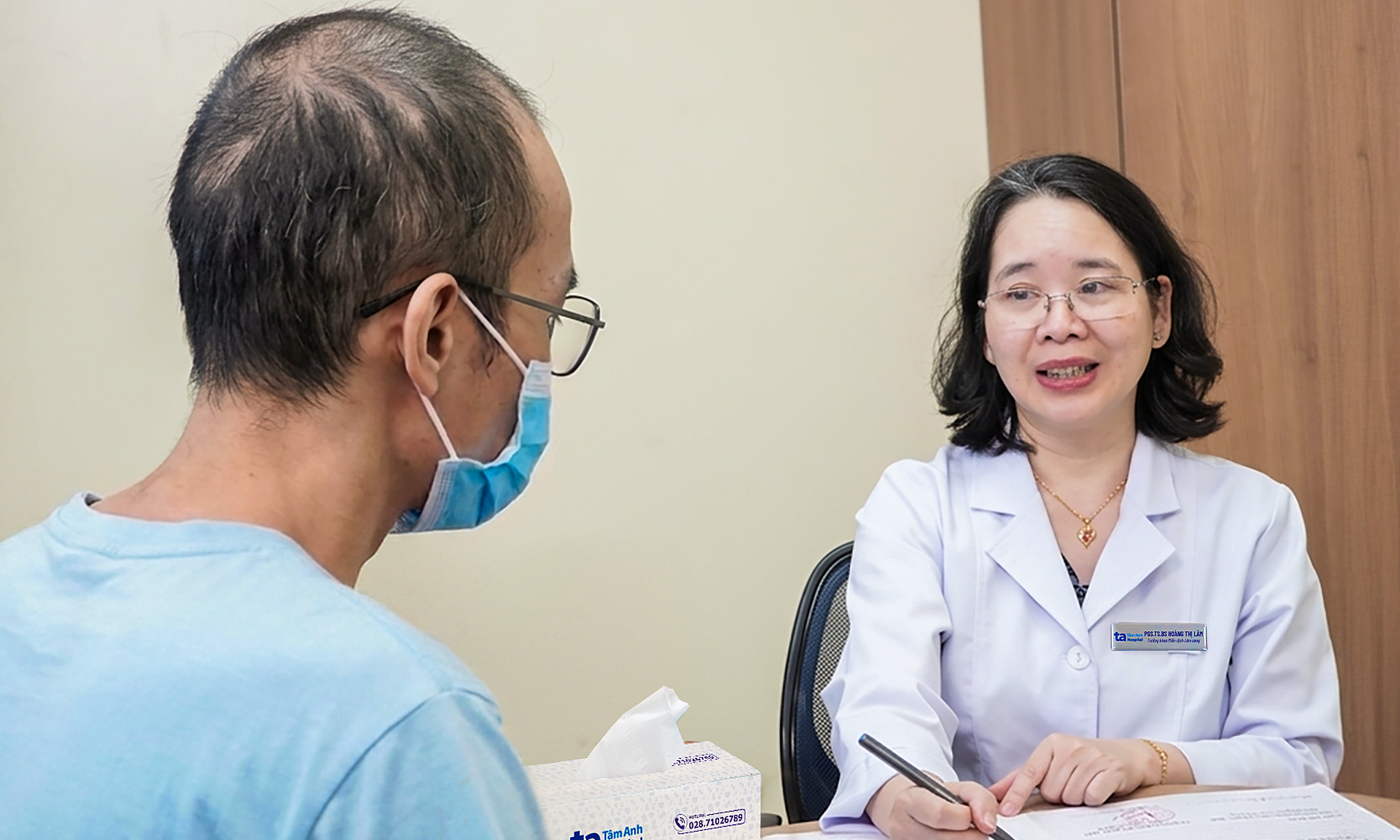
Dr. Bao visiting the patient before discharge. *Photo: Tam Anh General Hospital* |
Dr. Bao explained that femoral head necrosis occurs due to an insufficient blood supply, leading to bone and cartilage death. If not detected and treated promptly, patients risk severe consequences, including losing the ability to walk, experiencing spinal dysfunction, and developing body deformities. This condition typically affects men and tends to increase with age, making early diagnosis and intervention crucial.
Early-stage femoral head necrosis often presents with no clear symptoms. By the time abnormal signs appear, the condition has usually advanced. Patients then experience pronounced pain in the anterior groin area, radiating down the thigh. This pain worsens with movement or prolonged standing and subsides with rest. Range of motion becomes limited, making internal and external rotation, abduction, or adduction difficult, and squatting nearly impossible.
At this advanced stage, hip replacement surgery becomes a necessary treatment option. Many modern, minimally invasive surgical techniques are available today, enabling patients to regain mobility quickly and be discharged. These include approaches such as: the anterolateral ABMS approach, SuperPATH approach, Anterior Path, SPAIRE, and direct anterior approach, offering various options for optimal patient outcomes.
Phi Hong