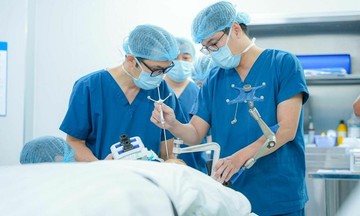
On 25/12, representatives from Lang Son General Hospital reported that the patient was admitted in critical condition, with a rapid pulse, severely low blood pressure, pale skin and mucous membranes, and dizziness. Just hours after taking the medication, she experienced massive vaginal bleeding, leading to hemorrhagic shock. Her obstetric history was complex, including 3 C-sections, 1 aspiration abortion, and 2 medical abortions.
Doctors diagnosed the patient with a pregnancy implanted in an old C-section scar. This is a particularly dangerous form of ectopic pregnancy, where the gestational sac develops directly at the C-section scar site instead of implanting within the uterine cavity. In women with multiple C-sections, the scar tissue is often thin, allowing the placental villi to deeply invade the uterine muscle, potentially even penetrating the bladder.
Self-administering abortion pills stimulated strong uterine contractions, causing the gestational sac to detach. However, at the C-section scar, the uterine muscle loses its ability to contract and control bleeding, leading to severe, life-threatening hemorrhage. Doctors performed ultrasound-guided uterine aspiration, removing all placental tissue and controlling the bleeding. The patient's health is now stable.
According to obstetric experts, if a scar pregnancy is diagnosed late or managed incorrectly, it can lead to uterine rupture, necessitating a hysterectomy, which impacts reproductive health or can cause death. Doctors advise women with a history of C-sections or uterine interventions to seek early medical examination upon pregnancy to accurately determine the implantation site. Medical abortion is only safe with a doctor's prescription and supervision, after ruling out abnormalities such as ectopic pregnancy. If dull lower abdominal pain or unusual bleeding occurs after a missed period, patients should immediately visit a specialized medical facility for timely treatment.
Thuy Quynh