


Cold weather constricts blood vessels, reducing blood flow to the brain and increasing sympathetic nervous system activity. This change often causes headaches, a heavy sensation in the head, and tension in the forehead or temples, especially in those sensitive to weather changes.
According to Doctor of Specialty Level I Dao Thi Yen Thuy, Head of the Department of Nutrition and Dietetics at Tam Anh General Hospital, Ho Chi Minh City, a diet lacking water, minerals, and healthy fats in cold weather can make headaches more frequent and prolonged. Below are five foods that help relieve headaches on cold days.
Fatty fish
Salmon, mackerel, and herring are rich in omega-3, which has anti-inflammatory properties, improves blood vessel elasticity, and increases blood flow to the brain. Omega-3 also helps regulate the neurotransmitter serotonin, thereby reducing headaches caused by vasoconstriction or stress. Consuming fatty fish two to three times per week, preferably steamed or pan-fried with minimal oil, can help reduce headache frequency during cold weather.
Dark leafy greens
Dark leafy greens such as spinach, bok choy, and kale contain magnesium and folate, two vital micronutrients for nerve function. Magnesium helps dilate cerebral blood vessels and reduces muscle spasms in the head and neck, while folate supports stable nerve impulse transmission. Eating one plate of green vegetables daily can limit dull, heavy headaches that occur in the early morning during cold weather.
Nuts
Nuts like almonds, walnuts, cashews, and pumpkin seeds are rich in magnesium, vitamin B2, and unsaturated fats. These nutrients reduce nerve irritation, stabilize brain energy, and limit headaches caused by low blood sugar or stress. A small handful of nuts (20-30 g) as a snack on cold days can help keep the body warmer and the brain functioning steadily.
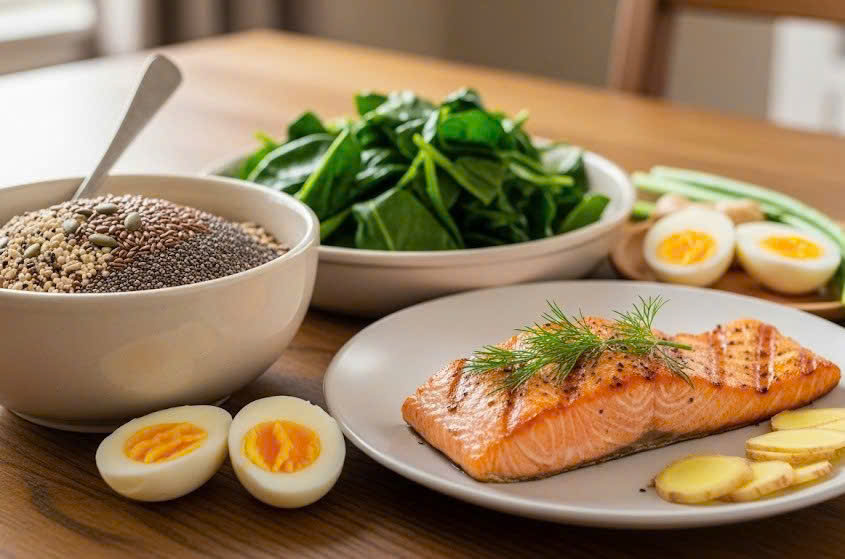 |
Foods containing magnesium, vitamin B2, and omega-3 help improve headaches in cold weather. Photo created by AI |
Ginger
Ginger has anti-inflammatory properties, reduces nausea, and supports blood circulation. The active compound gingerol in ginger soothes headaches related to inflammation, catching a cold, or sudden weather changes. Drinking one warm cup of ginger tea in the morning or afternoon can reduce the heavy sensation in the head during cold weather.
Bananas
Bananas are rich in potassium and vitamin B6, providing quick energy for the brain. Potassium helps balance electrolytes and limits vasoconstriction, while vitamin B6 supports the synthesis of serotonin, a pain-regulating substance. Eating one banana daily, especially in the morning or mid-day, will reduce headaches caused by fatigue or lack of energy when it's cold.
To limit headaches in cold weather, in addition to choosing appropriate foods, Doctor Thuy recommends drinking enough water even if not thirsty, keeping the head and neck warm, avoiding skipping meals, and limiting alcohol, beer, and strong coffee. Supplementing with other natural extracts like blueberry and ginkgo biloba can increase blood flow to the brain, improve neural connections, and reduce headaches and insomnia.
Individuals experiencing frequent, prolonged headaches, especially those accompanied by dizziness, nausea, numbness and weakness in limbs, worsening in cold weather, or not responding to dietary changes, should visit a neurology specialist for examination, diagnosis, and appropriate treatment.
Trong Nghia
| Readers can submit nutrition questions here for doctor's answers |





