Aging impacts muscle strength, balance, movement speed, and cardiorespiratory endurance. Simple tests can help individuals monitor these changes over time. However, results are for reference only and cannot precisely determine biological age or predict lifespan.
Standing up from the floor without using hands
The sit-to-stand from the floor test assesses strength, flexibility, and balance. To perform it, start in a standing position, cross your legs, lower yourself to the floor, and then stand back up without using hands, knees, or any support.
According to Verywell Health, this test requires coordination of multiple muscle groups and body control. Performing it well may indicate maintained motor function, while needing more support could reflect limitations in strength or balance.
Age, joint condition, past injuries, and familiarity with sitting on the floor also influence the results of this exercise. Individuals with joint pain or mobility issues should not attempt the movement if they feel unsafe.
Standing on one leg to check balance
Standing on one leg for about 30 seconds is a simple test of balance. As age increases, muscle strength and brain-muscle coordination can change, making it harder to maintain posture.
WebMD indicates that the ability to stand on one leg can reflect balance and fall risk, especially in older adults. Individuals performing the test should stand near a wall or a sturdy support to prevent loss of balance. However, balance also depends on age, physical condition, medical conditions, medications being used, and test conditions.
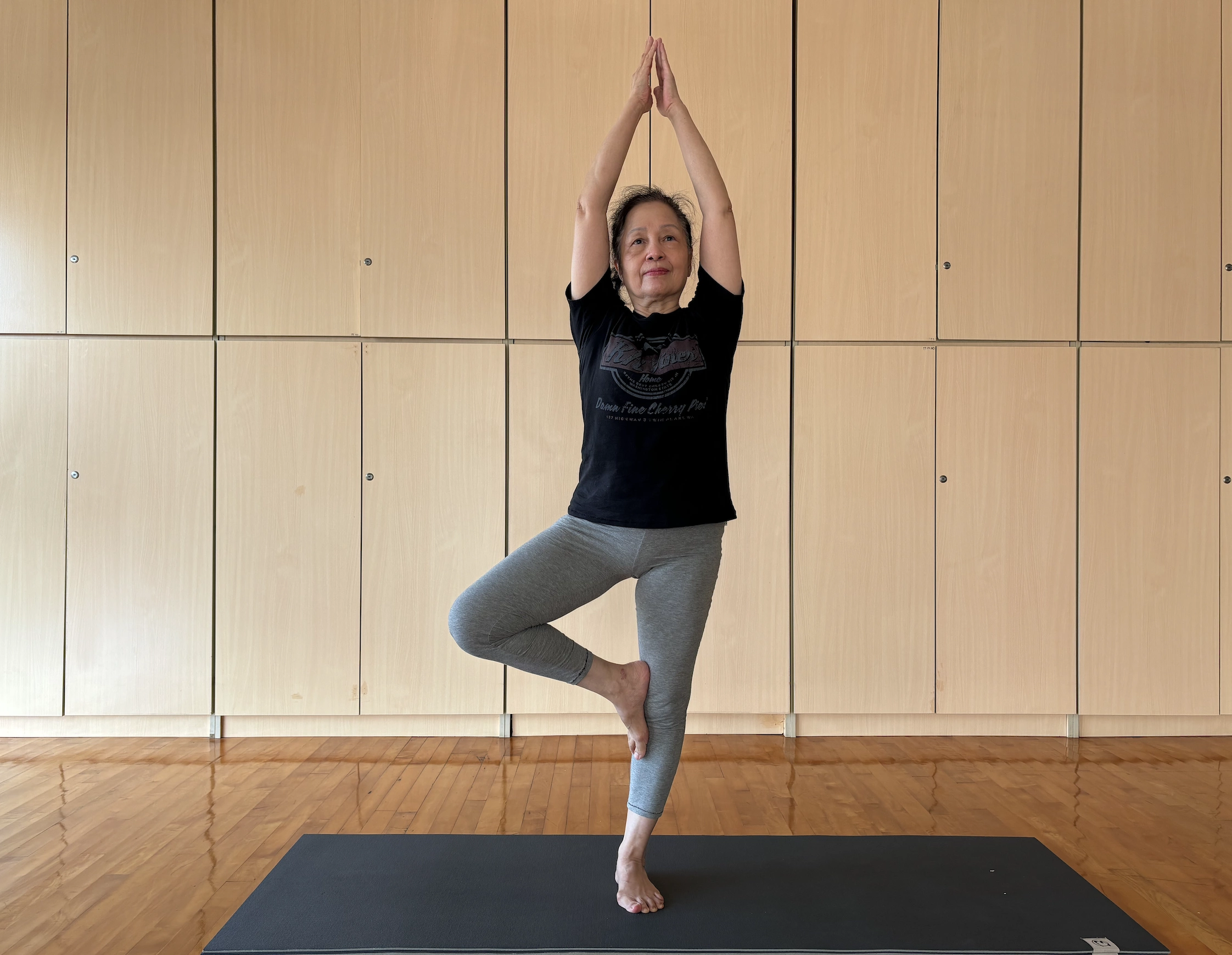 |
The one-leg stand exercise helps check the body's balance. *Quynh Dung*. |
Walking speed
Walking speed is a simple way to monitor mobility. To measure it, mark a 4-meter straight path, walk at a fast but comfortable pace, then calculate the distance divided by the completion time.
According to WebMD, a walking speed below 0,8 m/second may indicate a higher risk of physical frailty. However, walking speed only partially reflects mobility and physical function and cannot precisely determine an individual's aging rate.
A more useful approach is to measure under the same conditions at different times. If the speed significantly decreases compared to before, especially when accompanied by difficulties in daily activities, one should consult a doctor to find the cause.
Grip strength test
Grip strength partially reflects muscle strength and physical function. In a medical facility, grip strength can be measured with a handheld dynamometer, which helps assess muscle strength and motor function. For monitoring, measure three times on each hand and take the average value.
Grip strength is also influenced by gender, age, body size, occupation, and exercise level. Therefore, a low result does not necessarily mean the body is aging rapidly. Monitoring your trend over time may be more meaningful than comparing with others.
Monitoring VO2 max
VO2 max is the amount of oxygen the body can use during high-intensity exercise, often used to assess cardiorespiratory endurance. Some smartwatches and wearable devices can estimate this metric based on activity data, while more precise measurements are taken in a sports physiology laboratory.
VO2 max is related to cardiovascular health and the ability to maintain physical activity. However, this metric should be considered as a trend over time, rather than relying on a single measurement to assess the entire aging process.
Maintaining aerobic activities such as brisk walking, cycling, swimming, or running, suitable for one's physical condition, can help improve cardiorespiratory endurance. Appropriate VO2 max levels also vary by age, gender, and training level.
Note
The tests above can help monitor some aspects of physical health, but no single test comprehensively assesses whether a person is aging well. The aging process also involves cardiovascular health, cognition, nutrition, sleep, mental health, and the ability to maintain daily living activities.
If results significantly decrease compared to before, or if muscle weakness, loss of balance, difficulty walking, or difficulty performing familiar activities appear, one should consult a doctor to find the cause. Individuals with musculoskeletal, cardiovascular, or pulmonary conditions, dizziness, or mobility issues should also receive guidance before performing these tests themselves.
Bao Bao (Compiled)