According to information from the Taipei City Department of Health in Taiwan, China, colorectal cancer primarily develops from the malignant progression of adenomatous polyps in the colon. Early detection and removal of these polyps can effectively minimize the risk of developing colorectal cancer.
Colorectal cancer manifests in various types depending on its origin, with adenoma and adenocarcinoma being the most common.
Pathological classifications include various malignant tumors: adenocarcinoma in situ, adenocarcinoma, mucinous adenocarcinoma, squamous cell carcinoma, adenosquamous carcinoma, and undifferentiated carcinoma.
Other benign tumors include: carcinoid tumors, benign smooth muscle tumors, lymphangiomas, and various polyps and lipomas.
The Taipei City Department of Health advises residents to be particularly vigilant if they experience the following symptoms:
Changes in bowel habits.
Blood or mucus in stool.
Changes in stool consistency and shape (e.g., flattened, thin).
Frequent tenesmus (feeling the urge to defecate but being unable to or feeling incomplete evacuation).
Abdominal pain.
Anemia or unexplained weight loss.
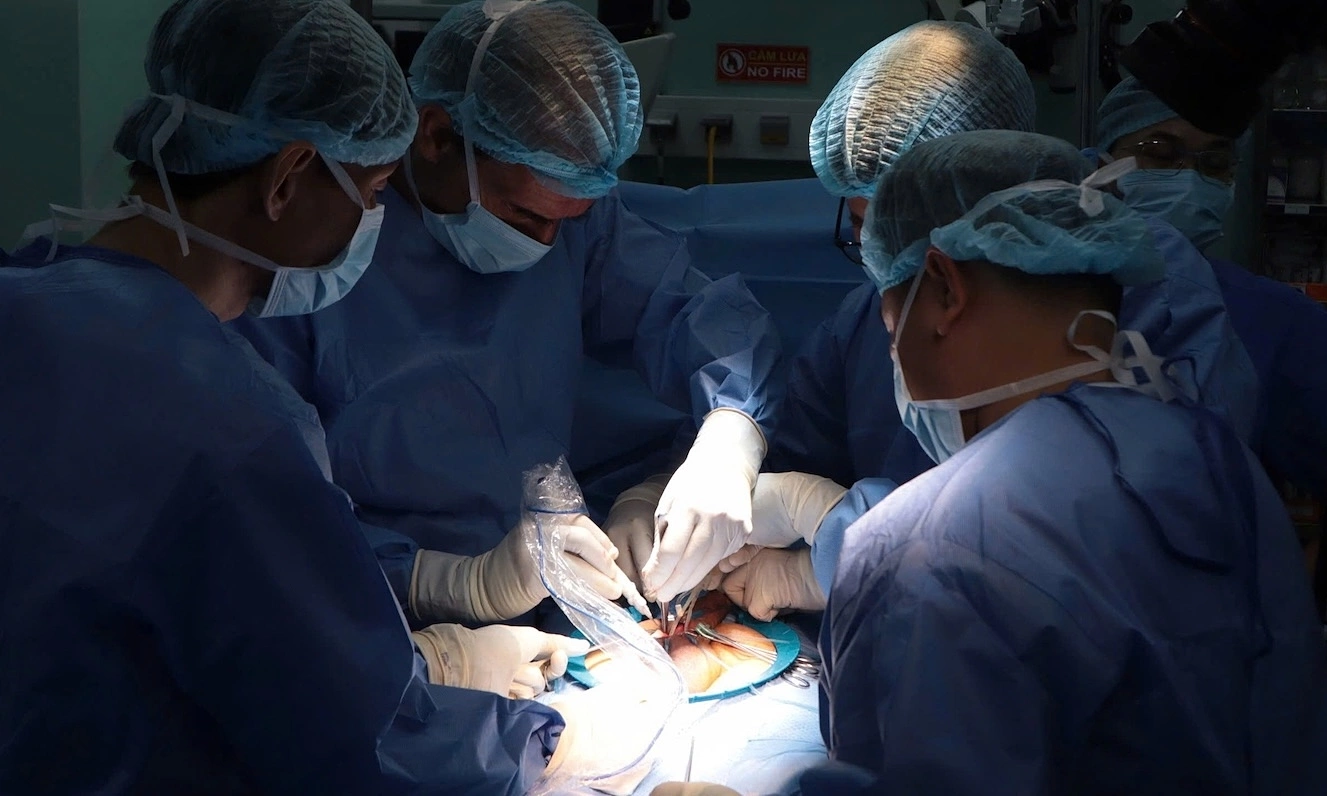
Dr. Truong Tinh, a specialist in Gastroenterology and Hepatology, recently shared a clinical case on the social media platform Threads. He performed a colonoscopy and polyp removal on a 23-year-old man. Subsequent histopathological results confirmed it was an adenomatous polyp. This case made the young man the youngest patient with an adenomatous polyp Dr. Truong Tinh had ever treated.
Dr. Truong Tinh noted that while family history played a significant role in this young patient's case, subsequent dietary adjustments are equally important.
Therefore, in addition to promptly intervening to remove the lesion, Dr. Truong applied a unique method during the consultation. He asked the young man to repeat aloud three times the statement: "From now on, I will eat less sausage, bacon, and ham." The doctor hoped this method, akin to a "magic spell", would help the patient deeply engrave the importance of dietary modification into his mind.
 |
Maintaining at least 150 minutes of moderate-intensity exercise each week helps prevent cancer. *Nguyen Dong* |
Dr. Truong Tinh emphasized that the most crucial method for preventing colorectal cancer is to halt the "evolutionary" path from colonic adenoma to cancer. He outlined the following seven core principles:
**1. Reduce processed meats and red meat**
The International Agency for Research on Cancer (IARC) classifies processed meats like sausages, bacon, and ham as Group 1 carcinogens (definitely carcinogenic to humans).
**2. Increase fiber intake**
Adequate fiber intake promotes bowel movements, reducing the time carcinogens remain in the intestines.
**3. Limit alcohol consumption**
Excessive alcohol consumption significantly increases the risk of colorectal cancer.
**4. Manage weight and waist circumference**
Obesity triggers chronic systemic inflammation, a key factor promoting abnormal proliferation of colon cells.
**5. Engage in regular physical activity**
Maintain at least 150 minutes of moderate-intensity exercise per week.
**6. Quit smoking**
Harmful substances in cigarette smoke can travel through the bloodstream to reach and damage the intestines.
**7. Undergo regular colonoscopies and screenings**
Regular health check-ups help detect and promptly remove colonic adenomas in their early stages.
My Y (According to Yahoo TW)