After nearly four years of intensive treatment, the child retained vision in his left eye, although his right eye had to be removed.
By the end of july, following more than four years battling the disease, the boy's left eye was preserved with functional vision, significantly improving his quality of life. He is developing physically and mentally normally for his age, though he still requires regular follow-up appointments to monitor for any risk of recurrence.
The boy's mother recalled that when her son was just over five months old, he didn't track objects like other children his age. What concerned her more was a faint white streak that appeared in the pupil when light shone into his eye. This seemingly harmless sign is a typical symptom of retinoblastoma – the most common intraocular malignant tumor in children under five.
Doctors at the hospital diagnosed the boy with the disease in both eyes, but at different stages. His right eye was at stage E, a very severe group with almost no chance of preservation. His left eye was in group D, offering hope for preservation with intensive treatment. For over four years, his childhood was largely spent in hospitals, enduring six rounds of systemic chemotherapy, numerous laser treatments, and close monitoring of the tumor.
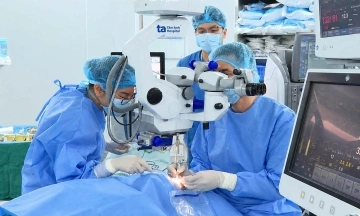
In late 2025, the boy was transferred to Bach Mai Hospital for a specialized procedure: direct chemotherapy infusion into the ophthalmic artery. This method delivers medication directly to the tumor, aiming to preserve the eyeball and vision.
Associate Professor, Doctor Vu Dang Luu, Director of the Diagnostic and Interventional Radiology Institute at Bach Mai Hospital, stated that this technique is extremely difficult. This is due to the very small size of blood vessels in young children, the complex path to the ophthalmic artery, and the requirement for coordination among multiple medical specialties.
"The primary goal is always to save the child's life. Once the disease is controlled, doctors then focus on preserving the eyeball and any remaining vision", he said.
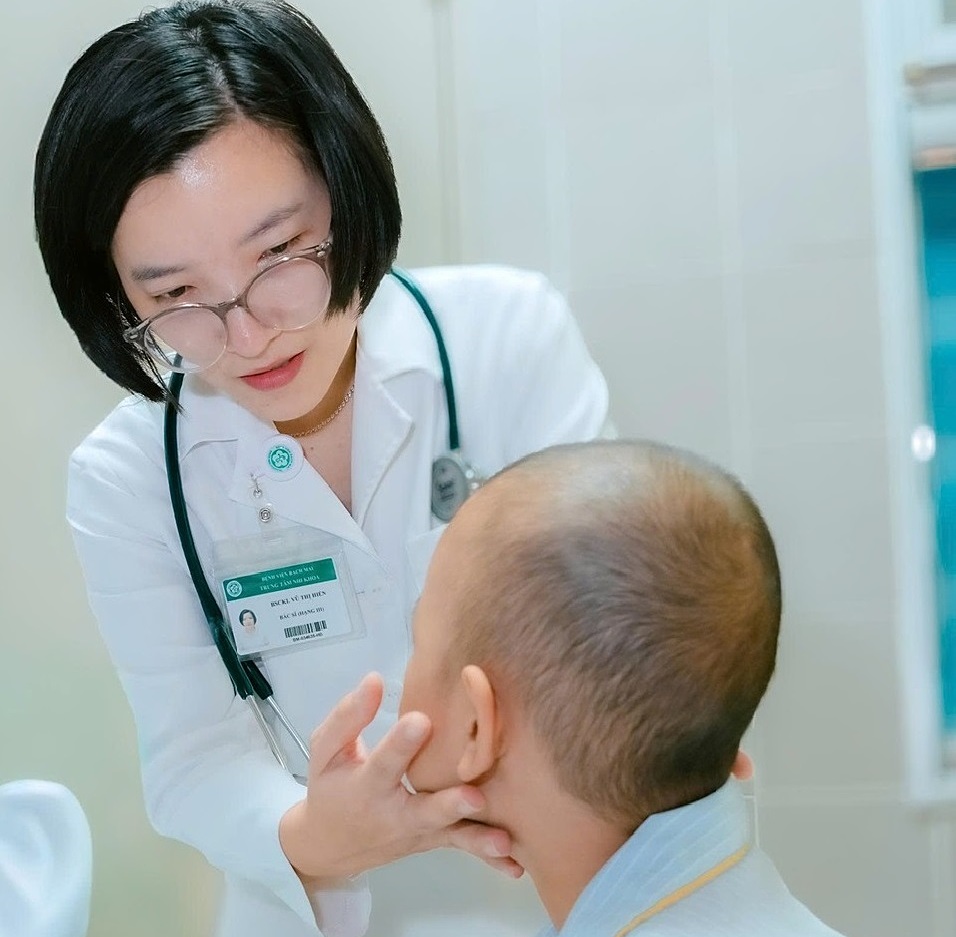 |
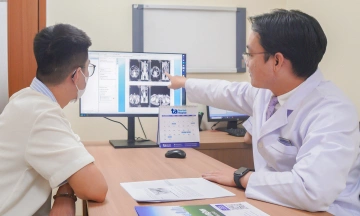
Doctors examine the child before discharge. Photo: The Anh |
Doctors examine the child before discharge. Photo: The Anh
The boy's right eye could not be saved and was surgically removed in june to prevent the tumor from spreading. Meanwhile, doctors continued to preserve the left eye using intra-arterial chemotherapy, laser treatment, and regular monitoring.
Intra-arterial ophthalmic chemotherapy has been implemented by Bach Mai Hospital and the National Eye Hospital since 2018. This method offers an opportunity to preserve eyes for many children with retinoblastoma; however, it is not applicable in all cases. Patients who arrive too late, have widespread tumors, or face life-threatening risks still require eyeball removal.
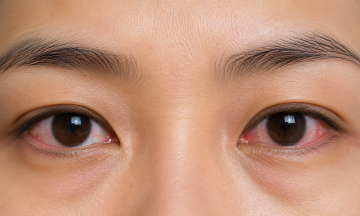
Retinoblastoma typically appears before a child's fifth birthday. The most characteristic sign is leukocoria, or a white pupil – appearing as a white spot or streak in the pupil, most noticeable when taking flash photographs. Children may also experience strabismus (crossed eyes), failure to track light, different light reflexes in each eye, or prolonged redness, pain, and swelling of the eye.
Experts advise parents to take their child for an eye specialist examination immediately if they notice an abnormal white reflection in one eye, a white spot in the pupil, or if the child shows signs of decreased vision. Early detection not only increases the chance of saving the child's life but can also preserve the eyeball and vision.
Le Nga