**Height**
According to Parents, healthy children typically grow taller over time, but the rate varies at different stages. In the early years, babies often develop quickly; then, the height growth rate gradually slows before increasing sharply again during puberty.
One height measurement is not enough to conclude if a child is growing well. Parents need to monitor multiple times to determine if the child maintains an appropriate development rate. If height increases steadily across measurements, the child is usually developing stably. Conversely, if the indicator remains almost unchanged for a long time or the growth rate slows noticeably, parents should have their child checked.
**Weight**
Weight is one indicator that helps monitor children's growth and nutritional status. When assessing weight, parents need to consider age, gender, height, and changes over time.
Do not assess a child's development based solely on weight. If a child gains weight too quickly or does not gain weight for a long time, parents should investigate the cause. These changes may relate to diet or certain health issues.
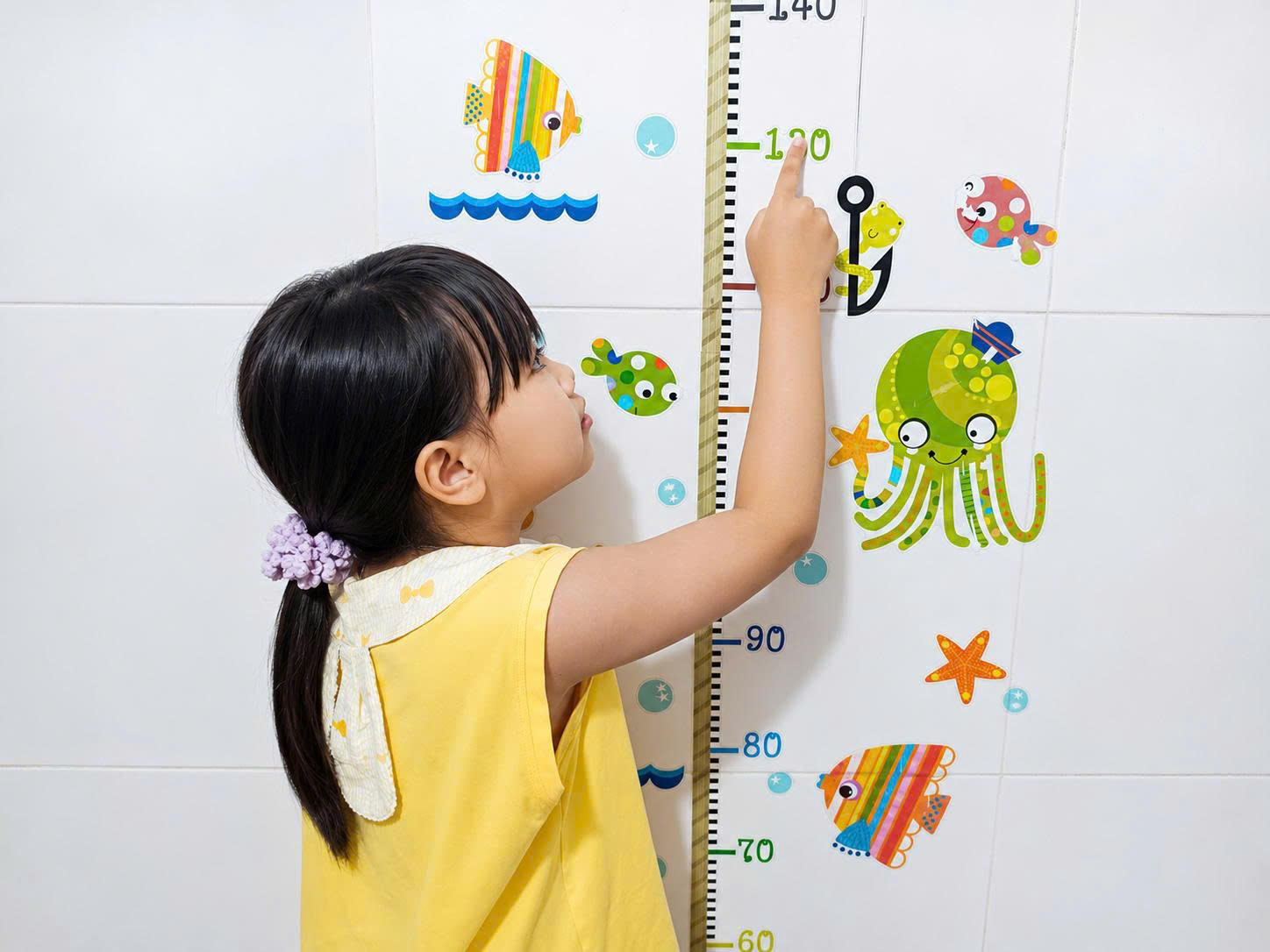 |
A child's height reflects physical growth. Photo: Kim Uyen |
**Body Mass Index (BMI)**
Body mass index (BMI) is calculated based on weight and height. For children, BMI is not assessed using a fixed threshold like adults but must be compared against age and gender on a growth chart.
Age-specific BMI helps identify if a child may be underweight, within a healthy range, overweight, or obese. This indicator is useful when a child gains weight rapidly or has a high weight relative to height.
Doctors often consider BMI along with height, weight, age, gender, and the trend of these indicators over multiple measurements. This helps to more accurately assess a child's nutritional status.
**Head circumference**
According to Times of India, head circumference is significant in the early years when a child's head and nervous system develop rapidly. This indicator is typically measured by wrapping a soft tape measure around the widest part of the head, passing between the forehead and the prominence at the back of the head.
Similar to height and weight, head circumference needs to be compared against age and gender, and monitored over time. One single measurement cannot fully reflect the developmental process.
If head circumference increases too quickly or too slowly, or changes significantly compared to previous measurements, parents should consult a doctor for further assessment.
Le Nguyen (Compiled)
| Readers can send questions about pediatric illnesses here to be answered by a doctor |