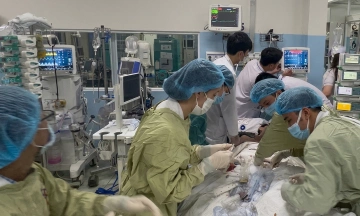
On 1/1, Master, Resident Doctor Tran Thi Quyen from the Department of Dermatology and Burns, Bach Mai Hospital, reported the patient's left thigh was swollen, with a lesion about 10 cm in diameter that had formed pus-filled fistulas. Magnetic resonance imaging (MRI) revealed large abscesses at the filler injection sites, with infiltration deep into the soft tissue and adjacent muscle groups.
Doctor Quyen described this as an acute infection with a risk of rapid progression. The patient received treatment for her injuries and is currently in stable condition.
According to Doctor Quyen, soft tissue abscesses following filler injections pose particular risks due to three main factors. First, there is a risk of systemic infection if the pus collection is not properly drained and antibiotic treatment is not administered according to standard protocols. Bacteria can enter the bloodstream, leading to septic shock and multiple organ failure – complications with a high mortality rate.
Abscesses in the thigh area tend to spread along muscle compartments, potentially causing muscle necrosis, osteomyelitis, or damage to major blood vessels and nerves. This directly threatens the patient's mobility. Moreover, patients may experience long-term aesthetic and functional sequelae. Even after infection control, prolonged inflammation can result in fibrotic scars, permanent thigh deformity, and chronic pain due to sensory nerve damage.
Doctors advise that filler injection procedures should only be performed at licensed hospitals or specialized cosmetic dermatology clinics. The procedure must be carried out by a doctor with a practice certificate and a thorough understanding of the injection area's anatomy. It is crucial to avoid using fillers or "dissolving agents" of unknown origin or those not licensed by the Ministry of Health for circulation.
If prolonged swelling, heat, redness, or pain occurs after an injection, immediate medical attention at a healthcare facility is necessary for timely examination and treatment. Continuing interventions at spas or facilities lacking medical expertise can lead to a loss of the "golden hour", increasing the risk of widespread necrosis and blood poisoning.
Le Nga