Answer:
Filler injections, a non-surgical cosmetic procedure, are commonly used to address facial imperfections such as deep smile lines, thin lips, recessed chins, hollow temples, or signs of aging caused by soft tissue volume loss. This method offers several advantages: quick execution, minimal invasiveness, and a short recovery period.
During the procedure, doctors use a needle or cannula to deliver the filler into the subcutaneous tissue. The tiny injection points typically close within a few hours to a day. After injections, individuals may experience mild swelling, redness, bruising, or a feeling of tightness in the treated area. These are common physiological responses related to the mechanical action of the needle and the tissue's reaction to the filler, usually subsiding within a few days.
Many people traditionally avoid sticky rice and chicken after medical interventions, believing these foods can cause inflammation, pus formation, or delay wound healing. However, there is no scientific evidence to suggest that consuming sticky rice or chicken increases the risk of inflammation, infection, or complications following filler injections.
Tet sticky rice dishes, such as xoi, banh chung, banh tet, and banh nep, are primarily rich in starch, providing energy to the body. They are not direct causes of swelling or pus at the injection site. For individuals with a normal constitution, consuming a moderate amount of sticky rice after filler injections does not affect the procedure's efficacy or safety. Nevertheless, sticky rice can be difficult to digest, potentially causing bloating or discomfort if eaten in large quantities. Therefore, it is advisable to consume it in reasonable amounts for better comfort during the recovery phase.
Chicken is a quality source of protein, essential for tissue regeneration and the body's recovery process. Most healthy individuals who eat chicken after filler injections do not experience swelling, inflammation, or negative effects on the treated area. Avoiding chicken is only necessary for those with a history of allergies, who have previously experienced itching, hives, or digestive issues after consuming this type of food.
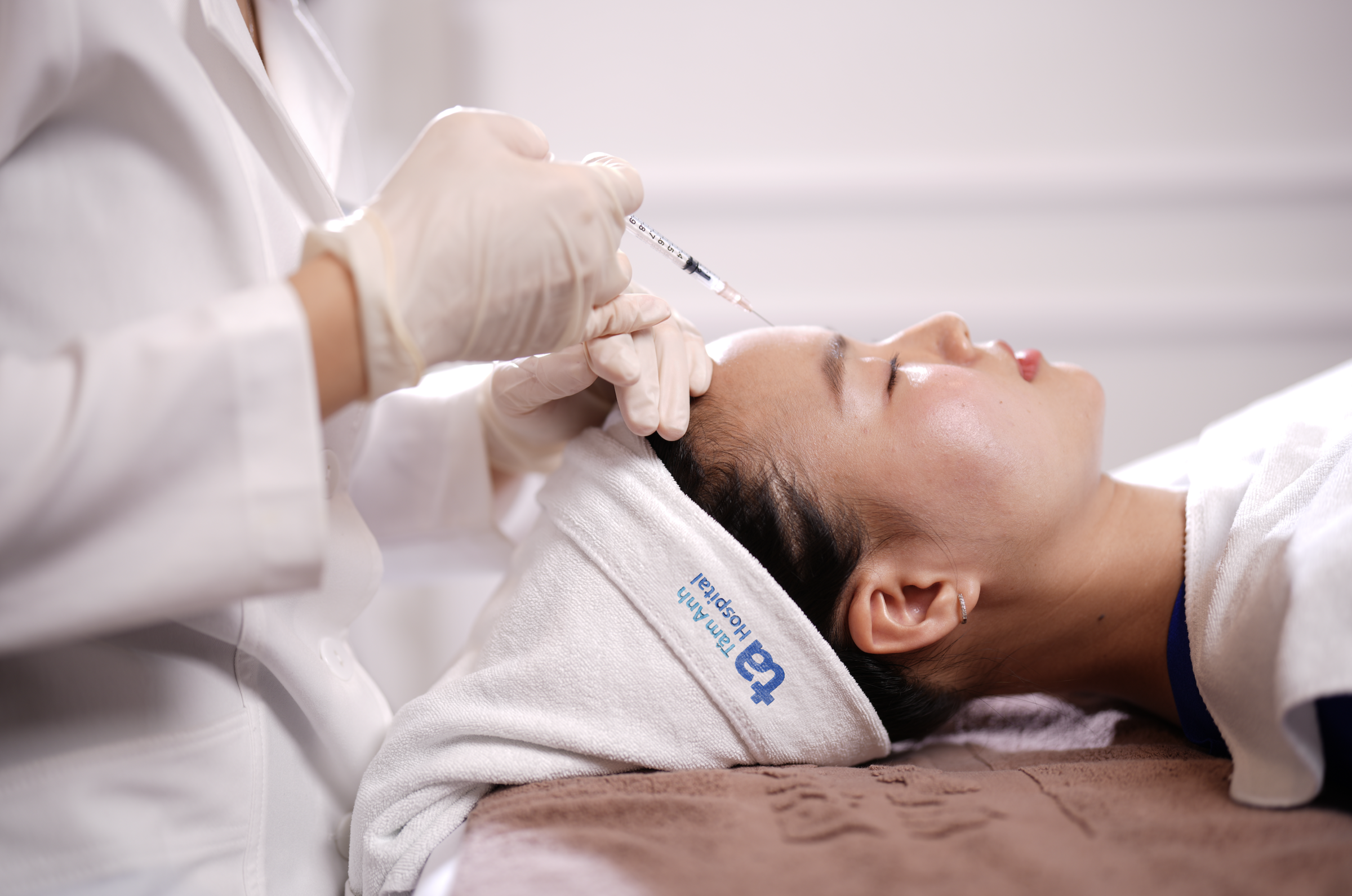 |
A woman receives filler injections at Tam Anh General Hospital Hanoi. Illustration: Trang Le |
Overall, after filler injections, you are not required to avoid sticky rice or chicken unless you have a history of allergies or specific digestive problems. During the initial few days, caution is advised with foods that might increase inflammatory reactions or affect circulation. Alcohol can cause vasodilation, potentially increasing swelling and bruising, so it should be limited. Overly spicy or hot foods may cause discomfort. Seafood can trigger itching and rashes, so individuals with allergies should also avoid it.
A balanced and healthy diet, rich in vitamins and minerals, is recommended after filler injections to support the recovery process. Green vegetables and fresh fruits provide vitamin C, vitamin A, and antioxidants, which help reduce inflammation and promote healing. Adequate water intake helps maintain skin hydration and plumpness, supporting the natural effectiveness of the filler. Supplement protein from various sources like fish, eggs, lean meat, and tofu, prioritizing soft, easy-to-chew foods to minimize excessive facial muscle movement.
Proper skincare after filler injections ensures both safety and optimal results. Avoid strong touching or massaging the injection area, and limit wearing tight face masks in the initial days to prevent filler displacement or increased infection risk. Do not apply makeup immediately after injections or use products containing high concentrations of AHA, retinol, or vitamin C before the filler stabilizes in the skin tissue.
For lip fillers, avoid applying lipstick for about one week to prevent infection and maintain the desired lip shape. If filler was injected into the cheeks or chin, limit strenuous activity, bending over, lying face down, or sleeping on your side for approximately 7-10 days. When resting, lie flat and elevate your head with a pillow to reduce swelling. Additionally, avoid steam baths, hot showers, or exposure to high temperatures, as heat can affect the filler's structure.
If you experience abnormal signs after the injection, such as progressively worsening pain, prolonged swelling or redness, warmth in the injection area, skin discoloration, fever, or suspected infection, seek immediate medical attention. These conditions often relate to the injection technique, filler quality, or the body's reaction, requiring prompt assessment and timely management according to specialized protocols to prevent severe complications.
Doctor Duong Quoc Trung
Department of Aesthetics
Tam Anh General Hospital Hanoi
| Readers can submit dermatology and cosmetic skin questions here for doctor consultation. |