Response:
The cornea, the clear tissue at the front of the eye, acts as a "window" allowing light to enter. When a child's cornea becomes inflamed, they may experience red eyes, pain or a gritty sensation, tearing, light sensitivity, rubbing, or constant blinking. In severe cases, vision may become blurry, and white spots can appear on the cornea.
Keratitis in children stems from various causes, including bacterial, viral, or fungal infections. It can also be linked to eye injuries, foreign objects, dry eyes, allergies, or other underlying medical conditions. If left untreated, the condition can lead to corneal ulcers, scarring, reduced vision, and even corneal perforation.
The disease can recur if the underlying cause is not fully addressed or if the child still has risk factors. For instance, keratitis caused by the herpes simplex virus can reactivate after a period. Children with dry eyes, blepharitis, allergic conjunctivitis, blocked tear ducts, or those who frequently rub their eyes are also prone to recurrence.
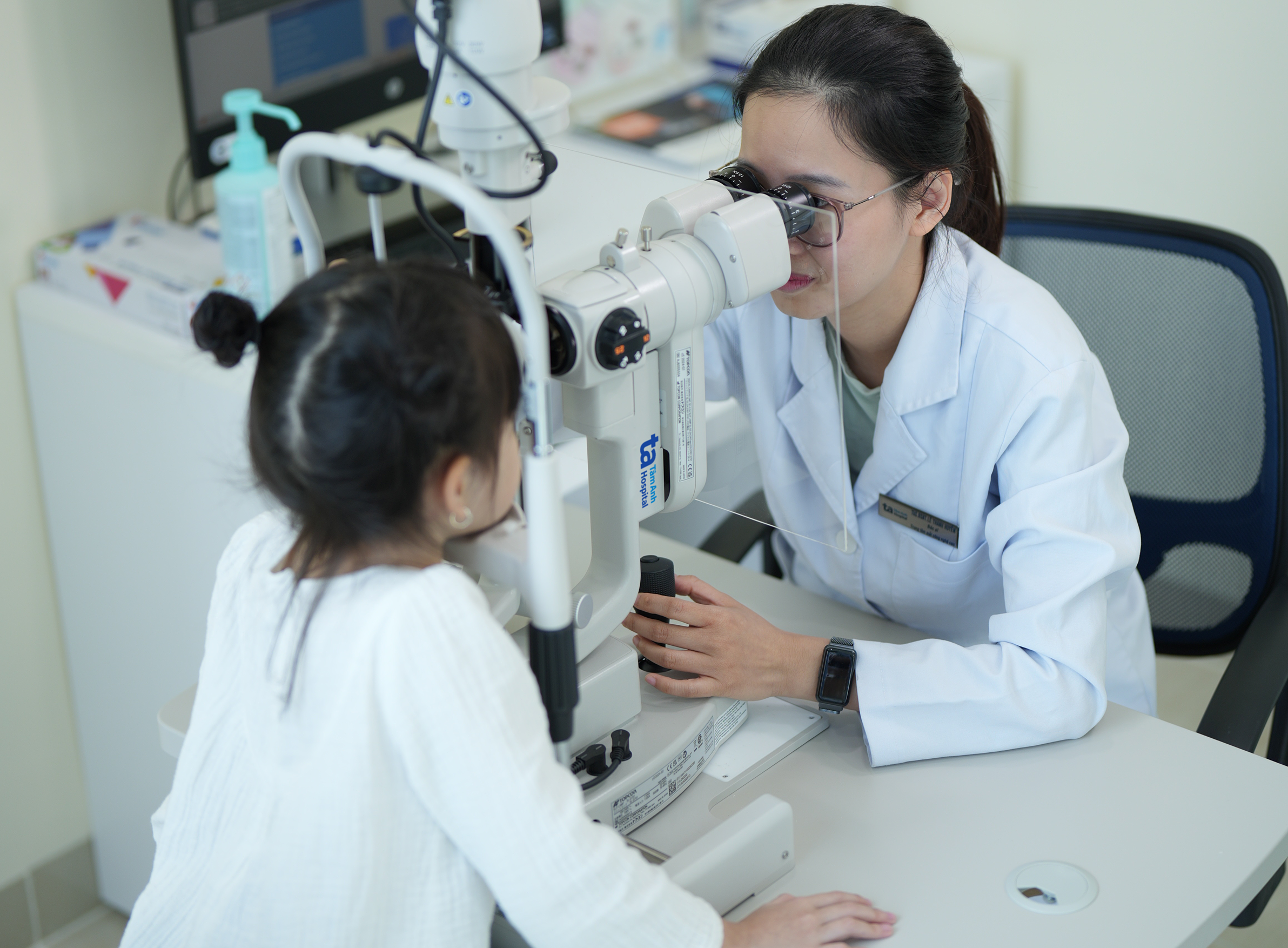 |
A doctor examines a young girl's eye. Illustration: Tam Anh Cau Giay General Clinic |
Treating keratitis requires identifying its specific cause. The primary goals are to eliminate the inflammatory agent, alleviate symptoms, protect the cornea, and prevent complications that could affect vision. Treatment options may include antibiotics, antivirals, or antifungal medications.
If a child experiences recurrent episodes, a specialist ophthalmological examination is essential to determine the cause and adjust the treatment regimen. Parents should not reuse old prescriptions without professional guidance. The likelihood of recovery and the risk of recurrence depend on the cause, the severity of the condition, and adherence to the correct treatment plan.
Parents should avoid purchasing over-the-counter eye drops, especially those containing corticosteroids, without a doctor's prescription. Inappropriate medication can worsen infections, delay corneal healing, and increase the risk of complications.
During the child's treatment period, parents must wash their hands before administering eye drops or cleaning the child's eyes. Use a separate clean towel, prevent the child from rubbing their eyes, and limit exposure to smoke, dust, and chemicals. Parents need to ensure the child uses the correct type, dosage, and duration of medication, and should not stop treatment prematurely just because symptoms have improved.
If a child experiences severe eye pain, light sensitivity, blurred vision, prolonged eye redness, white spots on the cornea, or rapid vision loss, seek prompt ophthalmological examination. This helps limit the risk of corneal damage and long-term vision impairment.
Doctor, First Degree Specialist Le Thi Huong Giang
High-Tech Eye Unit
Tam Anh Cau Giay General Clinic
| Readers can submit ophthalmology questions here for a doctor's response |