Ms. Huong had general health check-ups at Tam Anh General Hospital in TP HCM for the past three years, where the tumor grew to 7x6x4 cm. A contrast-enhanced pelvic MRI indicated a right ovarian teratoma, and biomarker tests showed a low risk of malignancy. However, growing ovarian tumors in postmenopausal women always carry many risks.
Doctor Nguyen Ba My Nhi, Director of the Obstetrics and Gynecology Center, advised Ms. Huong to undergo surgery to remove the tumor. However, she had many underlying conditions, including hypertension and chronic kidney disease, which led to its postponement. Recently, she experienced frequent abdominal discomfort. A hospital check-up revealed the tumor had continued to grow to approximately 9x8x7 cm, posing a high risk of ovarian torsion and requiring surgery.
For patients with many underlying conditions like Ms. Huong, the medical team must comprehensively assess the anesthesia risks, the patient's tolerance for surgery, and the complexity of the lesion to choose an appropriate method.
Ms. Huong stabilized her underlying conditions with outpatient treatment one week before surgery. Instead of open surgery with a large abdominal incision, doctors used the Da Vinci Xi robotic system to assist in laparoscopic surgery to access and remove the tumor, limiting complications in patients with underlying conditions.
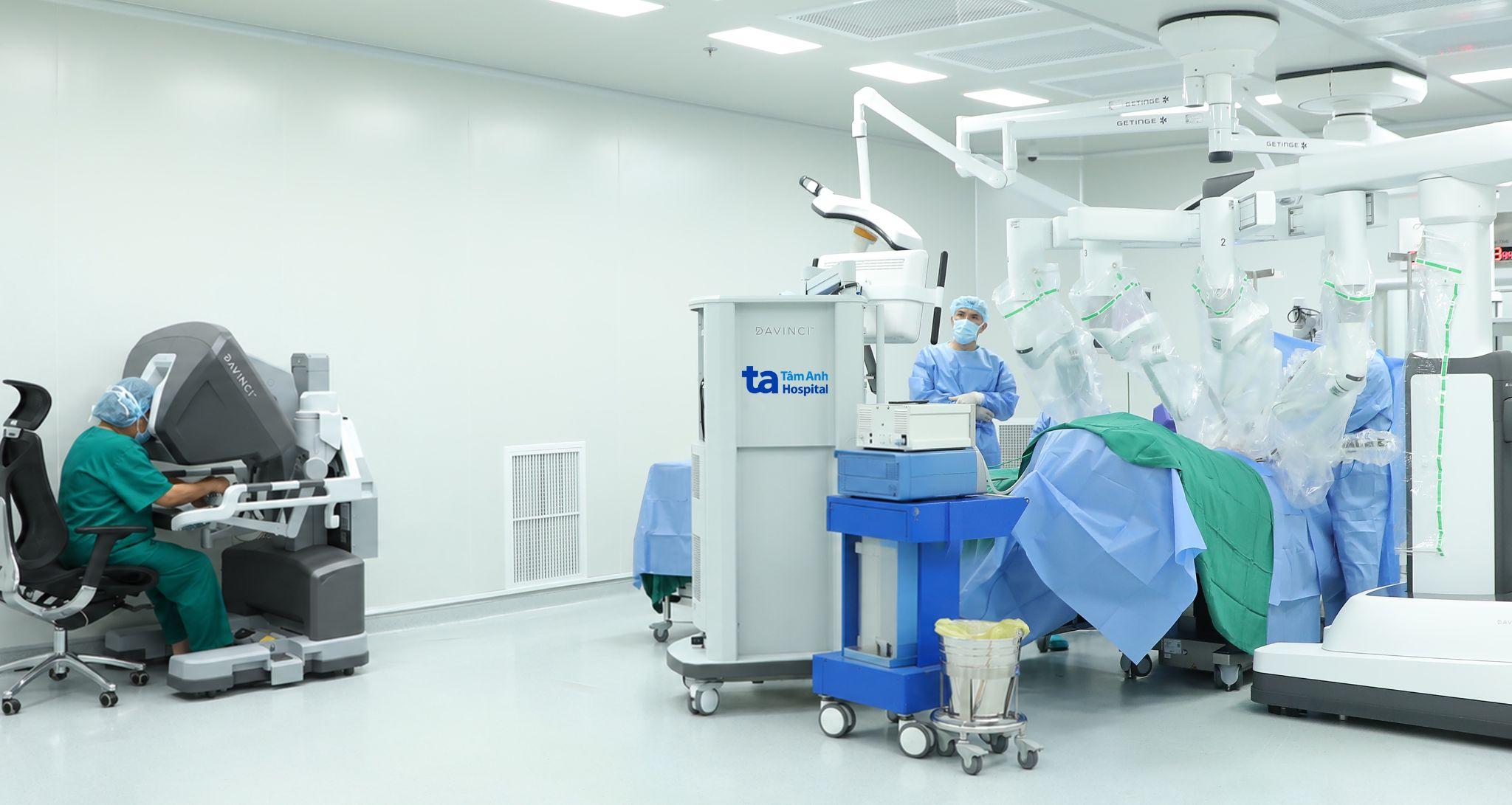 |
Doctor My Nhi controls the Da Vinci Xi robot to remove the entire ovarian teratoma for the patient. Photo: Tam Anh General Hospital |
Doctor My Nhi controls the Da Vinci Xi robot to remove the entire ovarian teratoma for the patient. Photo: Tam Anh General Hospital
From the control console, with a 3D camera image magnifying the surgical field 10-15 times, the doctor guided the robotic arms through the narrow pelvic area, dissecting the tumor and precisely cauterizing to stop bleeding, without damaging surrounding organs. The doctor incised the tumor, which contained hair and cartilage tissue, confirming it as an ovarian teratoma.
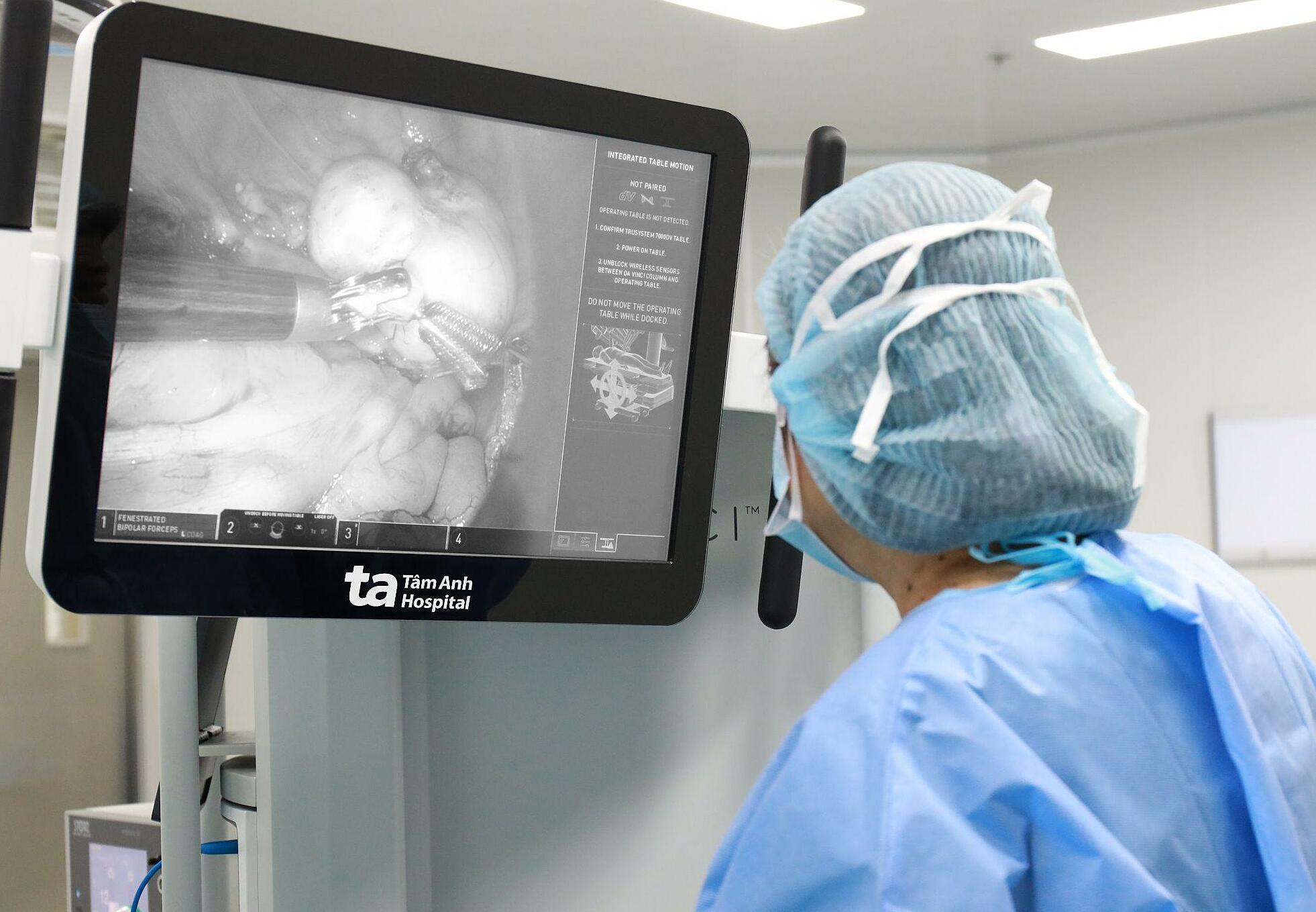 |
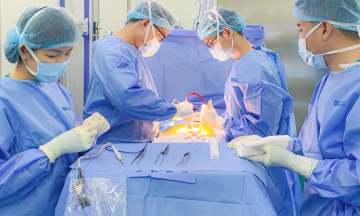
The large ovarian teratoma in the pelvic cavity was successfully removed by the robot. Photo: Tam Anh General Hospital |
The large ovarian teratoma in the pelvic cavity was successfully removed by the robot. Photo: Tam Anh General Hospital
Ms. Huong was closely monitored; her health indicators were stable. She was discharged 24 hours after surgery, comparable to many cases of robotic laparoscopic surgery in patients without underlying conditions.
According to Doctor My Nhi, robot-assisted laparoscopic surgery is a minimally invasive method that offers treatment opportunities for those who previously delayed surgery due to concerns about complications. However, this method is not suitable for all cases. Doctors still need to consider the tumor's characteristics, underlying conditions, and anesthesia risks to determine the appropriate method for each individual.
Ovarian teratomas are usually benign, formed from cells capable of developing into various tissue types. If the tumor is small, asymptomatic, and benign, doctors may recommend monitoring. Surgery is typically considered when the tumor is large, grows rapidly, causes pain or compression, or carries a risk of torsion, rupture, bleeding, or presents abnormal images requiring cancer exclusion.
Tue Diem
*Patient's name has been changed
| Readers can submit questions about obstetrics and gynecology here for doctors to answer |