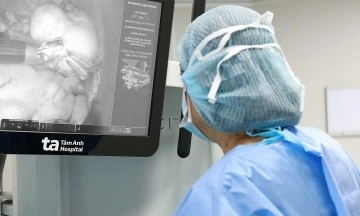
Nguyen Ngoc Tran, a specialist in Dermatology and Cosmetic Dermatology at Tam Anh General Hospital TP HCM, reported that Nam's tattoo, created with a machine, featured multiple ink colors such as red, orange, yellow, and green. The pigment's varied depths made its removal more complex than single-color tattoos. The scarred skin had distorted the dragon image, impacting its aesthetic appeal.
Nam was prescribed a course of 10-12 pico laser sessions, spaced 4-6 weeks apart, depending on his skin's response. Pico laser technology emits ultra-short energy pulses, creating a photomechanical effect that breaks down ink particles into smaller fragments. The body then naturally eliminates these pigment fragments.
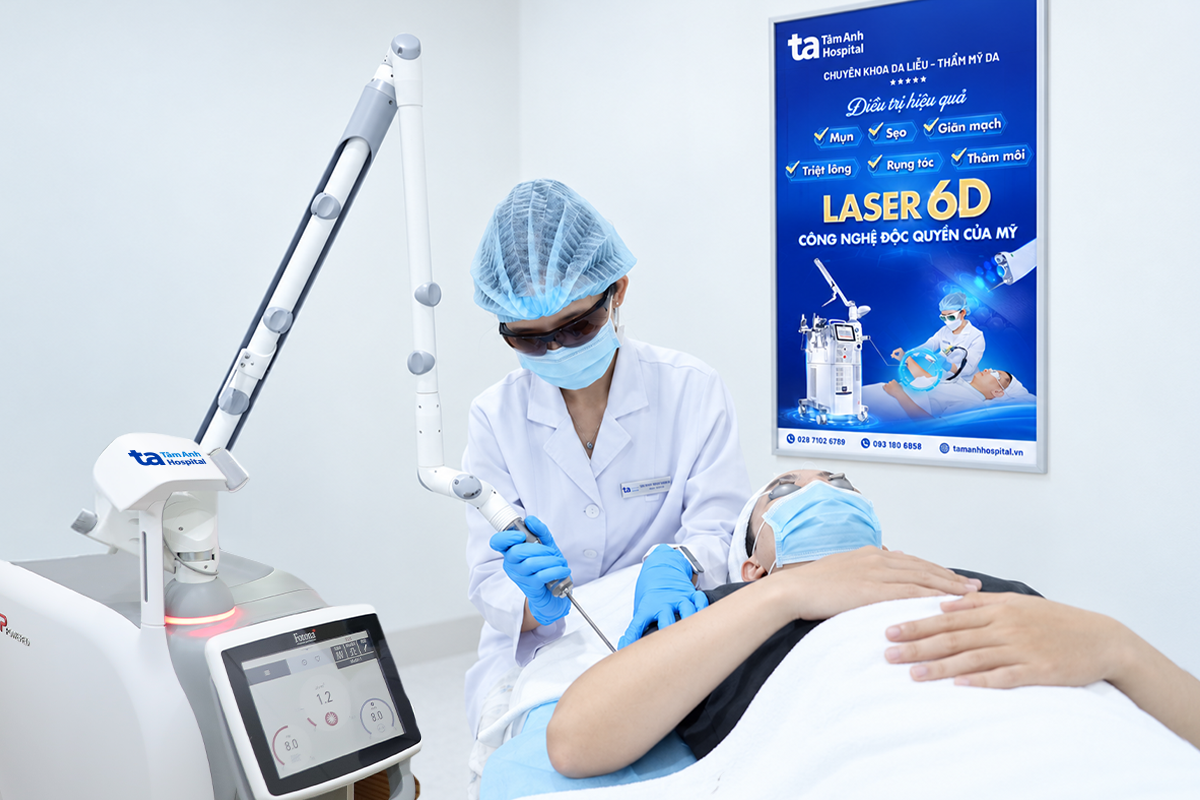 |
A doctor uses pico laser for Nam's tattoo removal. *Photo: Tam Anh General Hospital* |
Different pigments absorb laser energy distinctly, requiring doctors to select specific wavelengths and parameters for each color group rather than using a single energy level for the entire tattoo. Black ink typically responds well to a 1,064 nm wavelength. In contrast, a 532 nm wavelength is often more suitable for red, orange, and certain light, warm pigments. For challenging colors such as green, blue, or purple, doctors consider alternative wavelengths like 585 nm or 650 nm, depending on the ink's composition and the tattoo's characteristics.
According to Tran, factors beyond color, depth, and ink density, such as the tattooing technique and the tattoo's age, also influence the number of treatment sessions. Machine-applied, multi-colored tattoos with deeply embedded ink typically require a longer course of treatment compared to smaller, single-color designs.
After seven laser sessions, Nam's tattoo showed significant fading, with the black ink noticeably lighter. While brighter ink colors are gradually fading, continued treatment is necessary for optimal results. He received instructions to gently care for the treated area, apply comprehensive sun protection, and avoid rubbing, picking scabs, or using irritating products.
Tran emphasized that tattoo removal is consistently more complex, time-consuming, and expensive than getting a tattoo. Removal efficacy also depends on the technology, ink type, pigment depth, and an individual's unique physiological response.
Tattoos do not vanish after a single treatment; they typically require multiple sessions with sufficient intervals for skin recovery and the body to process residual pigment. Doctors evaluate the skin's response before each subsequent session, adjusting laser parameters accordingly. Employing excessive energy or conducting treatments too frequently on unrecovered skin can elevate the risk of skin damage, pigment alterations, or scarring.
Individuals seeking tattoo removal should undergo evaluation by a Dermatology and Cosmetic Dermatology specialist. This ensures the selection of appropriate wavelengths and laser parameters tailored to each pigment type, leading to safe and effective treatment.
Minh Huong
*Character's name has been changed
| Readers can submit questions about dermatology and cosmetic dermatology here for doctors to answer. |