Neck and shoulder pain is a common ailment, especially among office workers who spend hours in front of computers. Doctor Nguyen Phuong Dong, from the Department of Traditional Medicine at Bach Mai Hospital, states that neck and shoulder pain is one of the most common musculoskeletal conditions today. This condition can also be linked to cervical spondylosis, herniated discs, neck and shoulder injuries, improper exercise, or prolonged exposure to cold.
Common symptoms include pain in the neck and shoulders, which intensifies with prolonged sitting or neck movement, a stiff neck sensation, and restricted head rotation. In some cases, the pain radiates to the shoulders and arms, accompanied by finger numbness.
"Neck and shoulder pain is not always merely a musculoskeletal condition," Doctor Dong states. It can be a sign of many other issues, such as spinal damage, neurological conditions, endocrine disorders, or even tumors. Therefore, patients require a specialist examination to accurately determine the cause before treatment.
For example, a 40-year-old female patient in Hanoi, an office worker, initially experienced dull pain that gradually worsened. She had a stiff neck, difficulty turning her head, and persistent aches. Medication and exercise provided only short-term relief before recurrence. Doctors from the Department of Traditional Medicine treated her with massage and acupressure combined with acupuncture in the initial stage, followed by thread embedding to maintain effectiveness and prevent recurrence. After about two weeks of treatment, her pain significantly reduced, her neck and shoulder area became more flexible, and she could turn her head without the previous difficulty.
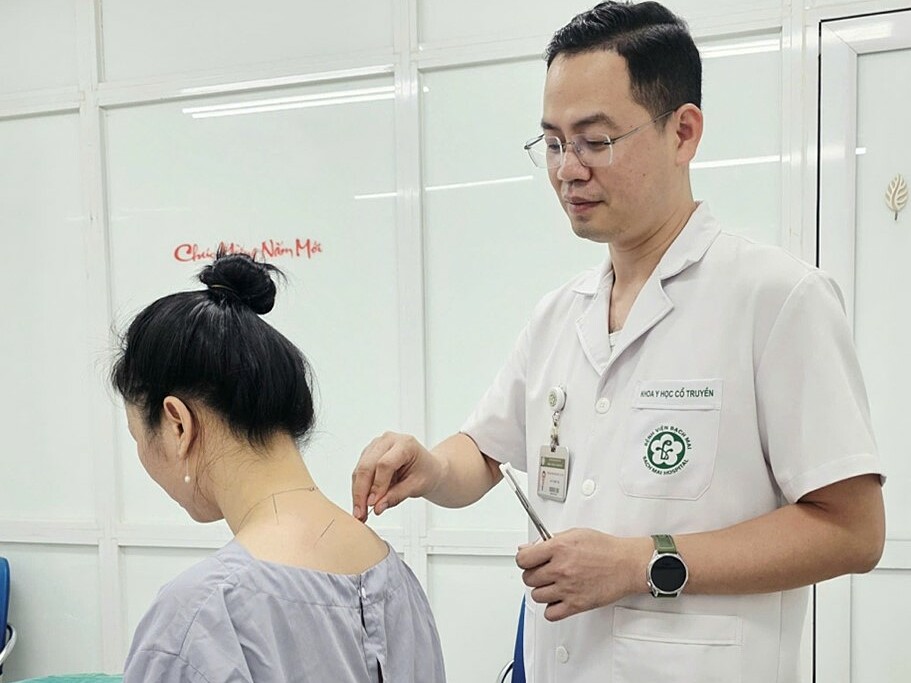 |
Patient receiving acupuncture treatment for neck and shoulder pain. *Photo: Nguyen Ha*
From a traditional medicine perspective, neck and shoulder pain falls under the category of "Bi syndrome," often caused by the invasion of wind, cold, and dampness, or poor circulation of qi and blood, which blocks meridians, leading to pain, muscle stiffness, and restricted movement. The advantage of traditional medicine lies in its focus on symptom reduction and addressing the root cause, thereby improving qi and blood circulation, relaxing muscles, restoring motor function, and preventing recurrence.
Doctor Dong explains that patients are treated with multiple methods. For example, acupuncture using the "Near Three Needles" technique provides rapid pain relief and shortens treatment duration. Warm needle acupuncture combined with mugwort compresses warms meridians and enhances qi and blood circulation. Massage, acupressure, and spinal manipulation release muscle stiffness and improve movement. Cupping therapy supports meridian flow and reduces pain. Traditional Eastern medicine is individualized based on each patient's condition. Absorbable thread embedding extends treatment effectiveness, particularly suitable for patients living far away or experiencing frequent recurrences.
Combining traditional medicine with modern physical therapy methods like shockwave therapy and multi-frequency ultrasound enhances treatment effectiveness. Patients experience significant pain reduction, restored motor function, and reduced reliance on long-term pain medication, according to Doctor Dong.
To reduce the risk of neck and shoulder pain, it is essential to maintain proper working posture and avoid sitting continuously for hours in front of a computer. After every 45-60 minutes of work, individuals should stand up, move around, and perform stretching exercises for the neck, shoulders, and back. Additionally, regular exercise, keeping the body warm in cold weather, choosing an appropriate pillow, and limiting prolonged phone use with a bowed head posture are recommended.
Le Nga