Mr. Hien, with a history of smoking and long-term hypertension, underwent regular check-ups. Before his 12-hour flight from the UK to Vietnam, a general health check and electrocardiogram revealed no cardiovascular abnormalities. However, upon arrival at Noi Bai Airport in Hanoi, he experienced fleeting chest tightness while retrieving his luggage.
That evening, the pain intensified, and Mr. Hien was rushed to Tam Anh General Hospital Hanoi. He was unconscious and had experienced cardiac arrest for approximately two minutes. The emergency team performed cardiopulmonary resuscitation, intubated to secure his airway, administered vasopressors, and established intravenous lines to maintain hemodynamic stability, ensuring continuous blood flow to his heart.
Doctor Duong Cong Linh, from the Cardiology Department, diagnosed Mr. Hien with an acute myocardial infarction linked to severe coronary artery obstruction. The intensive care team simultaneously prepared for emergency coronary intervention as soon as the patient's circulation was re-established.
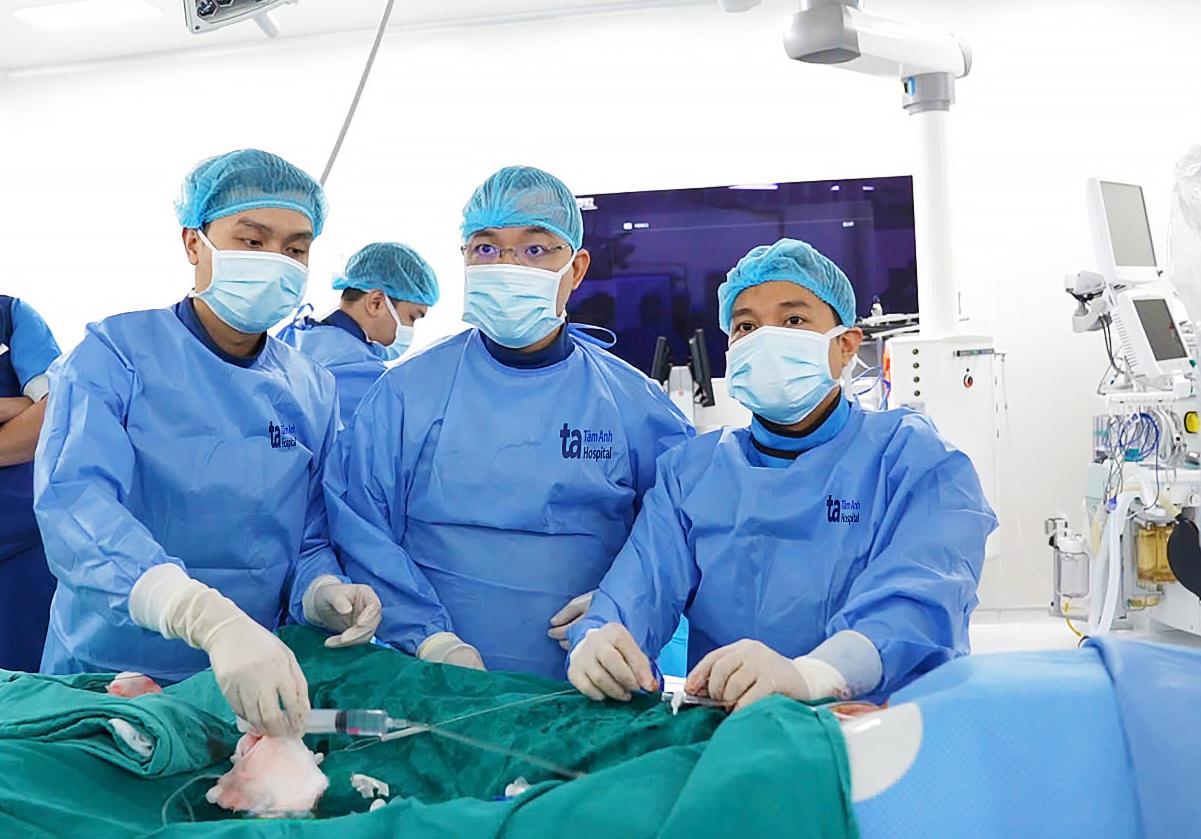 |
The emergency team revascularizes the patient's coronary arteries. Photo: Tam Anh General Hospital |
Coronary angiography revealed a complete blockage of Mr. Hien's left anterior descending artery—a critical vessel supplying the heart, which directly caused the heart attack. His right coronary artery also showed severe narrowing, reaching 90%.
The team performed a thrombectomy and stent placement, restoring blood flow to the heart and stabilizing the patient's condition. The remaining narrowed artery will undergo a subsequent intervention to mitigate complication risks. Following the procedure, the patient's hemodynamic status gradually stabilized.
Doctor Linh explained that a myocardial infarction occurs when blood vessels supplying the heart become suddenly blocked, leading to insufficient oxygen supply to the heart. This is typically caused by pre-existing atherosclerotic plaque within the vessel. When this plaque ruptures, it forms a blood clot that obstructs blood flow to the heart, causing the infarction. Factors such as sudden exertion, stress, lack of oxygen, or physiological changes can trigger this plaque rupture.
Mr. Hien's history of long-term hypertension meant that atherosclerosis had been silently progressing. Doctor Linh noted that a flight exceeding 12 hours—with its mild hypoxia, dehydration, and reduced movement—combined with exertion after landing, likely served as a trigger for the heart attack.
Mr. Hien received emergency treatment within the critical "golden hour" upon arrival at the hospital. The swift response, with patient admission and treatment completed in under 90 minutes, significantly minimized damage to his heart muscle.
After five days of treatment, Mr. Hien's heart failure was controlled, and his cardiac function gradually improved, allowing him to resume near-normal activities. However, the 90% severe narrowing in his right coronary artery remained, causing occasional shortness of breath. To reduce the risk of re-occlusion, doctors performed a second coronary intervention two weeks later. This procedure eliminated his shortness of breath, and his health continued to improve positively.
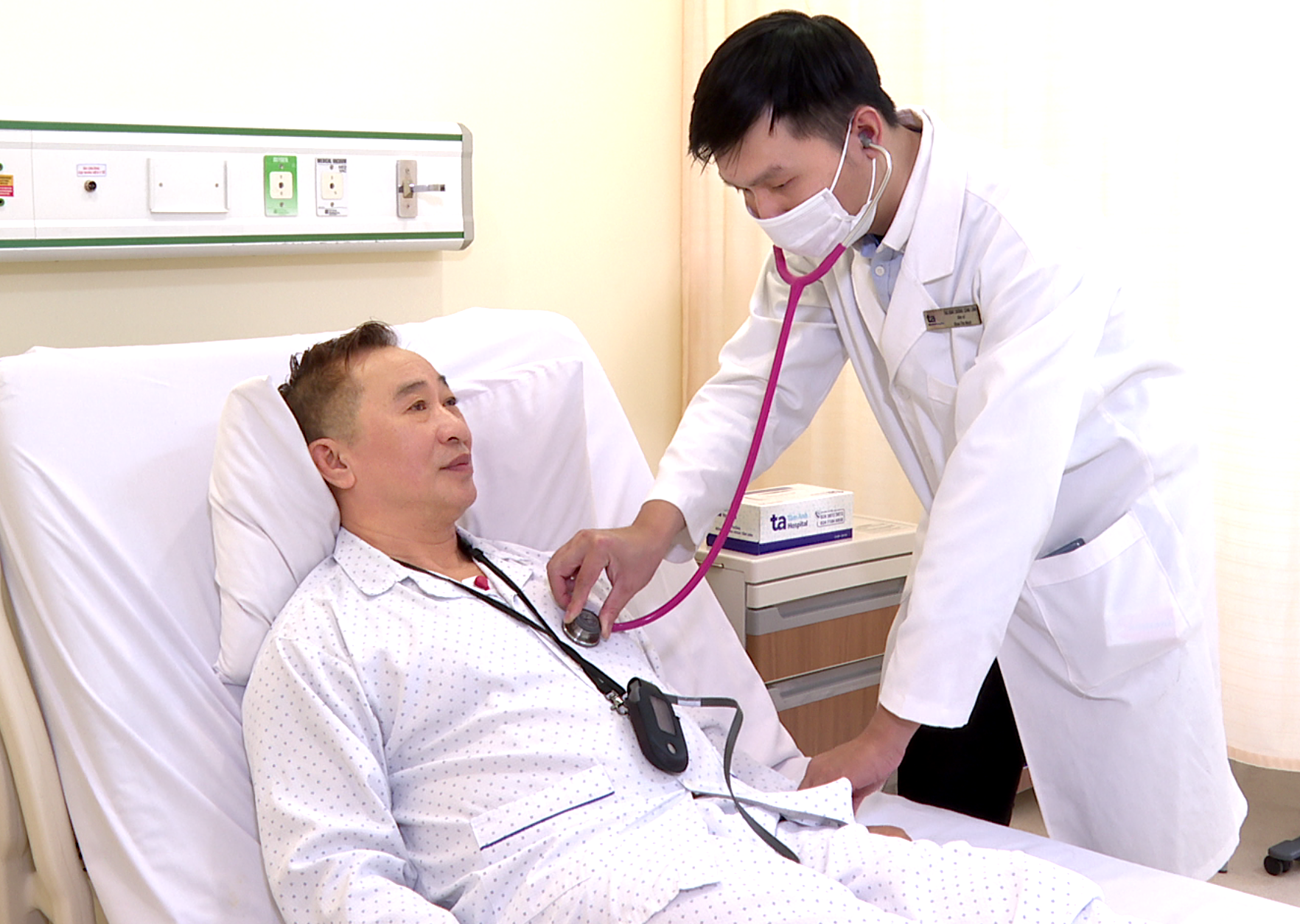 |
Doctor Linh examines Mr. Hien. Photo: Tam Anh General Hospital |
Despite Mr. Hien receiving a stent, the atherosclerotic process can still progress. In addition to adhering to medication, doctors advise patients to adopt lifestyle changes: quitting smoking, maintaining a healthy diet, controlling blood pressure, blood lipids, and blood sugar, engaging in appropriate physical activity, and attending regular follow-up appointments.
Doctor Linh emphasized that individuals with coronary artery disease should undergo a thorough cardiovascular assessment before undertaking long flights. During the flight, patients should stay hydrated, avoid alcohol, engage in light physical activity, and continue their prescribed cardiovascular medications. After landing, it is crucial to avoid sudden exertion and closely monitor for symptoms such as chest pain, shortness of breath, or dizziness. Any unusual symptoms require immediate medical attention to prevent dangerous cardiovascular complications.
Ly Nguyen
| Readers can submit cardiovascular questions here for doctors to answer. |