Many men believe alcohol helps reduce shyness, encourages social integration, and gets them "in the mood". However, the opposite is often true: many experience a familiar feeling of being energized at a party, only to feel "run out of battery" at home, experiencing decreased libido or difficulty maintaining an erection.
Dr. Tra Anh Duy, of Men's Health Center, explains that a decline in male performance is not necessarily due to "weakness". Instead, it stems from alcohol disrupting the body's biological rhythm, slowing nerve responses, disturbing sleep, and causing vascular and hormonal imbalances.
Alcohol's dual impact on nerves and blood vessels
Alcohol (ethanol) is a central nervous system depressant. In small quantities, men might feel less stressed. However, as alcohol intake increases, this "relaxing" effect transforms into "numbness", leading to slower reflexes, reduced sensation, and impaired focus on sexual stimuli.
Biologically, an erection results from the coordination of nerve signals and vasodilation, facilitated by nitric oxide. When alcohol slows brain function and hinders smooth blood vessel operation, the body struggles to respond to sexual arousal. Studies published in the Journal of Addictive Diseases (2024) and the Indian Journal of Psychiatry have consistently shown a high incidence of erectile dysfunction, nearly 70%, among men who abuse alcohol.
Poor sleep causes testosterone decline
Many mistakenly believe alcohol aids sleep because they "pass out" immediately after becoming intoxicated. However, this sleep is often of poor quality. While alcohol may shorten the time it takes to fall asleep, it frequently causes disruptions in the latter half of the night.
Waking up in the middle of the night and feeling exhausted in the morning drains both energy and libido. The male hormone testosterone is particularly sensitive to sleep quality. Consequently, alcohol not only impacts performance on the night it is consumed but also has a prolonged effect into the following day by disrupting sleep and the body's recovery processes.
 |
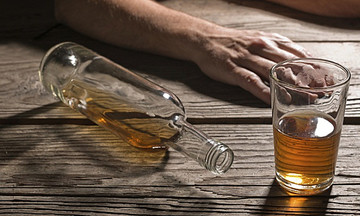
Alcohol (ethanol) is a central nervous system depressant. *Photo: Anh Thu* |
Binge drinking – an enemy of performance
At the Men's Health Center, Dr. Duy once treated a 37-year-old male patient who reported decreased libido and difficulty with erections. The patient had a habit of drinking with clients 3-4 evenings each week, often consuming large amounts of alcohol rapidly at the end of sessions. Test results revealed elevated liver enzymes, dyslipidemia, and low testosterone levels.
This case exemplifies "binge drinking", where consuming a large quantity of alcohol in a short period acutely disrupts nerve and vascular function, leading to dehydration and a rapid heartbeat.
Three principles to maintain performance during party season
According to Dr. Duy, the World Health Organization (WHO) emphasizes that no alcohol limit is "absolutely safe". To minimize risks to physiological health during holidays, men should observe three boundaries: First, avoid binge drinking; slow, spaced-out consumption is preferable to drinking a lot at once. Second, do not use alcohol as "courage medicine". Relying on alcohol for intimacy can lead to a cycle of psychological dependence. Increased stress leads to more drinking, which in turn causes poorer sleep and declining performance.
Finally, never mix alcohol with medication, especially erectile dysfunction drugs (PDE5 inhibitors), cardiovascular drugs, or blood pressure medication. This dangerous combination can cause a sudden drop in blood pressure, dizziness, or even serious cardiovascular events.
Individuals who need to be doubly cautious include those who experience facial flushing when drinking (a sign of poor alcohol metabolism), those with fatty liver, high blood lipids, or a history of mild erectile dysfunction.
"If the goal is to maintain stable performance, the practical rule is still to drink as little as possible. If prolonged low libido accompanies fatigue, men should seek medical attention early instead of self-medicating", the doctor advised.
Le Phuong