Mr. Vu, who has a history of hypertension and musculoskeletal conditions for many years, recently experienced numbness in his left arm, extending to his fingertips. He initially attributed this to a flare-up of his arthritis during cold weather. However, when the numbness began to disrupt his sleep and daily activities, he sought medical attention at Tam Anh General Hospital, TP HCM.
Dr. Ho Anh Tuan, a Master of Science and Level II Specialist at the Interventional Cardiology Center, explained that numerous factors can cause arm numbness. These include musculoskeletal conditions, carpal tunnel syndrome, thyroid disorders, Lyme disease, thoracic outlet syndrome, and atherosclerosis. During Mr. Vu's examination, doctors measured his blood pressure in both arms, noting a significant difference: 140/80 mmHg in the right arm and 110/70 mmHg in the left. They also identified a severe blood supply deficiency. Further investigation revealed a 90% severe stenosis at the origin of the left subclavian artery, caused by accumulated atherosclerotic plaque.
The subclavian artery is the primary blood vessel supplying blood to the arm. When this artery narrows, blood flow to the arm slows, leading to pain, fatigue, arm numbness, cramps, and transient dizziness. This dizziness occurs because reduced blood flows to the brain via the vertebral artery, which originates from the subclavian artery. Similar to other peripheral vascular diseases, untreated subclavian artery stenosis can lead to complications from reduced perfusion in the vessels downstream from the narrowed section. These complications include transient ischemic attacks (as the vertebral artery originates after the stenosis), vascular occlusion due to plaque rupture, and subclavian steal syndrome. Prolonged insufficient blood supply also puts fingers at risk of ulceration and necrosis.
Professor Doctor Vo Thanh Nhan, Director of the Interventional Cardiology Center at Tam Anh General Hospital, TP HCM, stated that two primary interventional methods exist for severe subclavian artery stenosis: stent placement and bypass surgery. The medical team opted for stent placement for Mr. Vu to mitigate the risk of acute limb ischemia, as this procedure is less invasive for the patient compared to surgery.
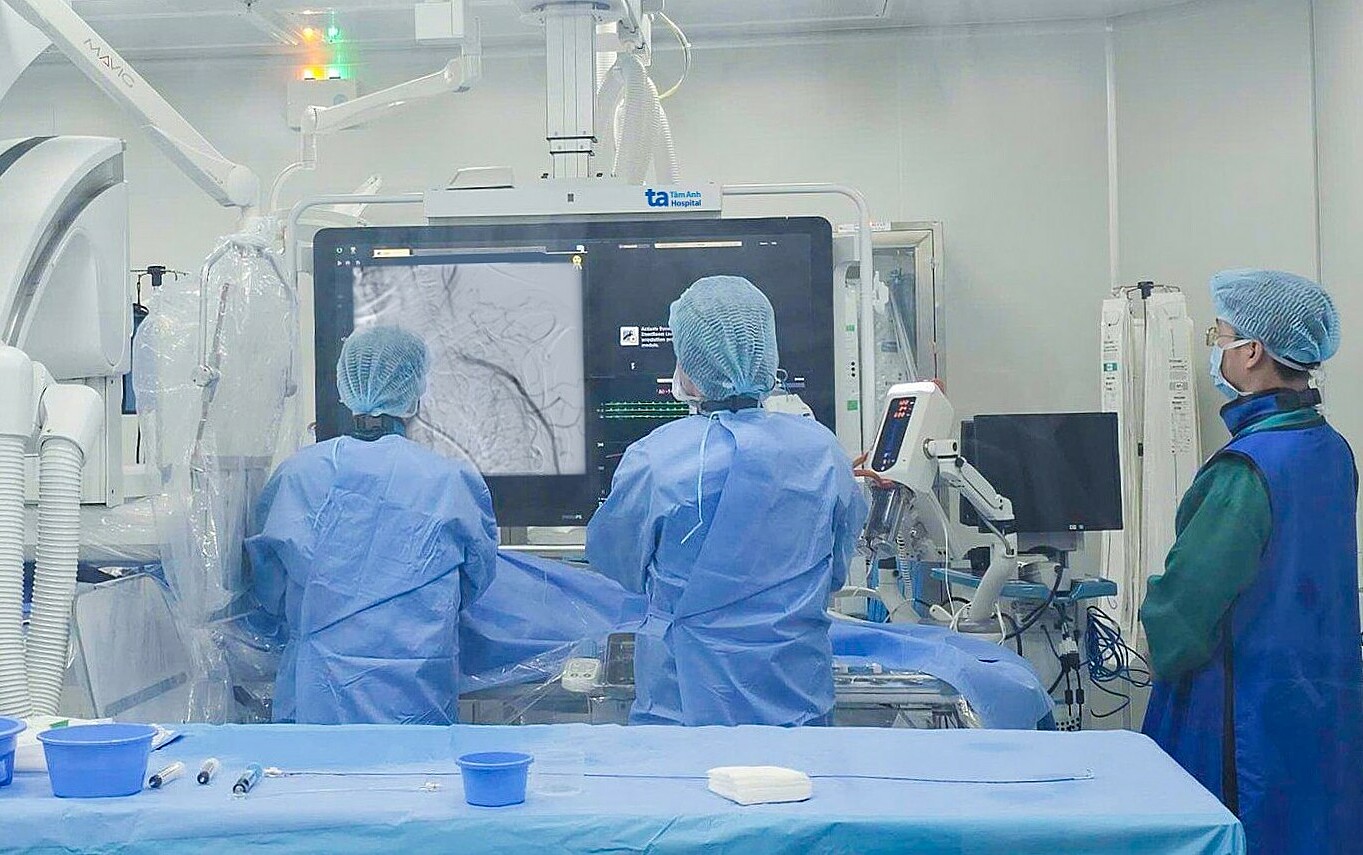 |
A doctor places a stent for a patient with peripheral vascular disease. Illustration: Ngoc Ha |
Doctors successfully inserted a catheter to guide a stent into the narrowed segment at the origin of Mr. Vu's left subclavian artery. Post-intervention DSA imaging confirmed good stent expansion and abundant blood perfusion. The patient's blood pressure in both arms normalized to an equivalent 140/80 mmHg. Mr. Vu's arm numbness resolved, and he was discharged after three days. He continues to attend regular follow-up appointments and physical therapy sessions.
Most patients with subclavian artery stenosis remain asymptomatic because the condition progresses slowly. Symptoms typically appear only when the vessel lumen narrows by over 70%. Some patients mistakenly attribute dizziness, pain, and arm numbness to other conditions, leading to delays in seeking medical attention.
The common cause of subclavian artery stenosis is the accumulation of atherosclerotic plaque. As this process advances, it narrows the arterial lumen and causes arterial wall calcification. Therefore, everyone should adopt a healthy lifestyle: eat a low cholesterol and saturated fat diet, avoid smoking, exercise regularly, manage weight, and avoid stress. It is also crucial to control risk factors such as diabetes, hypertension, and dyslipidemia. Seek medical attention immediately for any unusual symptoms.
Thu Ha
*Patient's name has been changed
| Readers can submit cardiology questions here for doctors to answer. |