Mr. Can experienced chronic shoulder pain and recurrent dislocations. Three months prior, a bicycle fall, causing his shoulder to hit the ground forcefully, exacerbated his pain. MRI 3 Tesla and 1975-slice CT scans at Tam Anh General Hospital Ho Chi Minh City revealed an extensive anterior labral tear, leading to recurrent shoulder dislocation and damage to the glenoid and humeral head.
Dr. Mai Hoang Duong, from the Center for Orthopedic Trauma, stated that frequent dislocations had caused complete tears in all four rotator cuff tendons, which are responsible for arm elevation, adduction, internal, and external rotation. Prolonged neglect of this condition could result in pseudo-paralysis, where the shoulder loses its ability to move, resembling muscle paralysis but without actual nerve damage. The patient also had three bone fragments fractured from the anterior shoulder joint, impaction of the humeral head, and deformity of the humeral condyle, leading to shoulder instability and restricted range of motion. Additionally, Mr. Can suffered from shoulder osteoarthritis.
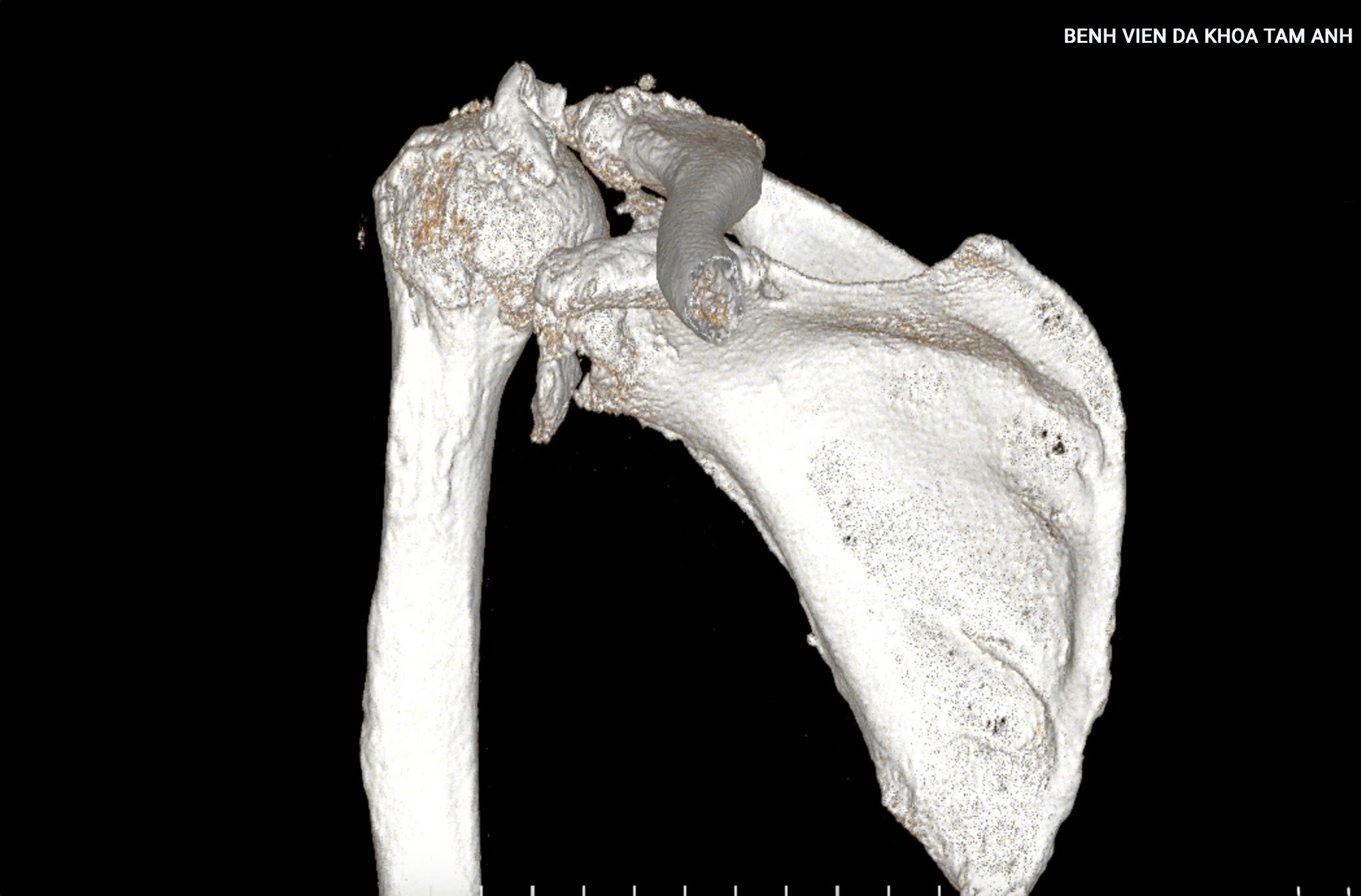 |
A 1975-slice CT scan shows the patient's shoulder joint dislocated and fractured. *Tam Anh General Hospital*. |
Dr. Duong prescribed artificial shoulder replacement surgery for the patient. Specialized TraumaCAD software aided the surgeon in selecting the appropriate artificial joint size and surgical approach. Mr. Can underwent reverse total shoulder arthroplasty, a procedure where the natural positions of the glenoid and humeral head are swapped. This technique aims to enhance the strength of the deltoid muscle, replace rotator cuff function, and restore shoulder mobility.
The surgical team accessed the shoulder joint via a deltopectoral approach, exposing the entire joint. They repaired the infraspinatus and subscapularis tendons and addressed other injuries with minimal invasion. This approach avoided damaging the cephalic vein, the longest superficial vein in the upper limb, promoting faster patient recovery. During the operation, a C-Arm continuous X-ray system guided the precise placement of the joint components.
On the first day after surgery, Mr. Can began guided physical therapy. Four days later, the patient was discharged, showing significant health improvement. He experienced no pain and could perform arm elevation, internal, and external rotation almost normally.
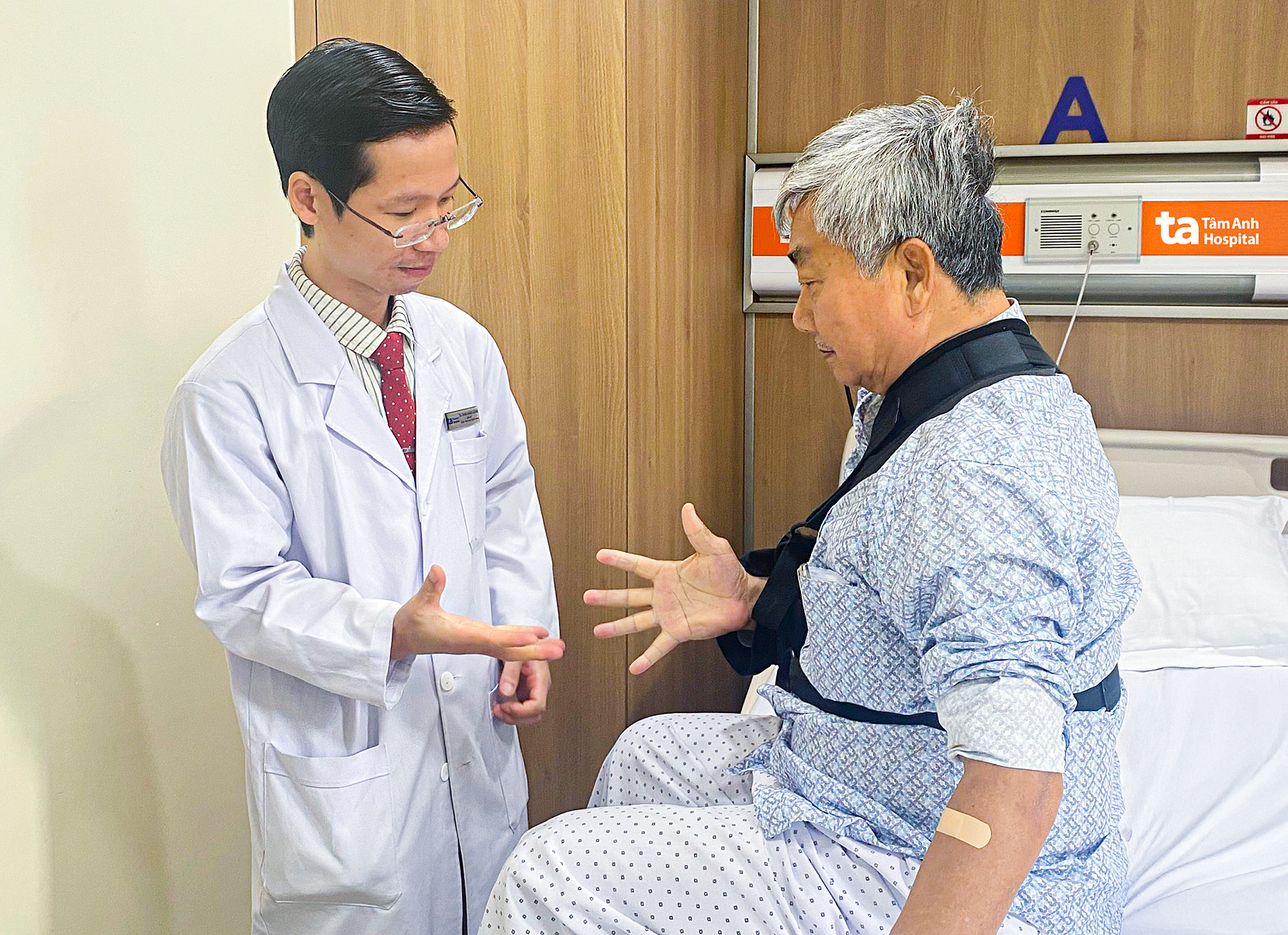 |
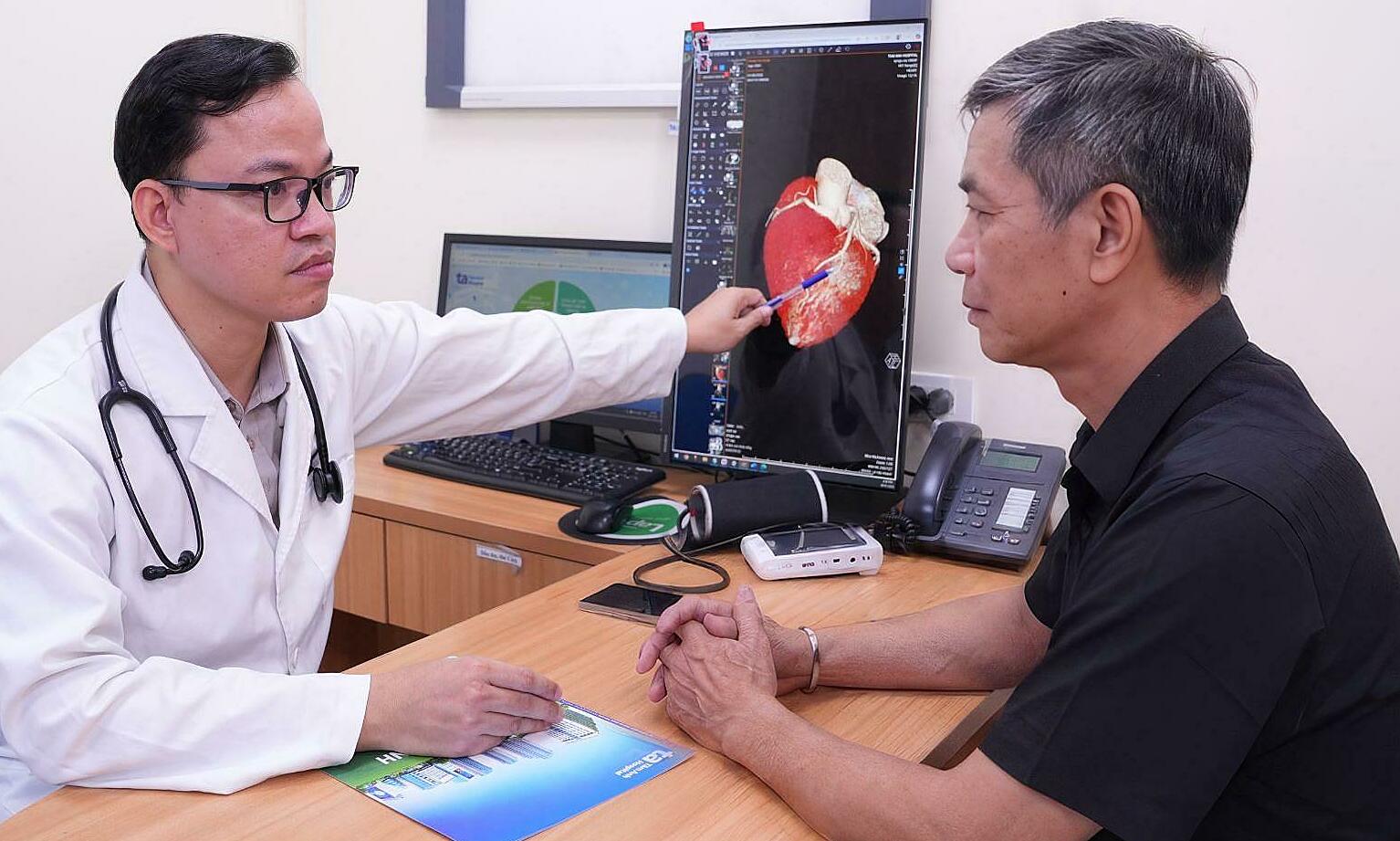
Dr. Duong checks the patient's range of motion recovery before discharge. *Tam Anh General Hospital*. |
Dr. Duong emphasized that the shoulder is one of the body's most active joints, possessing a complex structure and a large range of motion. Consequently, when the shoulder joint and its associated structures are damaged due to injury or disease, recovery can be challenging. Patients should seek immediate medical attention upon noticing any abnormalities to ensure timely treatment, limit complications affecting their quality of life, and potentially avoid the need for surgery.
By Phi Hong