Mr. Hoang, 54, presented with a BMI of 29.07, classifying him as class I obese according to Asian standards. He has a history of hypertension and chest pain, and had self-discontinued his blood pressure medication for the past year. A recent CT scan at Tam Anh General Hospital Hanoi revealed diffuse atherosclerotic lesions in all three major coronary arteries: the left anterior descending, circumflex, and right coronary arteries. Multiple sites showed severe narrowing, estimated at 90-95%.
Myocardial perfusion imaging indicated a slight reduction in blood flow to certain areas of the heart muscle, demonstrating that the coronary artery narrowing was beginning to impair the heart's blood supply. Despite this, the patient's myocardial structure remained preserved, and no signs of irreversible damage were observed.
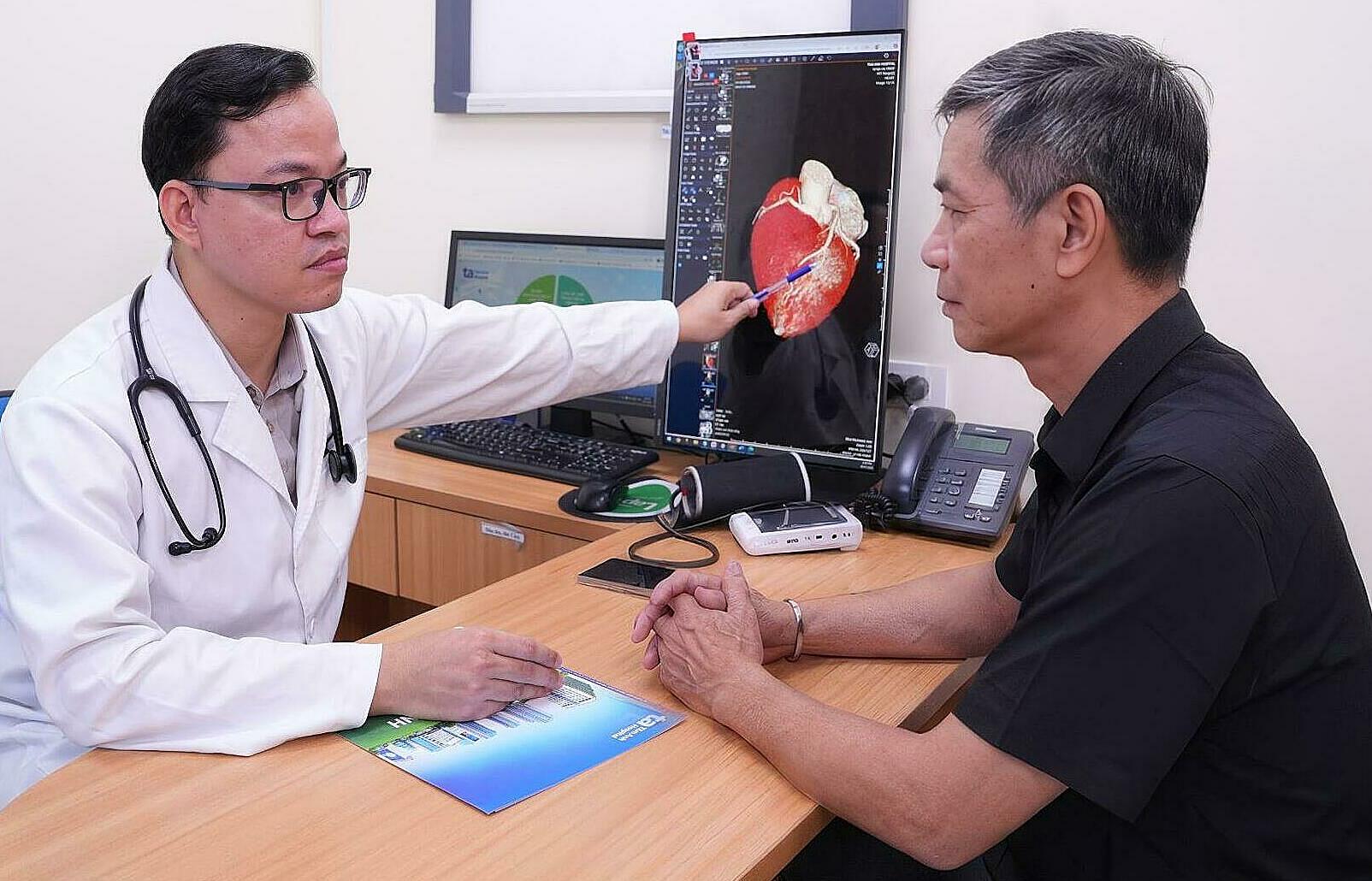 |
Doctor Long consults Mr. Hoang. *Photo: Tam Anh General Hospital*
Doctor Nguyen Tuan Long, from the Cardiology Department at Tam Anh General Hospital Hanoi, explained that Mr. Hoang's decision to stop medication led to uncontrolled blood pressure. Over time, this condition damages blood vessel walls, promotes endothelial dysfunction, and accelerates atherosclerosis. If hypertensive patients do not adhere to prescribed medication, the increased pressure on blood vessel walls can lead to vessel rupture or blockage, potentially causing stroke or myocardial infarction. These complications often occur suddenly, without warning signs.
The doctor prescribed blood pressure control medication and antiplatelet drugs to prevent the risk of myocardial infarction. He also advised regular follow-up appointments and recommended lifestyle and dietary changes to manage Mr. Hoang's health indicators. After a three-month follow-up, Mr. Hoang's health stabilized, and he will continue to use cardiovascular support medications and manage his blood pressure as prescribed.
Hieu Nguyen
| Readers can send questions about cardiovascular diseases here for doctors to answer |