On 25/9, Doctor of Clinical Specialty 2 Nguyen Tran Thi Huyen Dung, Deputy Head of the Neonatal Pathology Department at Gia Dinh People's Hospital, reported on the infant's condition. The newborn received close monitoring for respiration, body temperature, fluids, and electrolytes. Specialized skin care focused on hydration, preventing water loss, and protecting the skin barrier. The medical team also carefully monitored and managed the ectropion to safeguard the baby's eyes.
The infant also received respiratory support through nCPAP. Doctors and nurses regularly assessed the skin's condition, including dryness, peeling, risk of dehydration, and any signs of infection, to ensure prompt treatment. After one week, the baby's skin and eye conditions improved, and respiration stabilized. The infant was discharged after 12 days of hospitalization.
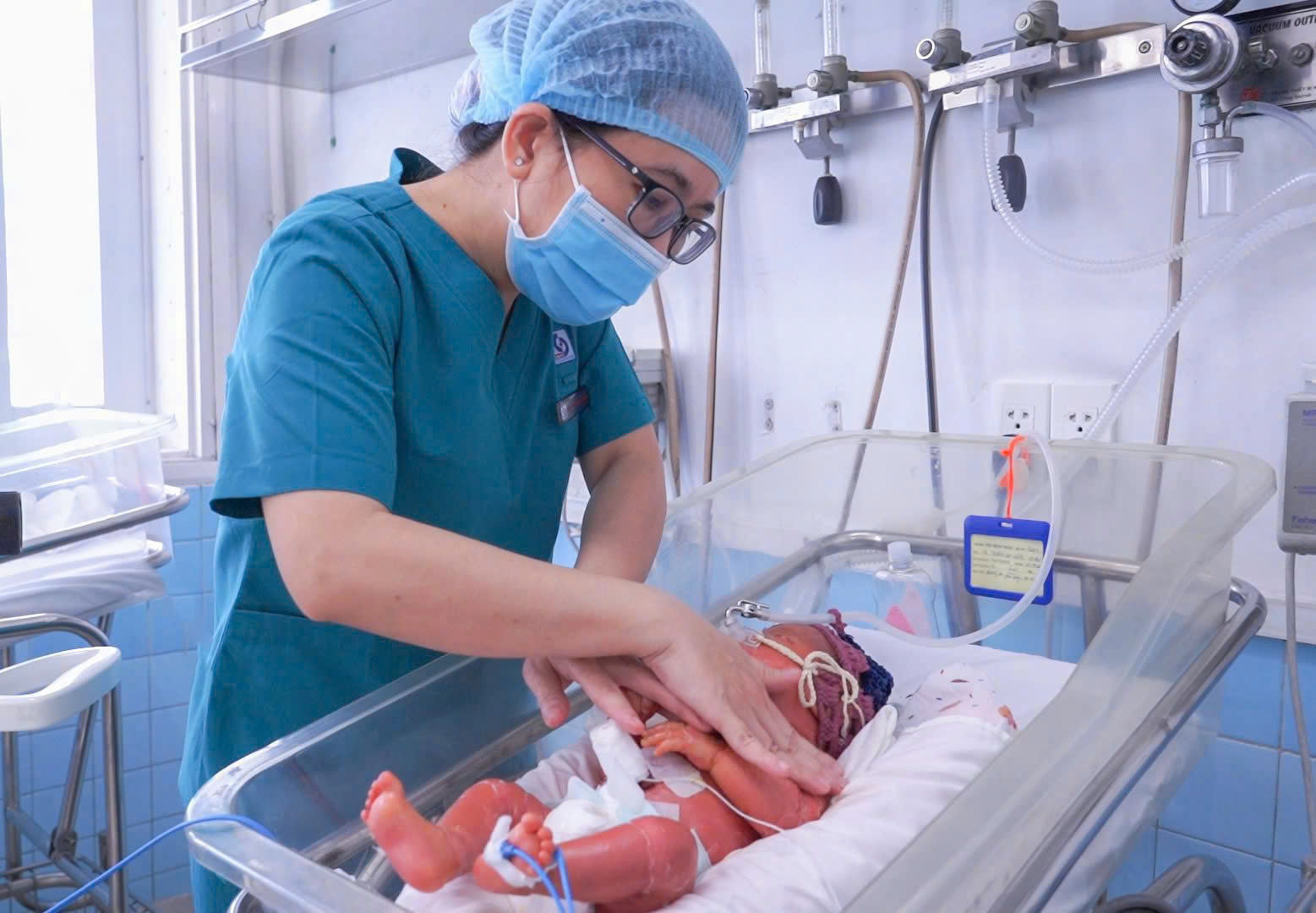 |
The infant patient received care at Gia Dinh People's Hospital. *Photo: Hospital provided* |
According to Doctor Dung, ichthyosis, or congenital fish scale disease, encompasses a group of skin conditions that can manifest from infancy with varying degrees of severity. Lamellar ichthyosis is a rare form of the disease, linked to genetic factors, with an estimated prevalence of about 1/100,000 to 1/300,000 people.
The condition can cause the skin to be dry, taut, shiny, peel, or be covered by a membrane. Some children may experience ectropion and eclabium, affecting their eyes and ability to feed. When the skin's protective barrier is compromised, infants face risks of dehydration, body temperature dysregulation, and infection.
For premature infants, whose skin barrier is not yet fully developed, care requires particular caution. After discharge, families must continue moisturizing and providing skin care as instructed by doctors. It is important not to self-medicate or use unprescribed topical products, especially those containing corticosteroids.
Doctors advise parents to seek medical attention if they notice their child's skin is excessively dry, peeling, red, cracked, or has changed color. Early detection, ongoing monitoring, and appropriate skin care help limit complications in children with congenital skin diseases.
Le Phuong