Dr. Phung Van Thao, from the Cardiovascular Center at Tam Anh General Hospital Hanoi, reported that Ms. Mai was admitted with recurring severe chest pain radiating to her left shoulder, accompanied by shortness of breath. Her blood pressure peaked at 172/103 mmHg, significantly higher than the normal range of below 120/80 mmHg. An electrocardiogram (ECG) revealed ST segment depression in leads V2-V4, while cardiac troponin levels increased from 552 to 2,700 pg/mL. These typical chest pain symptoms, ECG changes, and elevated troponin levels indicated potential myocardial damage.
A coronary artery computed tomography (CT) scan showed only mild atherosclerosis, which was inconsistent with the extent of myocardial injury. Subsequent cardiac magnetic resonance imaging (MRI) revealed myocardial edema and abnormal contrast enhancement, confirming acute myocarditis.
Further MRI scans identified a nodule in the left adrenal gland. Hormone tests confirmed elevated levels of noradrenaline, a type of catecholamine. Dr. Thao explained that an adrenal tumor could over-secrete catecholamines, triggering sudden episodes of hypertension and directly impacting the heart. High catecholamine levels can increase myocardial oxygen demand, cause vasoconstriction, and lead to dysfunction and damage to myocardial cells.
Ms. Mai's blood pressure gradually stabilized, and her cardiovascular symptoms improved with treatment. She underwent surgery to remove the left adrenal medulla tumor. Post-surgery, her adrenal medulla hormone levels returned to normal, and her cardiac function recovered, leading to her discharge from the hospital.
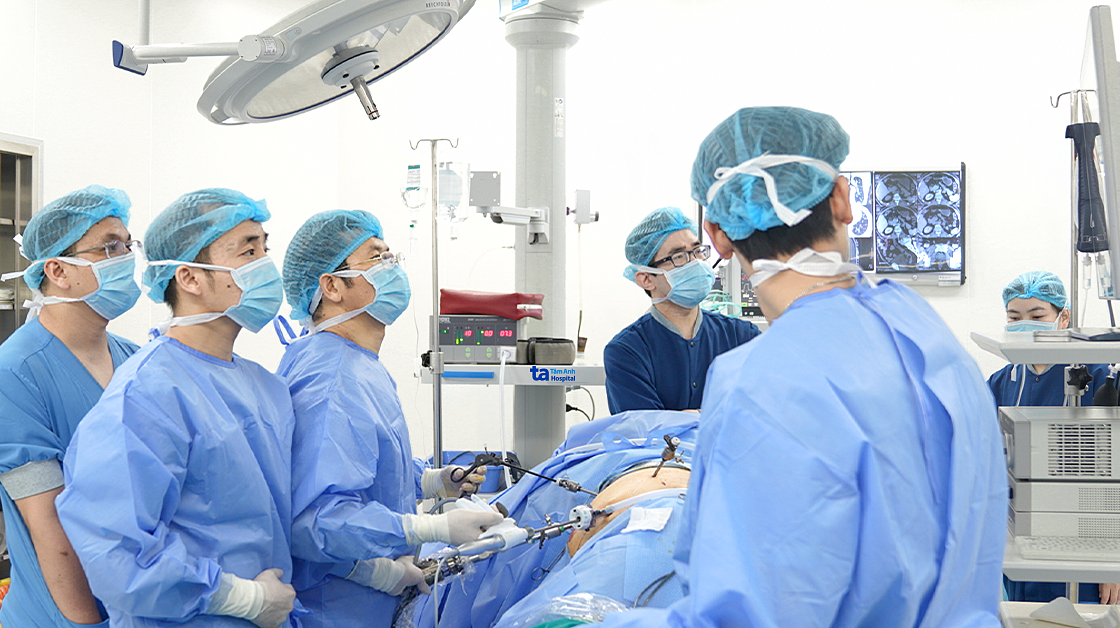 |
The surgical team performed the removal of the left adrenal medulla tumor for the patient. Photo: Tam Anh General Hospital |
According to Dr. Thao, most cases of primary hypertension are not due to a specific disease but are linked to prolonged factors such as advanced age, genetics, a high-salt diet, being overweight, obesity, inactivity, stress, or smoking. Secondary hypertension, however, results from clear underlying conditions like adrenal tumors, endocrine disorders, or sleep apnea.
Dr. Thao advises individuals experiencing sudden, abnormally fluctuating, or difficult-to-control hypertension, especially when accompanied by chest pain, palpitations, a rapid heartbeat, headache, sweating, or shortness of breath, to seek medical evaluation to identify the cause. It is important to measure blood pressure correctly, noting the time, pressure levels, and any accompanying symptoms to provide to the doctor during the examination. Early detection and appropriate treatment of the cause of hypertension can limit long-term damage to the heart, brain, kidneys, and other organs.
Ly Nguyen
*Patient's name has been changed.
| Readers can submit questions about cardiovascular disease here for doctors to answer |