Doctor Dang Tuan Dung from the A9 Emergency Center, Bach Mai Hospital, reported that the facility recently admitted many severe thermoregulation disorder cases requiring ventilation, dialysis, and intensive care. The expert emphasized that people should immediately consider the risk of heatstroke or heat exhaustion if they suddenly feel exhausted, nauseous, or dizzy in humid conditions. Ignoring these initial signs can quickly worsen symptoms, leading to a high fever above 40 degrees Celsius, hot and dry skin, loss of consciousness, seizures, and deep coma.
The expert categorizes heat-related injuries into two core forms: heat exhaustion and heatstroke. Heat exhaustion occurs when individuals are active too long in environments with high temperatures, high humidity, and lack of air movement. This condition often affects heavy laborers or those wearing restrictive clothing.
In contrast, heatstroke appears when direct sunlight hits the head and neck, damaging the brain's thermoregulation center. Both forms can easily progress to heat shock, directly threatening the lives of children, the elderly, individuals with chronic illnesses, and outdoor workers like shippers and construction workers.
Early cooling measures determine the victim's chance of survival. Bystanders should immediately move the affected person to a cool, airy place. Next, the first aid provider should remove thick clothing, wipe the victim with cool water, and apply wet towels to areas with large blood vessels such as the neck, armpits, and groin. Doctor Dung advises against applying ice packs to the entire body, as this causes vasoconstriction and hinders heat dissipation. Additionally, family members should not arbitrarily force the victim to take antipyretics, because the cause of the increased temperature does not stem from infection.
If the patient is still conscious, the helper should slowly give small sips of cool water, prioritizing oresol solution or fruit juice. People must remove ice water, alcohol, or concentrated salt solutions from the list of emergency drinks. In cases where the victim is drowsy, convulsing, or unconscious, those present at the scene must turn the victim into a safe side-lying position to prevent aspiration, continuously monitor breathing, and call an ambulance immediately.
To protect health during hot weather, the medical expert advises people to limit going out during peak midday sun hours. Each individual should proactively rehydrate before, during, and after physical activity. People should prioritize light-colored clothing made from sweat-absorbent materials, wear wide-brimmed hats, and ensure adequate daily nutrition and electrolytes for the body.
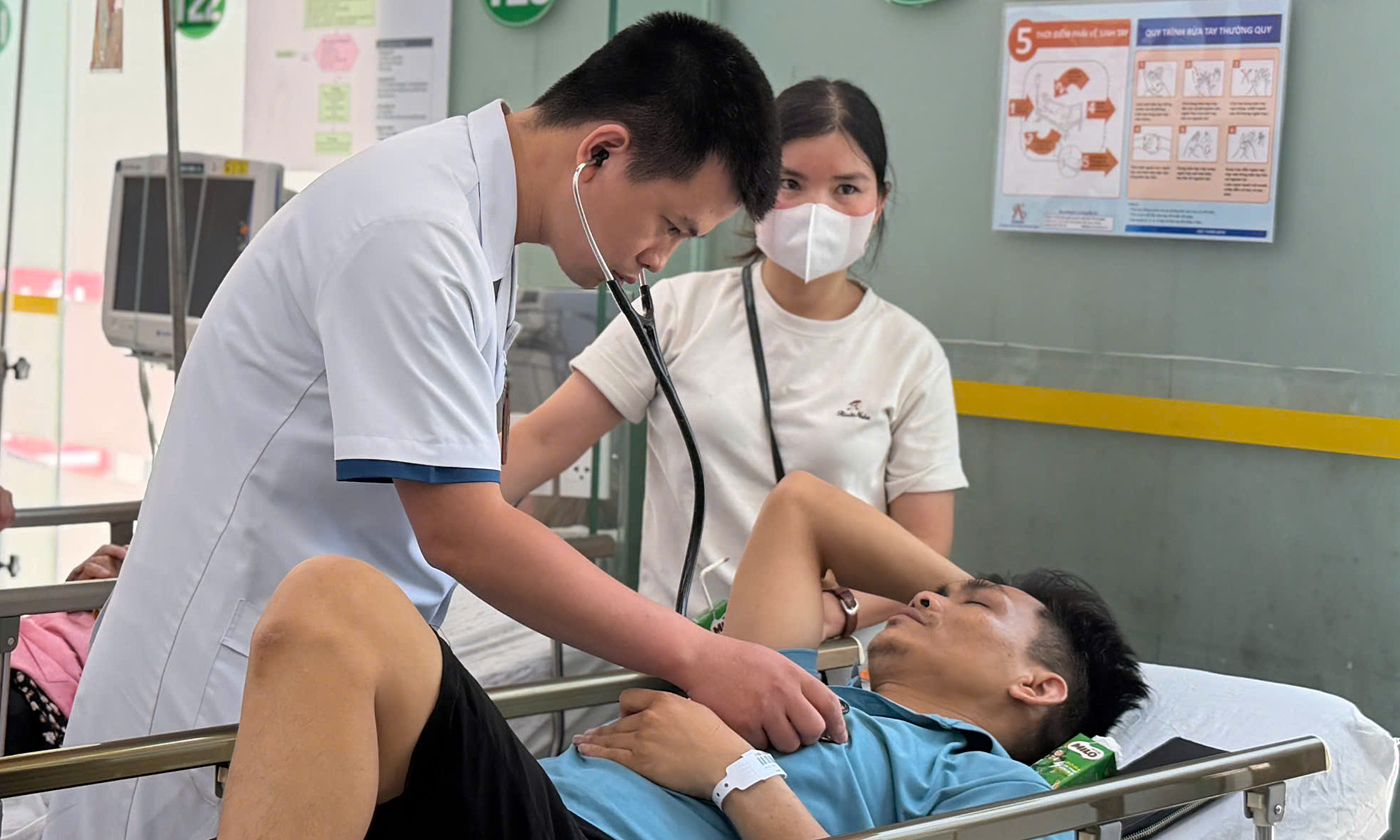 |
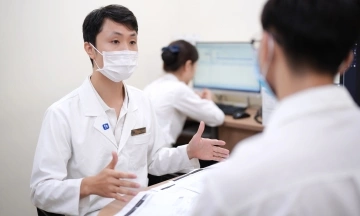
Doctor Dung examines a patient hospitalized due to hot weather. Photo: Le Nga |
Le Nga