Vietnam records approximately 22,584 new cases of colorectal cancer and 10,990 deaths annually. Stomach cancer accounts for about 12,373 new cases and 10,280 deaths. These figures, from GLOBOCAN 2024 statistics, place a significant burden on the healthcare system. Digestive tract cancers affect both older adults and working-age individuals. The disease often progresses silently, and by the time patients notice unusual symptoms, it is already in an advanced stage, according to associate professor Pham Cam Phuong, director of the Nuclear Medicine and Oncology Center at Bach Mai Hospital.
Associate professor Phuong stated that digestive tract cancers develop from many factors, with diet and lifestyle playing a significant role. Regularly consuming large amounts of red meat, processed meat, and insufficient vegetables, fruits, and fiber increases the risk of colorectal cancer. Patients should limit sausages, bacon, cold cuts, and other processed meat products.
Furthermore, physical inactivity, being overweight, and obesity are also linked to colorectal cancer. A sedentary lifestyle combined with a high-energy diet creates numerous adverse health factors.
Precancerous lesions also pose a risk. Some colorectal polyps can transform into cancer over time. Early detection and removal of high-risk polyps help reduce the chance of developing the disease. Individuals with a family history of colorectal cancer or hereditary polyposis syndrome need particular vigilance.
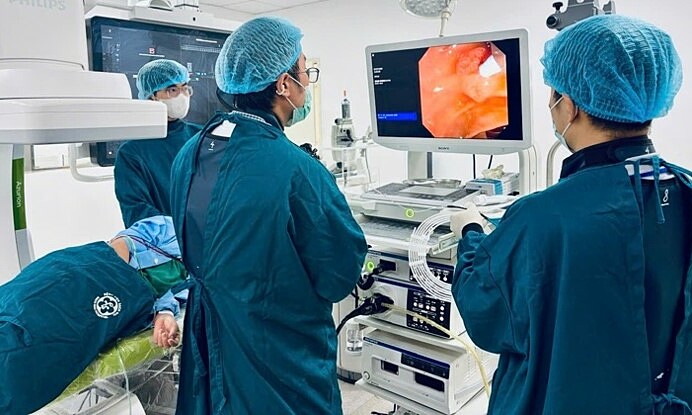 |
A doctor performs an endoscopy on a patient at Bach Mai Hospital. Photo: Hospital provided |
The digestive system has a remarkable ability to adapt. In the early stages of cancer, patients often eat, work, and live normally. Many people tend to dismiss digestive changes as common disturbances, which delays seeking medical examination. Associate professor Phuong advises: "When you notice persistent abnormal changes in your bowel movements, especially bloody or black stools, you need to see a doctor to find the cause".
Here are some signs to look for:
Changes in bowel habits: Persistent constipation, diarrhea, irregular bowel movements, or the feeling of incomplete evacuation (tenesmus) require attention if prolonged.
Changes in stool shape: Narrow, flattened, or unusually shaped stools that persist may indicate changes within the colon. This is not a specific sign of cancer and requires evaluation alongside other symptoms.
Bloody stools: Bright red blood or dark, black stools indicate gastrointestinal bleeding. The causes are diverse, ranging from benign conditions to cancer, so patients should not self-diagnose or disregard this symptom.
Persistent abdominal pain and fatigue: Dull, recurring abdominal pain, especially when accompanied by changes in bowel habits, requires examination. Chronic gastrointestinal blood loss can also lead to anemia, causing patients to feel tired and weak.
Unexplained weight loss: Rapid weight loss without changes in diet or physical activity warrants investigation, especially when accompanied by other digestive abnormalities.
The doctor emphasized that these symptoms do not automatically signify cancer. Many other digestive diseases can present with similar manifestations. Identifying the correct cause through examination and necessary tests is crucial.
Screening before symptoms appear helps in the early detection of colorectal cancer. The American Cancer Society recommends that individuals with an average risk begin colorectal cancer screening from 45 years of age. Depending on the case, a doctor may prescribe a fecal test or an endoscopy.
High-risk individuals, such as those with a family member who had colorectal cancer, a history of polyps, or chronic inflammatory bowel disease, require earlier screening. The screening schedule should be adjusted according to each person's medical history and risk factors. High-risk groups may need earlier screening and different methods compared to individuals with average risk.
Le Nga