Dr. Doan Thi Phuong Nhi, a specialist at the High-Tech Eye Center, Tam Anh General Clinic District 7, noted that Ms. Linh, 59, maintained 10/10 vision in both eyes and had no underlying health conditions or history of trauma. A detailed examination, however, revealed inflammatory cells floating in the anterior chamber fluid of her left eye. This clear liquid, located in the front part of the eye, indicated uveitis.
The intraocular pressure in her left eye was significantly elevated at 49 mmHg, compared to the normal range of 11-21 mmHg. Her right eye measured 20 mmHg, and no damage was observed in the fundus. Ms. Linh was thus diagnosed with elevated intraocular pressure caused by uveitis.
Uveitis is an inflammation affecting the middle layer of tissue between the sclera and the retina, which includes the iris, ciliary body, and choroid. Patients with uveitis may experience secondary elevated intraocular pressure. This complication arises when inflammation obstructs the eye's fluid drainage network or leads to scar tissue formation, increasing the risk of fluid buildup. Dr. Nhi warned that untreated uveitis can progress to glaucoma, a condition causing significant vision impairment or permanent vision loss.
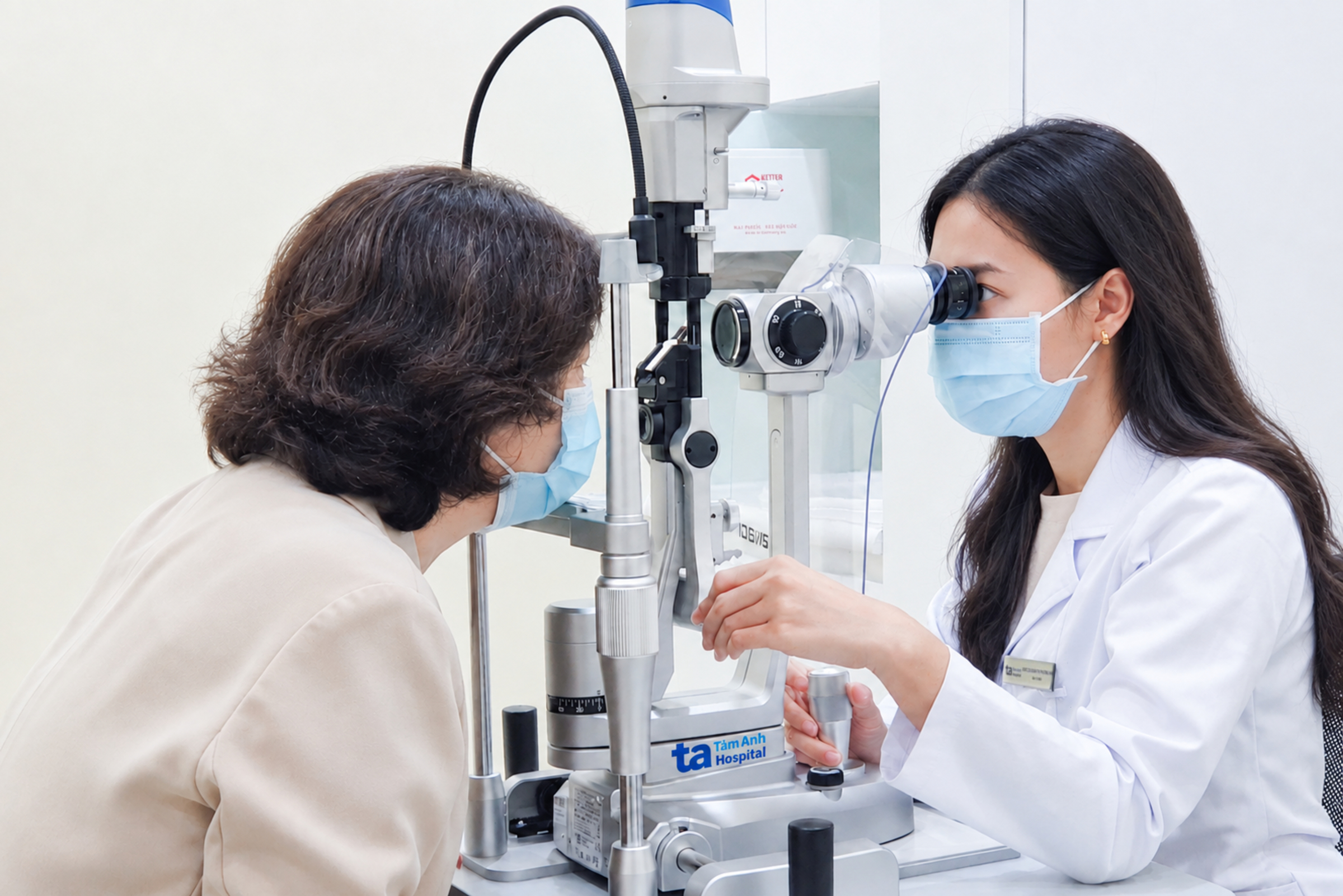 |
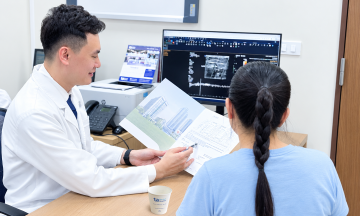
Dr. Nhi examines Ms. Linh's eyes using a slit lamp. *Photo: Tam Anh General Hospital*
Dr. Nhi prescribed eye drops and non-corticosteroid oral anti-inflammatory medication for Ms. Linh's left eye, aiming to control the inflammation and prevent its progression. She also received medication to lower her intraocular pressure. After one week, her left eye's intraocular pressure stabilized at 19 mmHg. The doctor noted a positive response to treatment and advised Ms. Linh to stop the intraocular pressure-lowering medication.
One month later, at a follow-up appointment, Ms. Linh's uveitis had resolved. She reported no further pain and her vision was clear. However, the doctor cautioned that the condition could recur or affect her other eye. Patients should monitor for any unusual signs, including blurred vision, eye redness, eye pain, severe headaches, or sudden vision loss, and seek prompt medical attention if these symptoms arise.
Uveitis is a common cause of vision impairment. Symptoms include eye pain, redness, blurred vision, light sensitivity, and the appearance of floaters or black spots. The condition is often associated with autoimmune diseases, infections, or certain medications. Potential complications include elevated intraocular pressure, cataracts, macular edema, and retinal damage, all contributing to vision loss.
Dr. Nhi recommends regular eye examinations every 6 to 12 months for individuals at high risk, such as those with a history of eye infections, autoimmune diseases, or previous eye trauma or surgery. Should any unusual symptoms arise, patients must seek immediate care at a hospital with an ophthalmology department for timely diagnosis and treatment.
Ngoc Kim Tham
*Patient's name has been changed
| Readers can submit ophthalmology questions here for doctors to answer. |