10 minutes before eating
Master of Science, Doctor Ha Dinh Khai, from the Department of Endocrinology and Diabetes, Tam Anh General Hospital Hanoi, states that taking a short break of about 10 minutes before a meal helps the body prepare to receive food. This method assists individuals in managing portion sizes, preventing overeating, and making informed food choices.
This time can be used for simple activities such as checking blood sugar (especially for those using insulin or medications that may cause hypoglycemia), drinking water, or practicing deep breathing. Pre-meal blood sugar checks aid in controlling blood glucose levels by allowing for portion adjustments, preventing excessive eating, making appropriate food choices, or adjusting insulin dosages (if applicable).
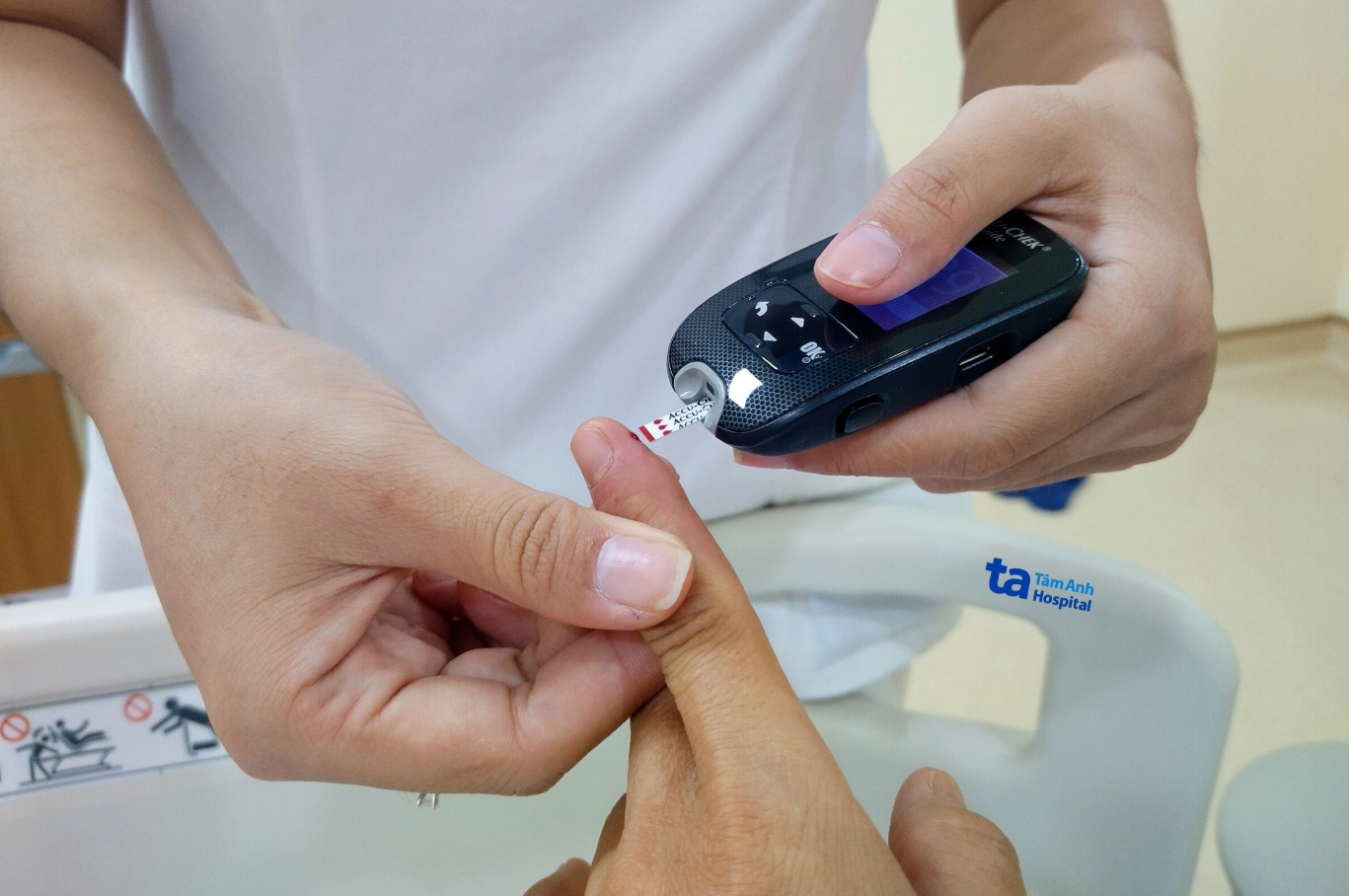 |
Finger prick to measure blood sugar. Photo: Tam Anh General Hospital |
The first 10 minutes during the meal
During the first 10 minutes of a meal, the order of food consumption can influence blood sugar. In this period, it is advisable to prioritize protein and vegetables before consuming carbohydrates for the next 10 minutes. This approach helps limit significant blood sugar fluctuations and reduces post-meal blood glucose and insulin variations.
10 minutes after the meal
After eating, light physical activity, such as walking, is recommended. A 10-minute walk after each main meal helps lower blood sugar in individuals with type two diabetes.
Post-meal walking also helps prevent high blood sugar levels by improving insulin sensitivity and aiding digestion. This effect is often most noticeable after dinner, when carbohydrate intake is typically higher and the body is less active. This habit also improves cardiovascular health, boosts metabolism, and reduces feelings of post-meal sluggishness.
10 minutes during the day
Doctor Khai advises dedicating an additional 10 minutes each day to evaluate lifestyle habits. This is an opportune time to review diet, sleep, water intake, and activity levels. This self-assessment process helps identify factors that influence blood sugar, enabling individuals to adjust their behavior for better management.
Furthermore, maintaining 10 minutes of low-intensity resistance training daily helps increase muscle mass, supporting the body's efficient processing of glucose and reducing insulin requirements.
Effective diabetes management depends on various factors, including medication, blood sugar monitoring, healthy nutrition, physical activity, and stress and emotional management. Doctor Khai notes that this rule serves as a supportive measure and does not replace established diabetes treatments.
Thuy Duong