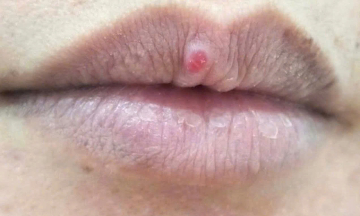
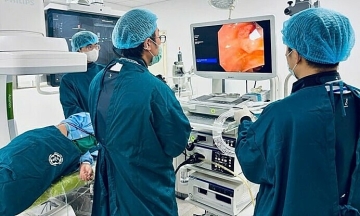
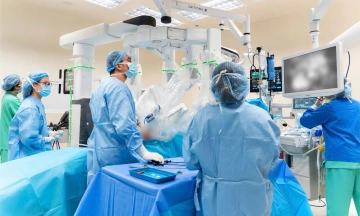
Doctor Lam Thien Kim, from the Pediatric Surgery department at Tam Anh General Hospital Ho Chi Minh City, reported a lesion behind the patient's left ear. This lesion extended to the occipital region, had an abnormally rough surface, and was oozing fluid and blood. Doctors diagnosed it as a neoplasm.
A neoplasm is a condition where cells grow abnormally, forming a mass in the body. Most tumors are benign, but some cases require further examination to rule out malignancy. Tumors can appear in various locations, including the skin and subcutaneous tissue.
Doctor Thien Kim assessed that simply removing the lesion could make it difficult to directly close the resulting skin defect behind Dang's ear, or it might create tension on the surgical incision. The medical team planned surgery to excise the tumor and reconstruct the skin defect, aiming to preserve the ear's shape.
Dang received laryngeal mask anesthesia. Doctors completely removed the abnormal mass. They then designed a local skin flap to cover the defect, which was about 4 cm, and performed aesthetic suturing.
After surgery, Dang was alert and resumed normal eating and daily activities. He was discharged the same day. At a follow-up appointment two weeks later, the skin flap was viable, the area behind the ear was stable, and there was no retraction or deformity. Dang had his sutures removed and will continue to monitor the surgical site.
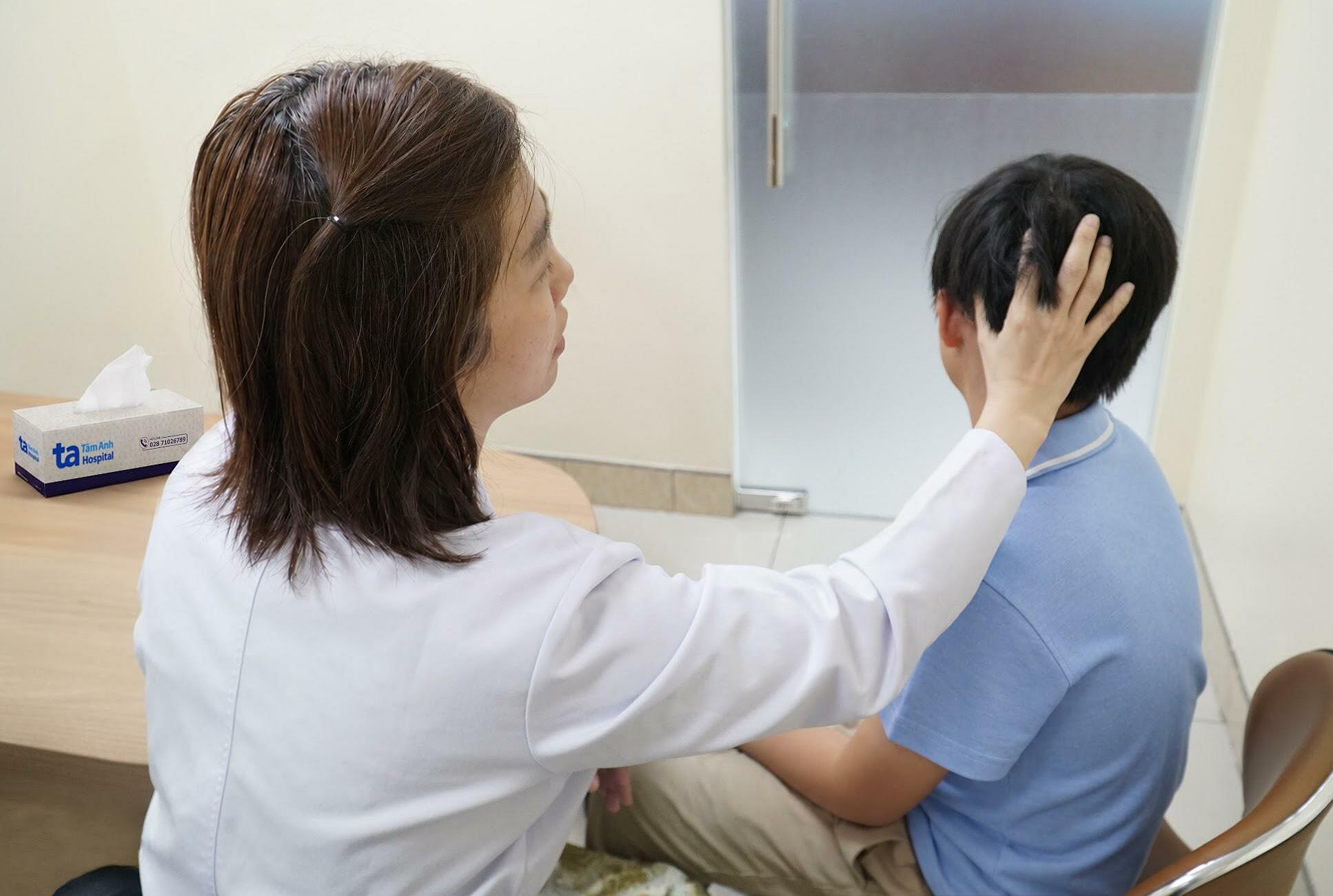 |
Doctor Thien Kim examines Dang after surgery. Photo: Tam Anh General Hospital |
Doctor Kim noted that skin tumors can exist for extended periods without causing symptoms. If a tumor continues to grow, the affected skin may experience rubbing, scratching, bleeding, or infection. A large tumor can also complicate future surgical procedures and reconstruction. In cases of malignant tumors, delayed detection and treatment can lead to disease progression and invasion of surrounding tissues.
Doctor Kim advised parents not to pick at, cut, burn, or apply medication to abnormal skin masses on children. For long-standing birthmarks or lesions, families should monitor for unusual changes in size, shape, color, or symptoms, and seek early medical consultation for their child.
Phuong Dang
* Patient's name has been changed
| Readers can send questions about children's diseases here to be answered by doctors |