Among the first children to receive the vaccine was the 4-year-old son of Bao Ngoc, 32, from Ho Chi Minh City. When he was one year old, her son suffered from a severe case of hand, foot, and mouth disease caused by EV71, requiring hemodialysis and ECMO (extracorporeal membrane oxygenation) intervention at Benh vien Nhi dong 1. Ngoc stated that she took her son for vaccination immediately after learning of its availability, as she was "haunted by his previous severe illness."
 |
People bring young children to receive the hand, foot, and mouth disease vaccine during its initial launch at VNVC. Photo: Tran Minh |
People bring young children to receive the hand, foot, and mouth disease vaccine during its initial launch at VNVC. Photo: Tran Minh
In Ha Noi, Minh Tam, 37, had her child vaccinated after the child had contracted hand, foot, and mouth disease three times. According to Tam, each time her child fell ill, the family had to closely monitor fever, meals, sleep, and any unusual symptoms due to concerns about severe progression. Therefore, when the vaccine became available, the family immediately registered their child for vaccination.
This marks the first time a vaccine against hand, foot, and mouth disease caused by the EV71 virus — a common strain that can rapidly progress to severe illness — has been introduced for vaccination in Vietnam. A VNVC representative noted a substantial number of pre-registrations before the deployment date. To meet public demand during the initial five days, VNVC increased staff and extended service hours at its centers. Examination areas, vaccination rooms, and the reception process were also expanded to ensure quick vaccine delivery while meeting all vaccination safety requirements.
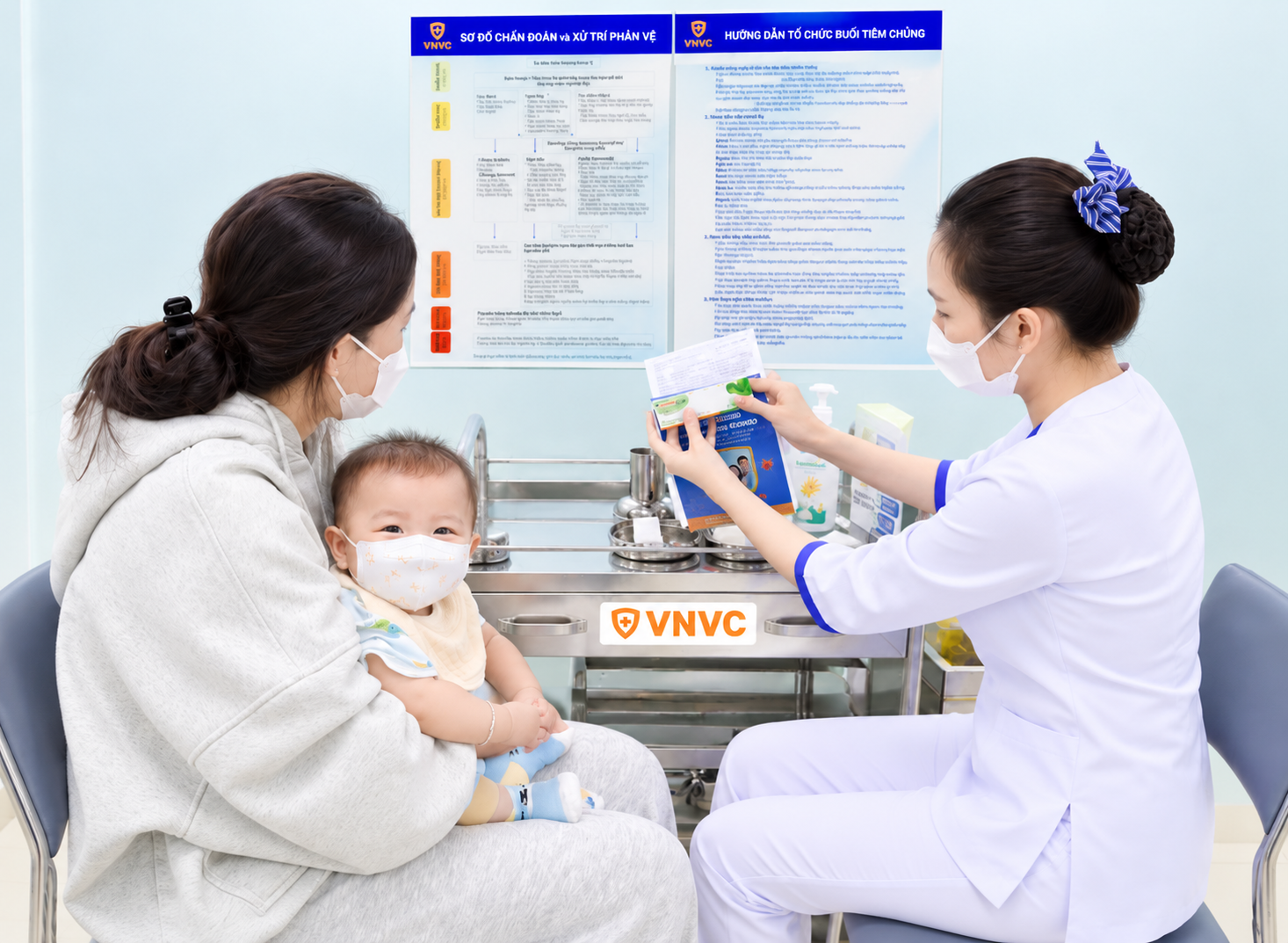 |
After five days, nearly 300 VNVC centers nationwide administered nearly 25,000 vaccine doses and received tens of thousands of pre-bookings. Photo: Minh Tran |
After five days, nearly 300 VNVC centers nationwide administered nearly 25,000 vaccine doses and received tens of thousands of pre-bookings. Photo: Minh Tran
At a recent conference titled "A New Era in EV71 Hand, Foot, and Mouth Disease Prevention," domestic and international experts presented updated data on the vaccine's efficacy. Studies reported a disease prevention efficacy of up to 97% and prevented hospitalization due to EV71, with no EV71 cases observed in the vaccinated group.
Doctor Truong Huu Khanh, Vice Chairman of the Ho Chi Minh City Infectious Disease Association, stated that the hand, foot, and mouth disease vaccine is indicated for children aged two months to under six years, even if they have previously contracted the disease. EV71 is a primary pathogen known for its rapid spread, causing many severe cases, neurological, respiratory, and cardiovascular complications, and fatalities in young children. Symptoms of EV71 infection can be subtle, easily mistaken for other common illnesses, leading to delayed treatment and an increased risk of complications.
"This is why vaccine development targets the most severe pathogen, EV71, rather than aiming to prevent all strains of viruses causing hand, foot, and mouth disease," Doctor Khanh explained.
Doctor Khanh anticipates that the vaccine, a culmination of over 15 years of research in Vietnam and other countries and territories worldwide, will help reduce infection rates and severe cases caused by EV71 once deployed domestically.
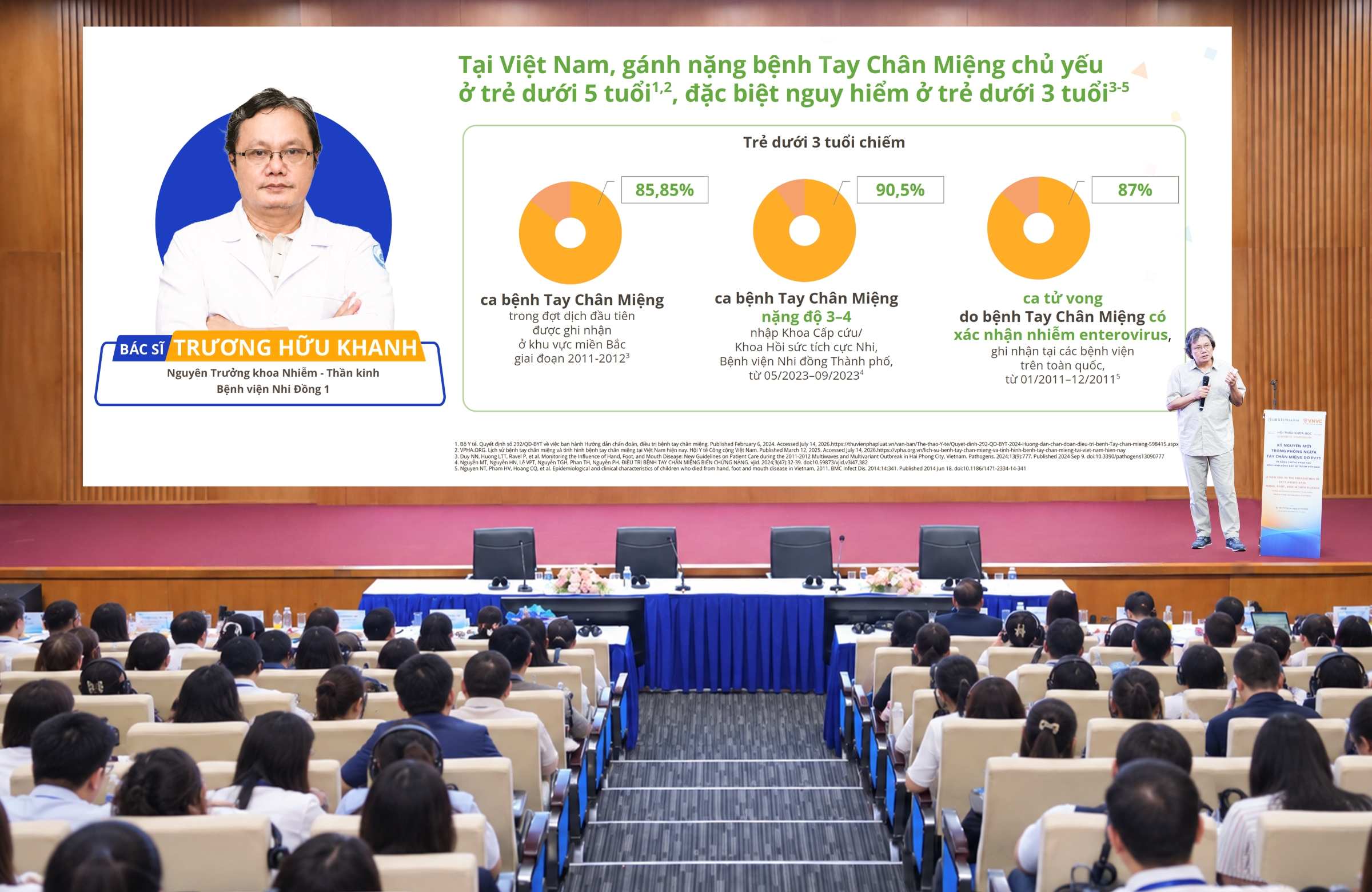 |
Doctor Truong Huu Khanh reports at the conference "A New Era in EV71 Hand, Foot, and Mouth Disease Prevention," analyzing why the vaccine focuses on EV71 prevention and presenting trial results on nearly 2,500 Vietnamese children. Photo: VNVC |
Doctor Truong Huu Khanh reports at the conference "A New Era in EV71 Hand, Foot, and Mouth Disease Prevention," analyzing why the vaccine focuses on EV71 prevention and presenting trial results on nearly 2,500 Vietnamese children. Photo: VNVC
Hand, foot, and mouth disease is caused by various enteroviruses. Currently, there is no specific treatment for the disease. Care primarily focuses on symptom reduction, monitoring for severe signs, and managing complications.
In addition to vaccine-based prevention, people should continue to implement other preventive measures such as personal hygiene, environmental disinfection, and early detection of signs of severe progression to reduce the risk of complications.
Gia Nghi