Mrs. Minh developed shingles in late July. Although antiviral medication helped her skin dry, peel, and outwardly heal, she continued to experience persistent, burning pain, described as a fiery sensation. This pain intensified at night, causing restless sleep, fatigue, mental exhaustion, and a weight loss of almost 3 kg in over one month. Despite trying nerve pain medications and some sleep aids, her condition did not improve.
Dr. Dam Thi Thuy Hong, a Second-Degree Specialist and Head of the Aesthetics Department at Tam Anh General Hospital Hanoi, diagnosed Mrs. Minh with post-herpetic neuralgia. This condition, caused by the varicella zoster virus, damages sensory nerve fibers. This damage results in chronic pain that can persist for weeks to months, even after the skin lesions have healed. Mrs. Minh was at high risk for prolonged post-herpetic neuralgia due to her age (over 60), delayed shingles treatment, and the extensive area of her skin lesions.
 |
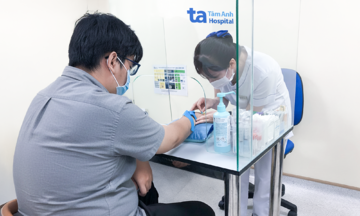
Dr. Hong consulting a patient. Illustration: Tam Anh General Hospital.
Following an assessment where her pain level registered 7 out of 10 on the Visual Analog Scale (VAS), Dr. Hong recommended botulinum toxin (botox) injections. This treatment approach has demonstrated high efficacy in numerous studies on post-herpetic neuralgia.
Dr. Hong explained that while botox is commonly used in aesthetics, it also provides pain relief by inhibiting the release of pain signal neurotransmitters at nerve endings. When injected into the affected skin, botox reduces the release of pain-inducing substances like substance P and glutamate. Additionally, this active ingredient helps relax small, tense muscles around the injured area, which can otherwise intensify pain. Administered with proper technique and precise placement, botox effectively reduces pain after one week, with effects lasting 4-5 months.
The injection procedure took about 15 minutes, involving multiple small injection points along the painful area in her left intercostal space. Mrs. Minh was monitored on-site and discharged home the same day. Aside from mild swelling at the injection site during the initial 24 hours, she experienced no significant side effects. After three days, her pain began to improve. By the 7th day post-injection, she no longer felt the severe burning sensation she had previously. After two weeks, her pain level had improved by 70%, and her sleep became stable again.
Dr. Hong noted that botox injections are particularly suitable for individuals experiencing pain for over one month who have not responded to or cannot tolerate nerve pain medications. It is also effective for pain localized to a specific skin area, or when pain severely impacts sleep and daily activities. However, patients with skin infections at the injection site, pregnant or breastfeeding women, or those with neuromuscular transmission disorders require thorough evaluation before receiving injections. Post-injection, patients should avoid massaging the treated area for the first 24 hours. They can then resume normal activities and monitor the effectiveness over two weeks.
For older patients, botox injections also reduce the inconvenience of daily oral or topical medications, while minimizing unwanted side effects.
By Thanh Ba.