On 25/12, Associate Professor, Doctor Do Dinh Tung, Director of Duc Giang General Hospital, stated that this is a pioneering model in Vietnam. It combines postal infrastructure with low-altitude flight technology for healthcare. The hospital and Vietnam Post are implementing this model to reduce transit times and enhance rapid response capabilities in emergencies.
The plan involves using small UAVs specifically designed for medical transport, ensuring all safety and legal conditions for operation within a radius of approximately 10 km. Each route is expected to operate two flights daily, with potential for increased frequency to meet urgent needs from medical facilities, subject to approval from authorities.
These aerial vehicles have a cruising speed of 60 km/h, an operating range of 15 km, and integrate real-time flight monitoring. The specialized storage compartment is designed to meet the preservation requirements for medical samples, medicines, and supplies. In the future, UAVs will be upgraded to achieve a flight range of about 20 km and a payload capacity of up to 10 kg, better serving medical transport needs.
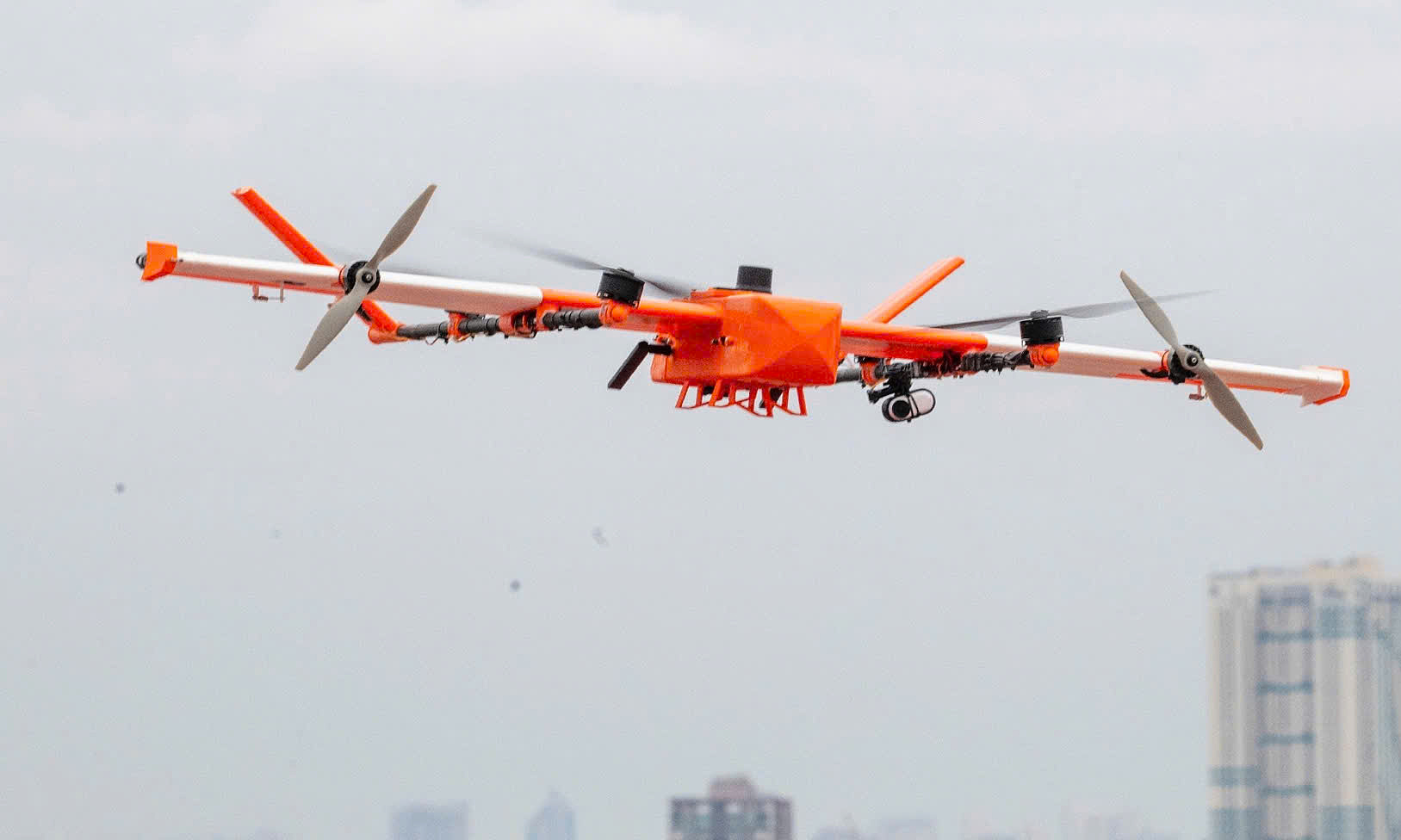 |
UAVs transport medical samples between hospitals. Photo: Thuy Ninh |
The flight route between Duc Giang General Hospital and Gia Lam Hospital has been successfully tested. When the medical team at Gia Lam Hospital needs medicine or blood, information is exchanged and agreed upon with the Duc Giang General Hospital team. Items are then approved, packaged according to regulations, and placed into the UAV. With an 8 km distance between the two hospitals, items are received and inspected by Gia Lam Hospital medical staff just 8 minutes after takeoff, ready for patient treatment. This journey typically takes 20-30 minutes by road.
Furthermore, if a lower-level medical facility, such as Thuan An Medical Station, lacks the conditions for testing, samples can be transferred to Duc Giang General Hospital by UAV for immediate testing and result delivery. This allows patients to receive results and treatment decisions sooner, reducing anxiety and waiting times.
"The application of UAVs is expected to help patients access test results sooner, reduce waiting times, and improve treatment effectiveness," said Mr. Tung. He added, "The model also supports connecting grassroots medical facilities with higher-level hospitals, contributing to improving people's access to healthcare services." He further emphasized that the delivery and reception process is strictly managed and transparent, with transportation status monitored to ensure proper purpose and safety for medical goods.
Mr. Nguyen Truong Giang, Chairman of the Board of Members of Vietnam Post, stated that medical goods are a special category directly linked to people's health and lives. In healthcare, time is not just a technical indicator but a critical factor determining diagnostic quality and treatment effectiveness. "We are approaching UAVs not to showcase technology, but to establish a new service capability that complements road transport in the context of increasingly complex urban traffic," Mr. Giang explained.
At the ceremony, Mr. Nguyen Trong Dien, Director of the Hanoi Department of Health, praised the model for reducing transport time for medical samples, medicines, and supplies. He highlighted its role in enhancing proactivity in professional work, especially during situations requiring rapid response. The application of UAVs also holds important meaning for ensuring healthcare equity, enabling residents at grassroots facilities like commune and ward medical stations to access advanced medical services faster through effective connections with higher-level facilities.
Based on the pilot results, the two entities will continue to evaluate, refine, and gradually expand the application scope in the future, aiming to build a smart healthcare ecosystem and improve the quality of public healthcare.
Le Nga