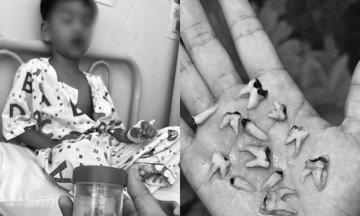
Doctor Nguyen Do Trong, Head of Pediatric Surgery at Tam Anh General Hospital TP HCM, explained that branchial cleft fistulas form during fetal development. This occurs when the branchial arches do not completely close, leaving a tract on the skin of the neck or chest. These fistulas are typically pinhole-sized and present from birth. When blocked by dirt, dead skin cells, or frequent touching, bacteria can proliferate inside, causing acute inflammation, known as superinfection. Initial signs include a tiny, painless hole on the skin of the anterior chest, often along the sternum or sternal notch, sometimes discharging a cloudy white fluid.
When Thai was born, he had a small, pinprick-like hole on his neck that discharged fluid, but his family did not notice it. The hole later developed into a hard mass measuring 3x4 cm, resembling a chicken egg in size. He was then taken to the hospital, where doctors diagnosed a branchial cleft fistula with superinfection.
While this is a benign condition, recurrent infections can cause the skin around the fistula to become swollen, red, and painful to the touch, potentially discharging yellow or green pus. Without early intervention, the inflammation can accumulate pus, forming an abscess directly in front of the neck. Children often experience a mild or high fever, depending on the extent of the local or systemic infection. At this stage, the surrounding tissues become inflamed and adhered, making surgical removal challenging.
Surgery is the effective treatment method to completely excise the fistula tract. If any part of the fistula tissue remains, the condition can recur, leading to unsightly scarring on the child's chest and affecting aesthetics. When the fistula forms an abscess, doctors perform an incision and drainage to release the pus and clean the wound daily. Most cases also require antibiotics for treatment.
 |
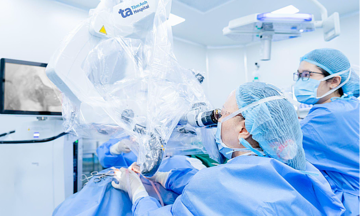
Doctor Trong performs surgery to excise the fistula for the young patient. *Photo: Tam Anh General Hospital* |
Because of the abscess, the surrounding tissues were fibrotic and adhered, making the excision more challenging than in cases without prior inflammation. The surgery took 60 minutes to fully remove the fistula tract. The boy remained hospitalized for four to five days for monitoring, receiving antibiotics to eliminate bacteria, reduce inflammation, and watch for complications.
Doctor Trong advises that if a child has a small hole on their neck or chest that discharges clear, yellowish-white, or foul-smelling fluid, or if there is swelling, pain, or redness, they should be taken to the hospital for timely diagnosis and treatment. It is crucial not to self-medicate with topical creams or squeeze the swollen fistula, as this can spread bacteria deeper and worsen the infection.
Dinh Lam
*Character's name has been changed
| Readers can submit questions about childhood illnesses here for doctors to answer. |