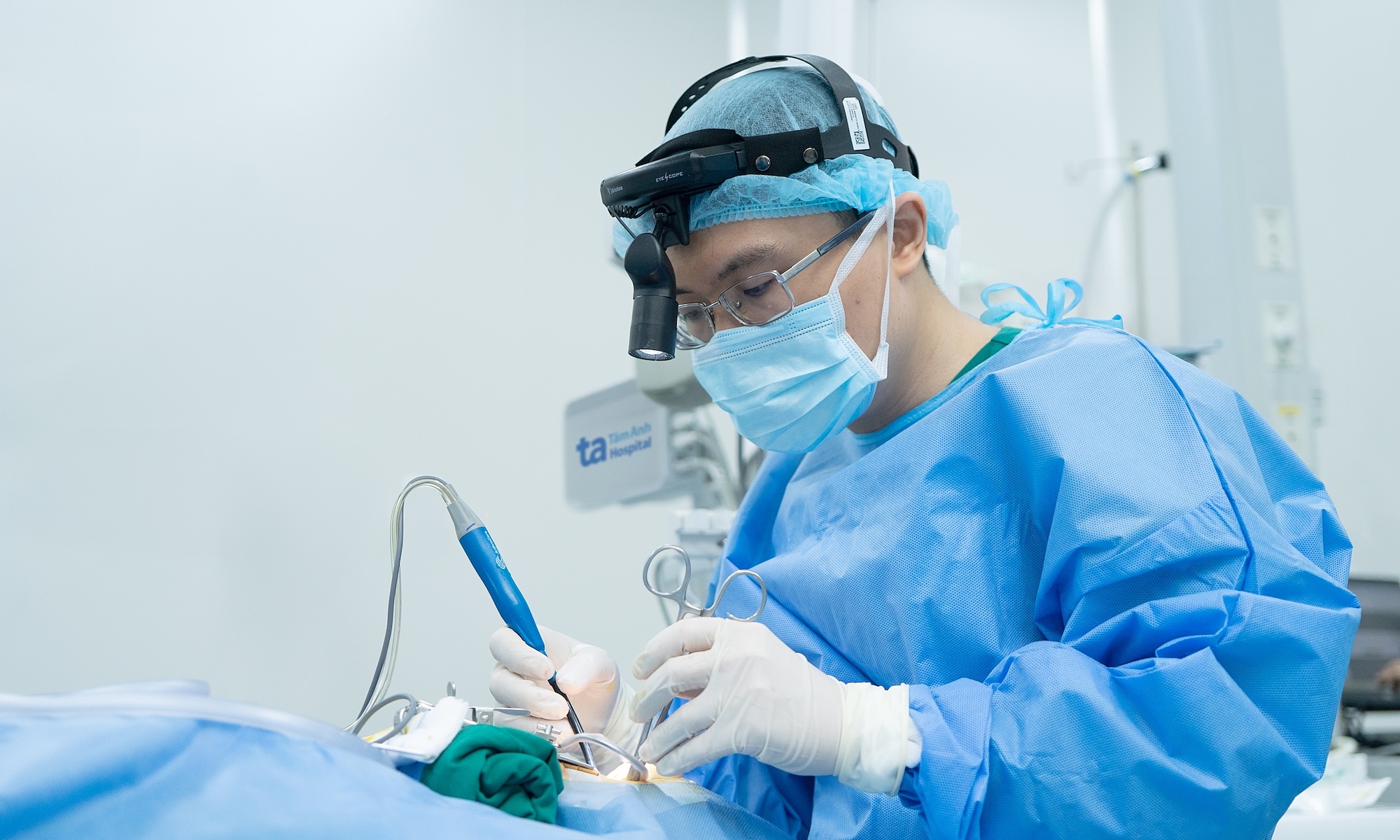
On 9/2, Associate Professor, Doctor Pham Van Quang, Head of the Intensive Care and Poison Control Department at Nhi Dong 1 Hospital, announced that the pediatric patient had completed all final health checks. The boy's heart is contracting well independently, his consciousness has fully recovered, and he is expected to be discharged in the coming days.
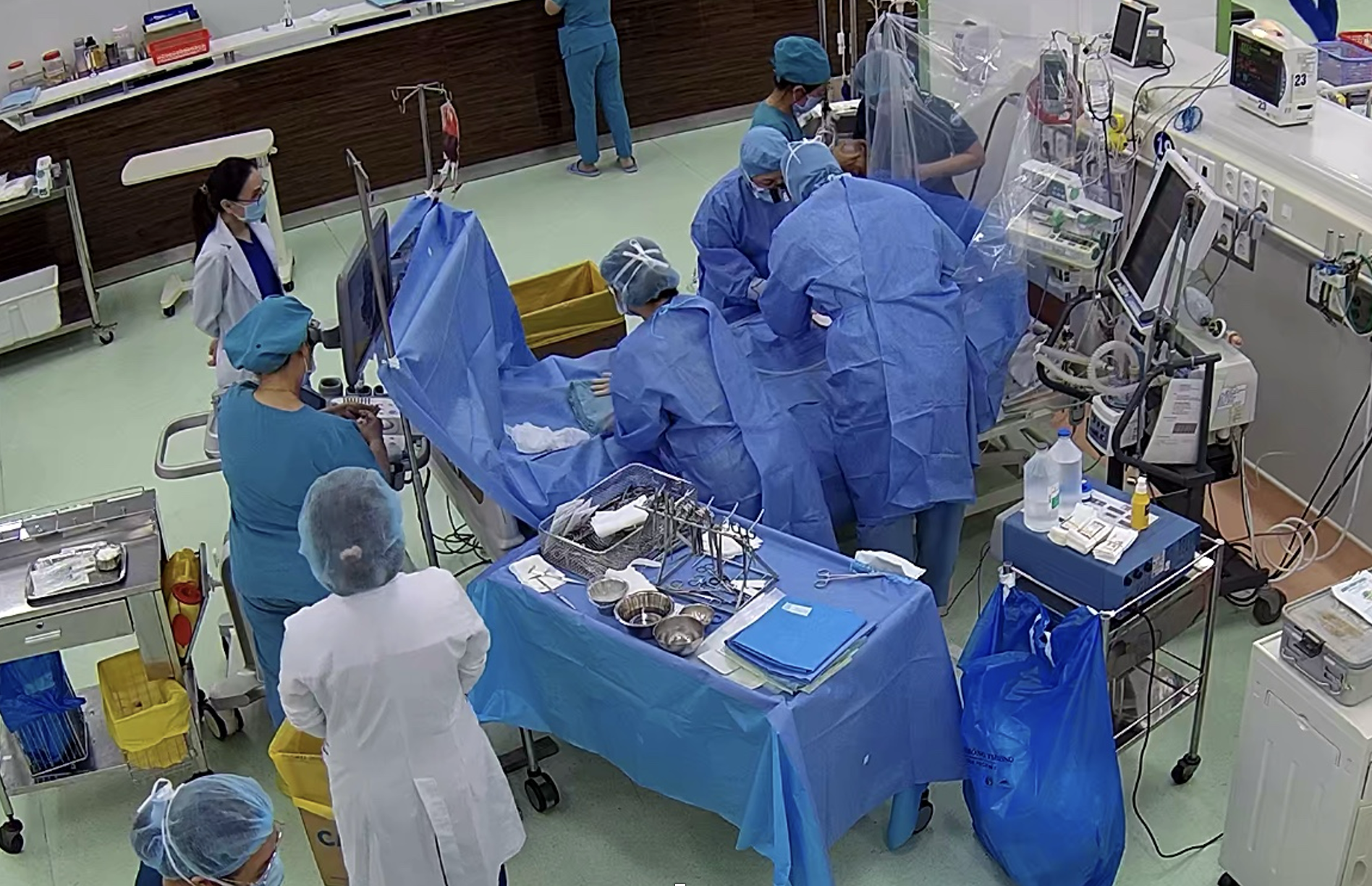 |
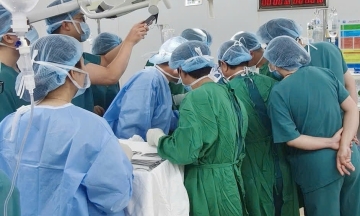
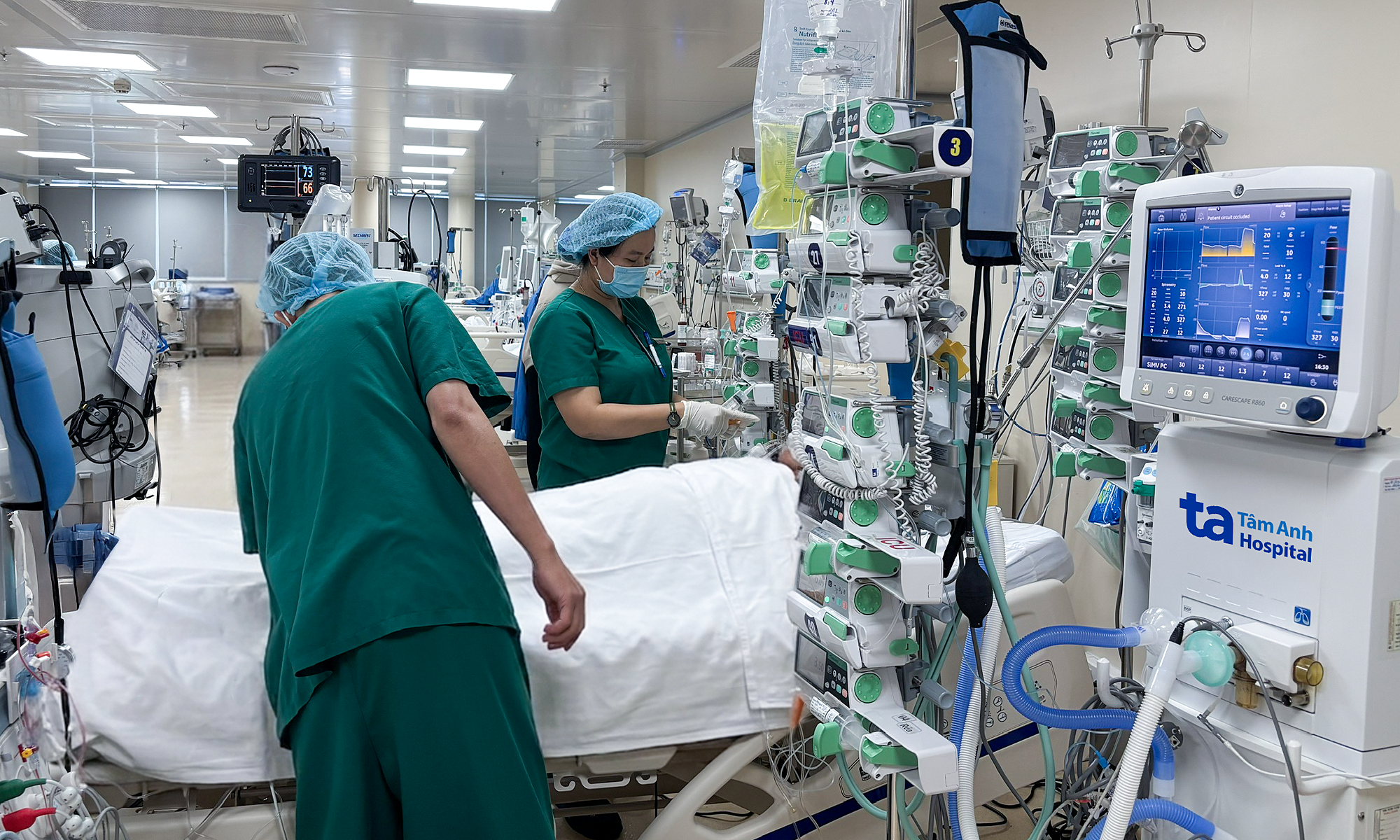
Cardiovascular surgery and intensive care doctors perform ECMO on the boy. Photo: Provided by doctor |
Doctors describe this as a dramatic revival, as the boy pulled back from the brink of death, both physiologically and pathologically. The patient experienced over 20 minutes of continuous cardiac arrest at the local hospital, a duration during which brain damage or brain death typically occurs. Fortunately, he regained consciousness without neurological sequelae. Furthermore, fulminant myocarditis previously had a mortality rate approaching 100% before the ECMO era. The fact that the boy was completely weaned off mechanical support after just 10 days of treatment represents a significant effort by the entire team.
The incident occurred earlier when the boy suddenly fainted while attending church. A local hospital in Dong Nai admitted the patient with circulatory collapse and arrhythmias. Doctors performed defibrillation, chest compressions, and administered anti-arrhythmic drugs continuously for over 20 minutes to revive him. Although his heart began to beat again, the boy remained in severe shock with ventricular arrhythmias, necessitating an emergency transfer to a higher-level hospital.
At Nhi Dong 1 Hospital, a "code red" protocol was immediately activated. However, the patient's condition deteriorated rapidly, with severe arrhythmias, cardiovascular collapse, and acute pulmonary edema threatening his life. The treatment team decided to transfer the boy to the Intensive Care Department for ECMO (extracorporeal membrane oxygenation) intervention, which was the last resort to stabilize his condition.
Associate Professor Quang stated that the team had to race against time. Cardiovascular surgery and intensive care doctors collaborated to establish the ECMO system to support the weakly contracting heart, while also applying therapeutic hypothermia and continuous hemodialysis to protect the brain and internal organs. After 30 minutes of intervention, the patient, who had been cyanotic, regained a healthy pink complexion.
The following week was a tense battle as the boy's heart continued to beat weakly and irregularly. It was only after 10 days of maximum support from the equipment and cardiotonic drugs that the patient's condition significantly improved, allowing for gradual weaning from mechanical support.
According to experts, acute myocarditis is often caused by viruses (commonly Coxsackie group B) and is prevalent during the winter-spring season. The disease is dangerous because its initial symptoms are non-specific, and people easily mistake them for the flu, such as mild fever, cough, runny nose, or nausea. In its fulminant form, the disease progresses rapidly, causing fainting, shortness of breath, chest pain, and cold extremities. Doctors advise parents to be vigilant if a child has a fever accompanied by unusual fatigue, excessive sweating, or chest pain. Families should take their child to a medical facility immediately for timely diagnosis and intervention.
Le Phuong