"This microsurgery was three times longer than usual," said Dr. Nguyen Quang Vinh, from the Center for Reproductive Assistance, Tam Anh General Hospital - District 8. Mr. Hoa, 36, had been infertile for many years due to a lack of sperm. The cause was two conditions: an undescended testicle and mumps complications.
10 years ago, Mr. Hoa discovered he had a congenital undescended testicle and underwent surgery to lower his left testicle from the abdomen into the scrotum. However, the prolonged ectopic position caused severe degeneration of sperm-producing stem cells, reducing spermatogenesis function. To make matters worse, Mr. Hoa later contracted mumps, a disease that significantly impacts male fertility as the virus attacks the remaining testicle, destroying seminiferous tubules and leading to fibrotic and atrophied testicular tissue. He had micro-TESE microsurgery to find sperm from his left testicle at another hospital for in vitro fertilization (IVF), but the embryo transfer was unsuccessful.
Dr. Vinh stated that non-obstructive azoospermia, as in Mr. Hoa's case, is a common cause of male infertility. The most promising treatment method is testicular microsurgical sperm extraction (micro-TESE). However, Mr. Hoa's testicle had undergone multiple interventions, resulting in extensive scar tissue, making the risk of failure very high. If the microsurgery failed, the patient would not find sperm to have children and would also face the risk of early andropause.
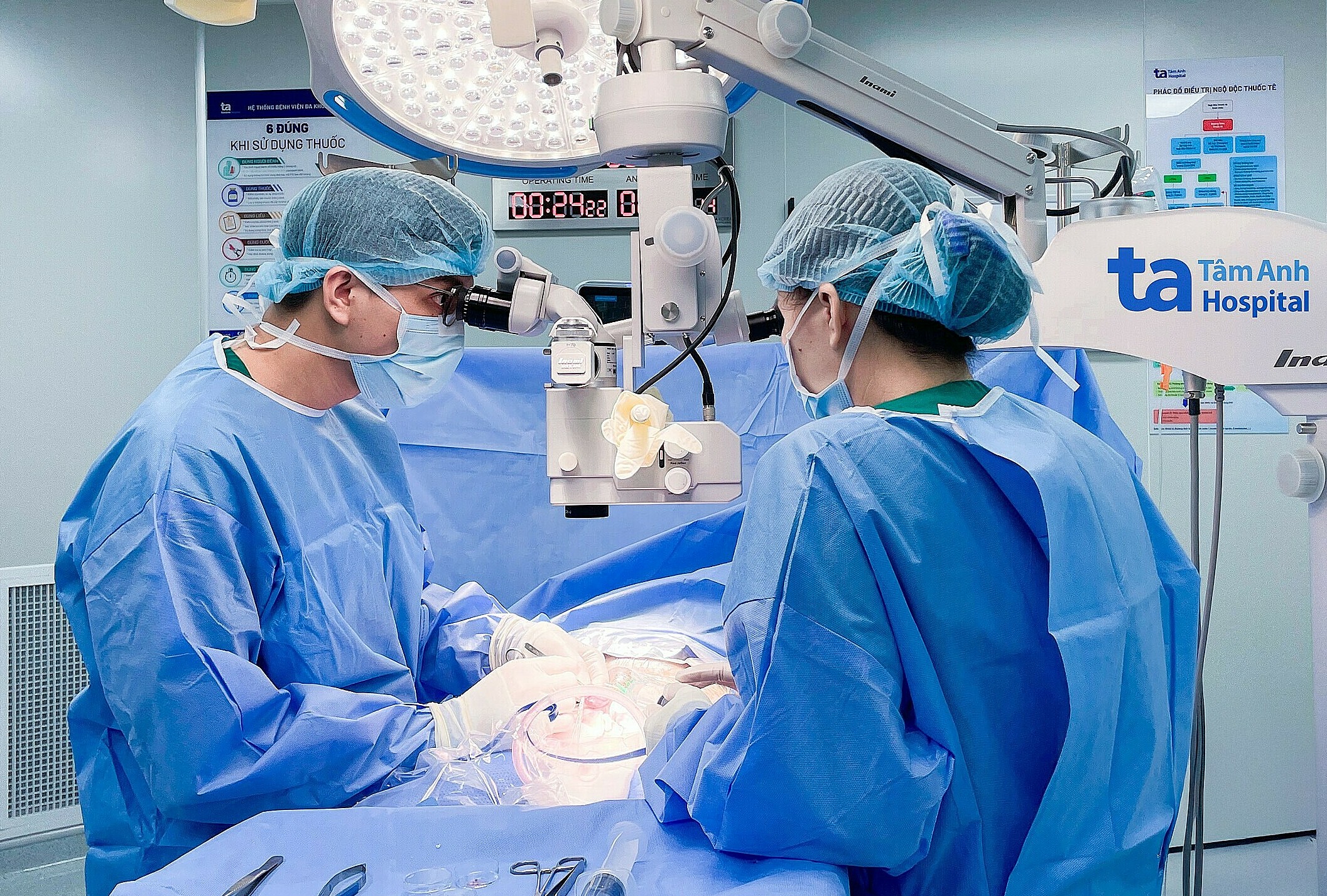 |
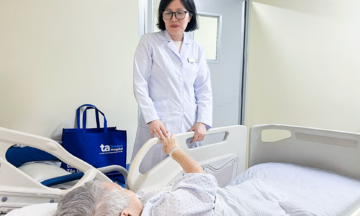
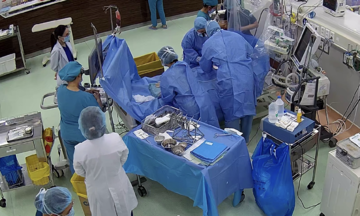
Dr. Vinh performs micro-TESE microsurgery to find sperm for Mr. Hoa. Photo: IVF Tam Anh |
Under a surgical microscope magnified 30 times, Dr. Vinh reopened the old incision. Previous surgeries had caused the surrounding membranes to adhere tightly due to scar tissue, requiring the doctor a significant amount of time to untangle and access the testicular parenchyma. Newly formed blood vessels after scarring were fragile, necessitating meticulous manipulation. The team only operated on the left testicle, preserving the right testicle, which had atrophied due to mumps complications, to maintain some endocrine function post-surgery for the patient.
Potentially viable seminiferous tubules were transferred to the lab for embryologists to search for sperm under an inverted microscope. They meticulously separated small pieces of tissue, scanning every microscopic field to ensure no signal was missed. However, after two hours, results showed most sperm were immotile, with the rest showing only sluggish movement.
The team weighed whether to continue or stop the microsurgery. If they continued, the chance of finding live sperm was low. If they stopped, it meant the patient would have to use donor sperm for in vitro fertilization to have children. Dr. Vinh assessed the likelihood of remaining viable seminiferous tubules and the testicle's resilience, deciding to continue the sperm search.
The team pinpointed potential areas, took smaller tissue samples, and patiently scanned. After more than three hours, they collected enough sperm for one IVF cycle and to store for the next cycle. Embryologists proceeded with intracytoplasmic sperm injection (ICSI), culturing embryos in a time-lapse system for continuous monitoring and quality assessment.
Mr. Hoa's wife is currently undergoing treatment for a uterine condition and is expected to have an embryo transfer after Tet.
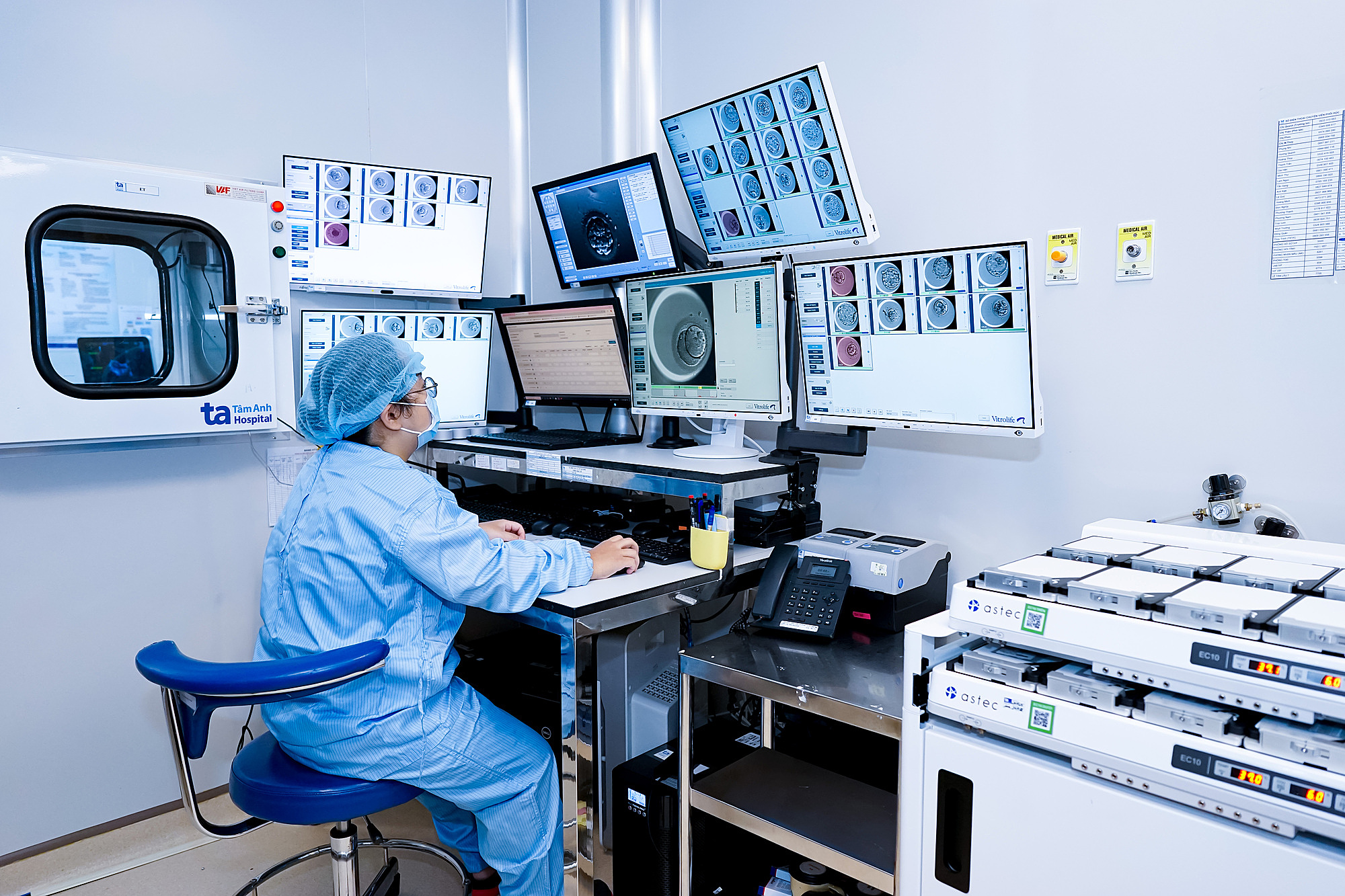 |
Embryologists observe embryo development cultured in a time-lapse system integrated with artificial intelligence. Photo: IVF Tam Anh |
Dr. Vinh stated that micro-TESE microsurgery is a modern technique typically indicated for cases of non-obstructive azoospermia, with a 40-60% success rate in finding sperm. If insufficient quality sperm are found, or if the first intervention fails, doctors may consider additional attempts. However, multiple interventions can affect endocrine function, so infertile men should seek examination at specialized fertility treatment centers. Depending on the patient's condition and physical state, doctors will prescribe the appropriate treatment method.
Dinh Lam
* The names of individuals in the article have been changed