An ultrasound examination of Ms. Khanh at Tam Anh General Clinic, District 7, revealed an inflammatory abscess in her left breast. Her right breast showed an irregular lesion measuring 9x12 mm, with hard elasticity on ultrasound, assessed as BIRADS-4B (suspicious for malignancy). Doctor Le Ngoc Vinh, from the Oncology Surgery unit, ordered a mammogram, which identified microcalcifications. A subsequent biopsy confirmed invasive micropapillary carcinoma.
Ms. Khanh decided to undergo surgery to remove the cancerous breast tissue and simultaneously perform a prophylactic mastectomy on the left breast, followed by breast reconstruction using implants. Before the surgery, she received antibiotics and underwent drainage of the purulent fluid from her left breast to treat the abscess.
 |
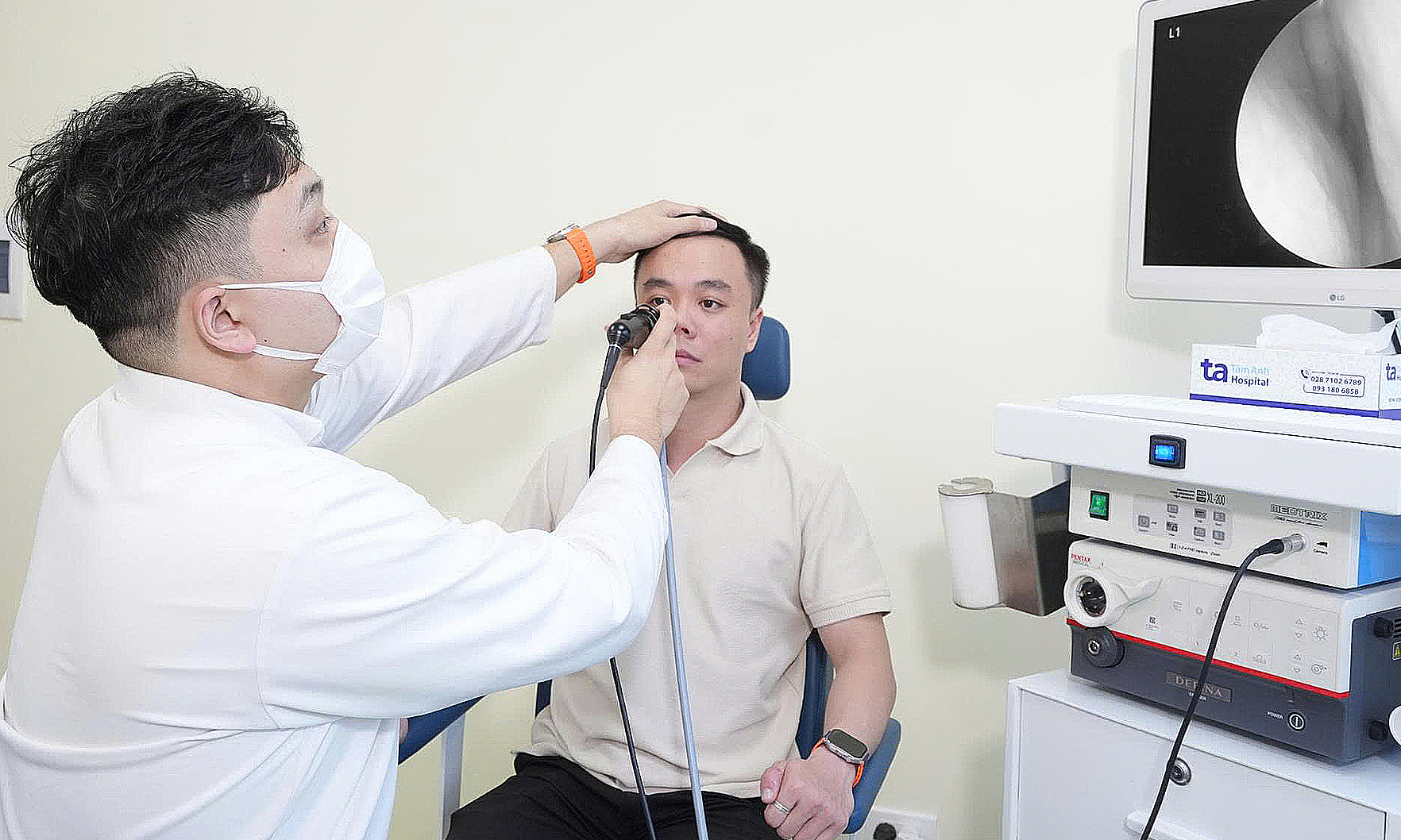
Doctor Vinh examines the patient. Photo: Tam Anh General Hospital |
After two weeks, the abscess healed. The surgical team from the Oncology Surgery department performed a bilateral mastectomy, preserving the skin and nipples, and then inserted breast implants, ensuring an aesthetic outcome for the patient.
Post-surgery, Ms. Khanh ate normally and recovered well, being discharged after two days. Pathological analysis revealed stage one, endocrine-positive breast cancer. Once her wounds healed, she continued with systemic treatment, including a five-year course of endocrine medication to block hormone stimulation and reduce recurrence risk. Currently, her health is stable, and she requires regular follow-up appointments.
Endocrine-positive breast cancer grows in response to hormones. Breast cancer cells possess protein receptors that bind to estrogen and progesterone to proliferate. In younger, premenopausal women, these hormones are primarily produced by the ovaries.
To treat endocrine-positive breast cancer, doctors may prescribe medication to suppress ovarian function. Patients often experience side effects such as dry skin, hot flashes, vaginal dryness, decreased libido, and bone pain. Patients should maintain a nutritious diet, drink enough water, and supplement with sufficient vitamin D to help mitigate these side effects.
Doctor Vinh stated that breast cancer has a good prognosis if detected and treated in its early stages. Women should regularly perform self-breast examinations and undergo routine health check-ups, which can aid in early detection, timely treatment, and improved quality of life. Women in high-risk groups for breast cancer (e.g., family history, BRCA gene mutations) should begin screening at an earlier age, before 40.
Nguyen Tram
*Patient's name has been changed
| Readers can submit questions about cancer here for doctors to answer |