Answer:
Spinal degeneration is a condition where the cartilage between the vertebrae gradually wears away over time. This causes the ends of the vertebral bones to rub directly against each other during movement. This process leads to inflammation, pain, joint swelling, reduced joint fluid, instability, and increased load on the vertebral body's edges.
Spinal bone spurs are a complication of long-term, ineffectively treated spinal degeneration. This condition frequently affects areas prone to degeneration and heavy load, such as the cervical (neck) and lumbar (lower back) spine. Degenerated vertebrae under significant load often experience chronic inflammation and repeated microtrauma. This stimulates the periosteum to proliferate and osteoblasts to activate, forming bony outgrowths or bone spurs at the edges of the vertebral bodies.
Newly formed spinal bone spurs are small and initially cause no symptoms. Without treatment, these bone spurs will grow, causing localized pain, compressing nerve roots and surrounding soft tissues, and exacerbating the pain and numbness associated with spinal degeneration.
 |
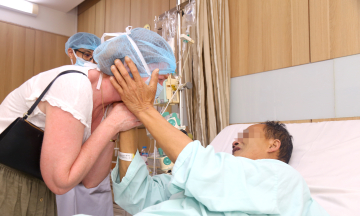
Doctor Trinh advises a patient with spinal bone spurs. Illustration: Tam Anh General Hospital |
Given your diagnosis of spinal bone spurs after a long period of degeneration, you should seek treatment at a multi-specialty hospital. Such facilities offer coordinated care from orthopedics, trauma and orthopedic surgery, neurosurgery, physical therapy, and rehabilitation.
Doctors typically use X-ray images to assess spinal bone spurs. They may also order a magnetic resonance imaging (MRI) scan if nerve root or spinal cord compression is suspected. For mild cases, bone spurs can be managed conservatively with medication and physical therapy. If the spurs severely compress nerves, surgery to remove them may be necessary to prevent dangerous complications that could impair mobility and quality of life.
Master of Science, Doctor Tran Thi Trinh
Department of Musculoskeletal
Tam Anh General Hospital Cau Giay Clinic
| Readers can send questions about musculoskeletal conditions here for doctors to answer. |