Cataracts and ptosis, common in older adults, can severely reduce vision and quality of life. While both conditions affect the eyes, their underlying mechanisms and treatment approaches differ, making simultaneous surgical correction generally unfeasible.
Cataracts occur when the eye's natural lens loses its transparency due to aging, trauma, prolonged corticoid use, or underlying conditions such as diabetes, high blood pressure, or heart conditions. Symptoms include blurred vision, glare, and seeing as if through a fog. Untreated cataracts can lead to complications and even vision loss. The current treatment is Phaco surgery, which involves emulsifying the cloudy lens with ultrasound, removing it, and implanting an artificial intraocular lens.
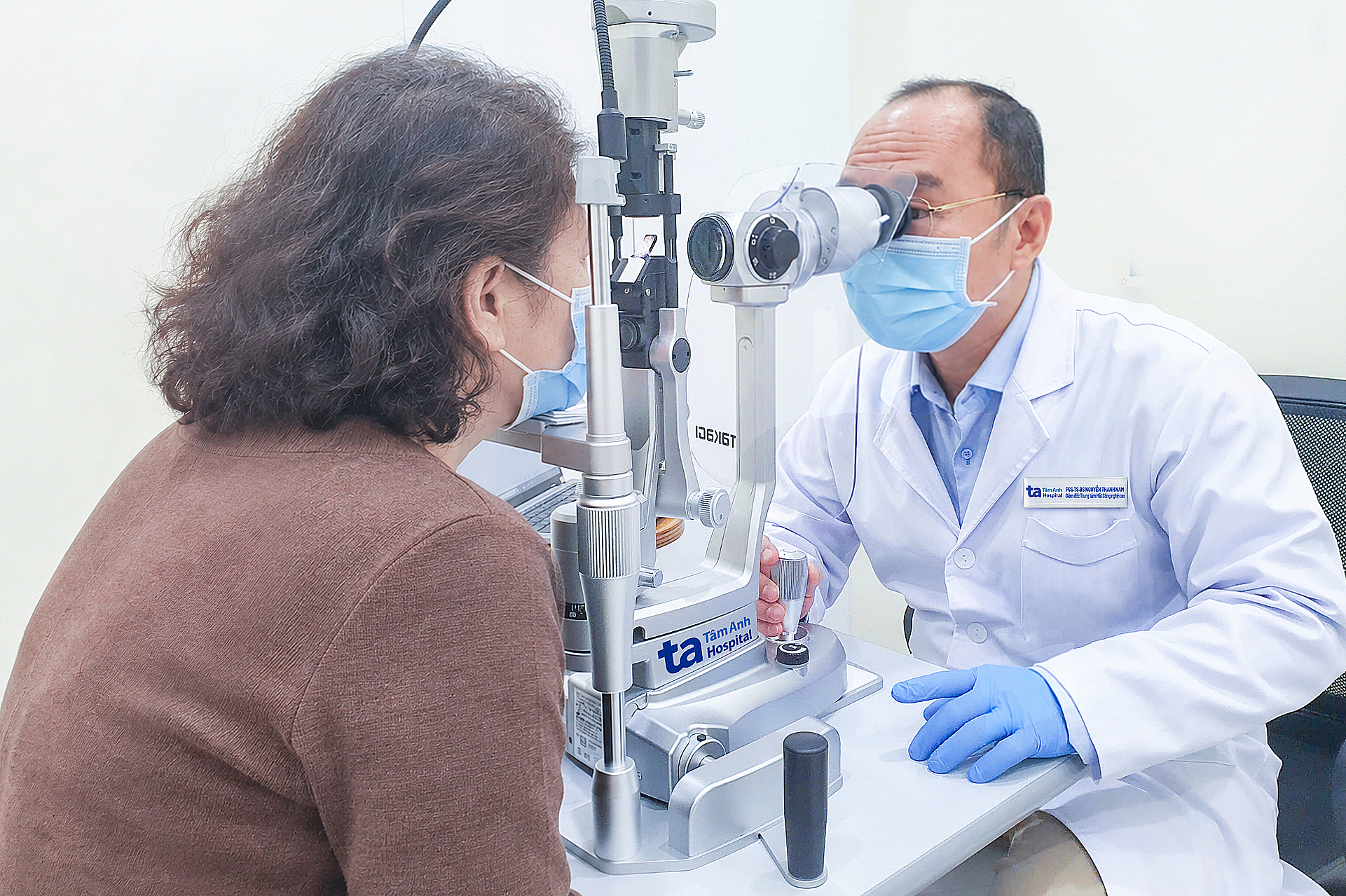 |
Associate Professor Nam examines a woman's eye. Illustration: Tam Anh General Hospital. |
Ptosis, or drooping eyelids, is a condition where the upper eyelid sags, potentially covering part or all of the pupil. This causes eye heaviness, fatigue, and affects both vision and appearance. In older individuals, ptosis often results from the weakening or stretching of the levator muscle due to aging. Other causes include trauma, previous eye surgery, or neurological and muscular abnormalities. Surgical correction can adjust the levator muscle, often combined with removing excess skin and creating an eyelid crease, to improve vision and aesthetics.
Since your mother has both conditions, and their impact on the eye and treatment methods are distinct, they cannot be addressed in a single surgical procedure. It is advisable to take your mother to an ophthalmology department for a comprehensive eye examination, including assessment of her vision, cataracts, and ptosis. Based on these results, the doctor will diagnose the conditions and recommend an appropriate treatment plan.
If the ptosis is not yet severely affecting vision, the doctor may prioritize Phaco surgery to replace the cataractous lens. This procedure aims to restore vision and prevent complications from progressive cataracts. Once the patient's vision improves, the doctor can more accurately assess the extent of the ptosis and consider surgical intervention for it if necessary.
Patients should provide full details of any underlying medical conditions, current medications, and surgical history. Health indicators such as blood sugar, blood pressure, and heart health are also checked before surgery, and the doctor will prescribe appropriate management measures.
Individuals over 60, those with underlying health conditions, a history of eye trauma, or prolonged corticoid use should undergo regular eye examinations every 6 months, especially if they experience blurred vision, glare, or see halos around lights. People with unusual eyelid drooping should also seek early examination, as it could indicate conditions such as stroke, cerebral hemorrhage, or myasthenia gravis.
Associate Professor, Doctor Nguyen Thanh Nam
Director of the High-Tech Eye Center
Tam Anh General Hospital System, TP HCM
| Readers can submit questions about ophthalmological conditions here for a doctor's response |