Heart rhythm disorders, or arrhythmias, occur when the electrical impulses controlling heart activity become irregular, causing the heart to beat too fast or too slowly. These episodes can last for a few minutes or less, appearing in bursts without noticeable signs. However, some arrhythmias can persist for hours or even years, requiring comprehensive treatment.
Arrhythmias are broadly classified into two common types: fast heart rhythms (tachyarrhythmias) and slow heart rhythms (bradyarrhythmias). Tachyarrhythmias include conditions such as supraventricular tachycardia, atrial flutter, atrial fibrillation, ventricular tachycardia, and ventricular fibrillation. Bradyarrhythmias encompass sick sinus syndrome and atrioventricular block. Other common arrhythmias include atrial premature beats and ventricular premature beats.
Mild arrhythmias, or those triggered by external factors like stress, anxiety, or alcohol consumption, typically pose no significant health risk and may not require treatment. However, arrhythmias stemming from underlying medical conditions, especially those accompanied by symptoms such as palpitations, shortness of breath, chest discomfort, difficulty breathing, or limited physical activity, can lead to heart failure, stroke, or even sudden cardiac death if left untreated.
Effective treatment for arrhythmias depends on their underlying cause. If the arrhythmia results from damage to another organ, such as a thyroid disorder or kidney failure causing electrolyte imbalance, those conditions must be addressed first. For arrhythmias caused by abnormalities or diseases within the heart itself, a combination of medical and surgical interventions is often necessary to achieve optimal outcomes.
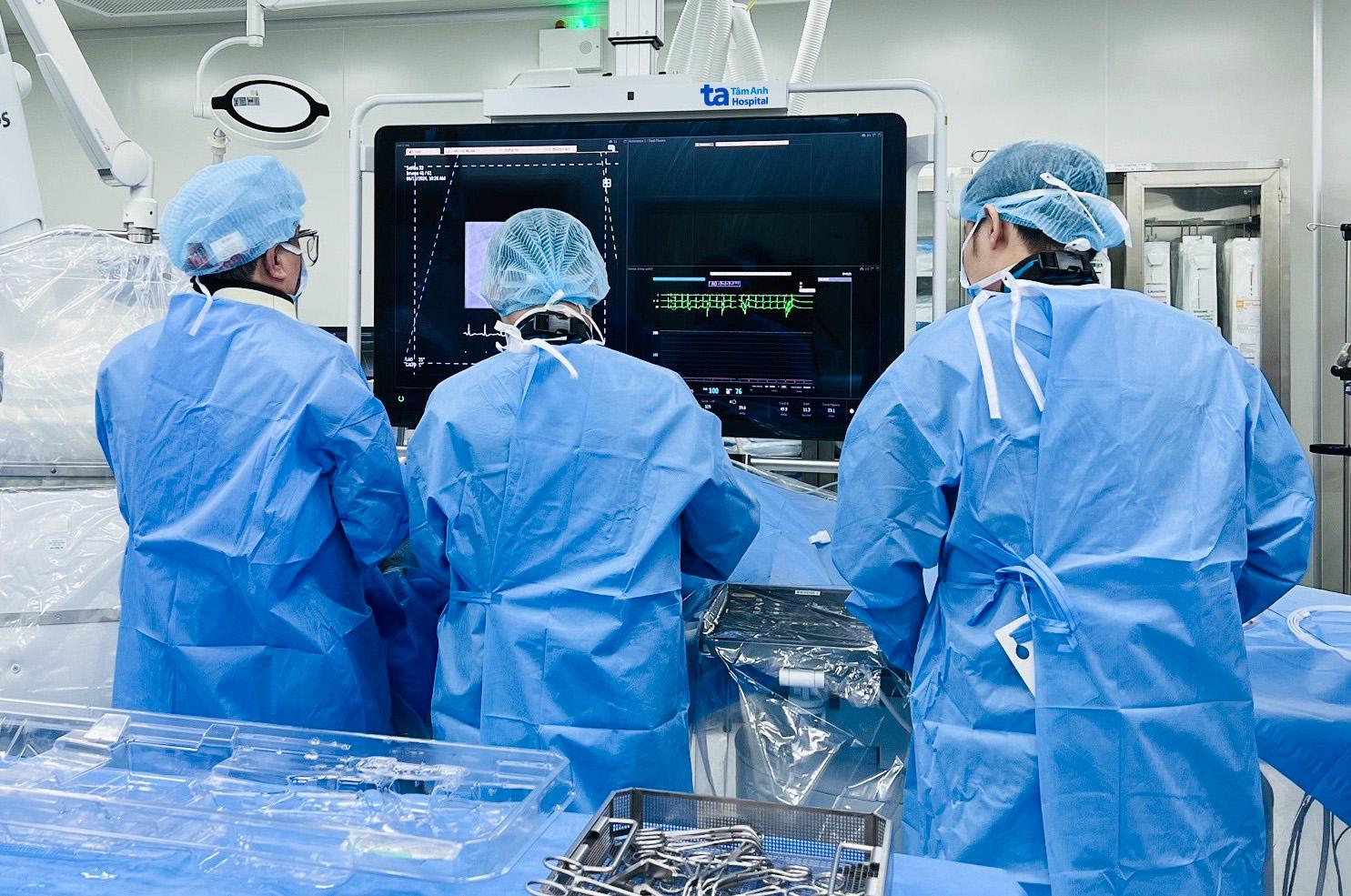 |
A team of doctors from the Interventional Cardiology Center, Tam Anh General Hospital Ho Chi Minh City, implants a pacemaker for a patient with a heart rhythm disorder. Photo: Ngoc Ha |
A team of doctors from the Interventional Cardiology Center, Tam Anh General Hospital Ho Chi Minh City, implants a pacemaker for a patient with a heart rhythm disorder. Photo: Ngoc Ha
Medical treatment often involves medications that help control heart rate and restore normal rhythm, particularly for patients with tachyarrhythmias. For those with atrial fibrillation or atrial flutter, anticoagulant medications are prescribed to prevent blood clots and reduce the risk of stroke. Patients must adhere strictly to their doctor's instructions when taking these medications.
Surgical and procedural methods are also crucial for treating heart rhythm disorders. These include:
Catheter ablation: Doctors insert one or more catheters through blood vessels to the heart. Electrodes at the catheter tips use heat or cold energy to create small scars in the heart, blocking abnormal electrical signals and restoring normal heart rhythm.
Pacemaker implantation: This device is chosen when medication cannot control the arrhythmia. Both wired and leadless pacemakers can be implanted under the skin to regulate heart rate and prevent dangerous complications.
Implantable cardioverter-defibrillator (ICD): This device is typically implanted in patients who develop fast or irregular heart rhythms in the lower heart chambers (ventricular tachycardia or ventricular fibrillation). Doctors may also implant an ICD if a patient has experienced sudden cardiac arrest or has heart conditions that increase this risk.
Maze procedure: Doctors create a series of incisions in the heart tissue in the upper half of the heart (atria) to form a maze of scar tissue. Since scar tissue does not conduct electricity, it obstructs errant electrical impulses, helping to treat certain types of arrhythmias like atrial fibrillation.
Alongside medical treatment, maintaining a healthy lifestyle supports heart rhythm control. This includes adopting a heart-healthy diet, preventing overweight or obesity, exercising daily, avoiding tobacco, limiting alcohol, and managing stress. Regular health check-ups are also vital for early detection of abnormalities and timely intervention.
Specialist Doctor Level II Nguyen Van Duong
Interventional Cardiology Center
Tam Anh General Hospital Ho Chi Minh City
| Readers can submit questions about cardiovascular diseases here for a doctor's response |