Yes, you can receive these three vaccines simultaneously during one appointment, provided it is recommended by a doctor.
Administering multiple vaccines during a single visit is permitted and outlined in the safe immunization practice guidelines by the Ministry of Health, along with recommendations from the Centers for Disease Control and Prevention (CDC) and the World Health Organization (WHO). Receiving several vaccines at once does not increase the frequency of severe allergic reactions or adverse events post-vaccination. Each vaccine should be administered at different sites on the body to facilitate post-injection monitoring.
Furthermore, the flu, pneumococcal, and new-generation shingles (recombinant type) vaccines are all inactivated vaccines, meaning they do not contain live viruses that cause disease. Studies show that inactivated vaccines can be administered on the same day without reducing their individual antibody-generating effectiveness.
Moreover, the human immune system is exposed to millions of natural antigens daily through eating and breathing. The antigens present in three vaccine doses constitute a very small fraction, and the body is fully capable of receiving them and generating independent protective antibodies for each disease.
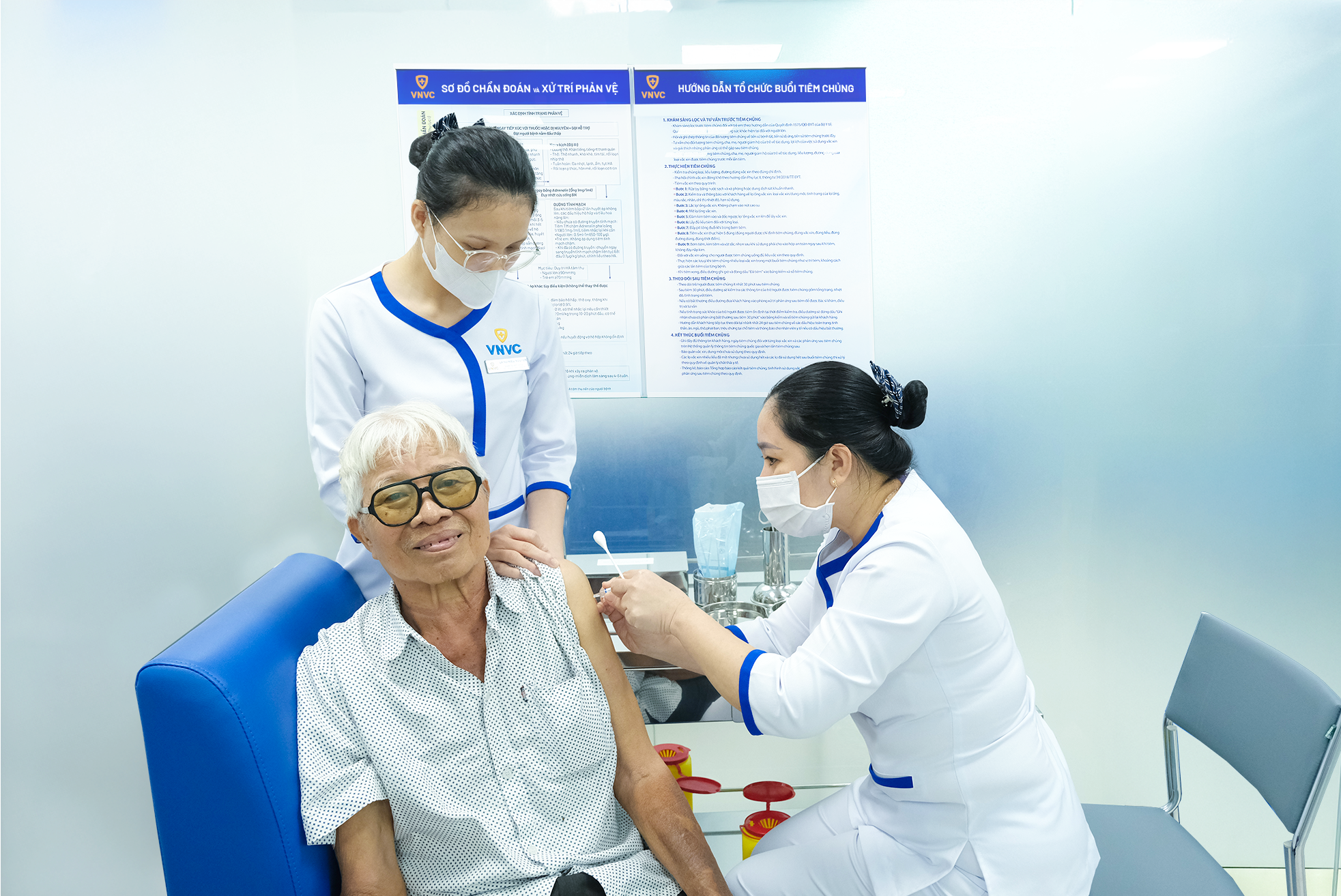 |
Nurse Vo Van Kiet at VNVC center administers a flu vaccine to an older adult. Photo: Moc Thao
After vaccination, you might experience common local reactions such as swelling, redness, or pain at the injection site in the upper arm, or mild fatigue and muscle aches within the first 24-48 hours. These are benign physiological signs, indicating that the immune system is recognizing the antigens and activating the antibody production process.
After the age of 50, the immune system begins to enter a phase of aging, known as immunosenescence. This increases the risk of respiratory infections, such as influenza and pneumococcal pneumonia, and the reactivation of the shingles virus. Post-herpetic neuralgia at this age can persist for many months, or even years.
Therefore, completing all three vaccinations in one visit to the center offers three key benefits: it saves time and travel effort; it creates a comprehensive protective shield, promptly preventing diseases affecting both the respiratory and nervous systems simultaneously, leaving no time gap for pathogens to attack; and it reduces psychological stress.
After vaccination, you should remain at the center for 30 minutes of monitoring. Upon returning home, drink plenty of fluids, eat nutritious food, continue any regular medication for underlying conditions (if applicable), and apply a cool compress (avoid hot compresses or herbal poultices) if the injection site experiences mild swelling or pain.
Dr. Bui Cong Su
Medical Manager, VNVC Vaccination System